
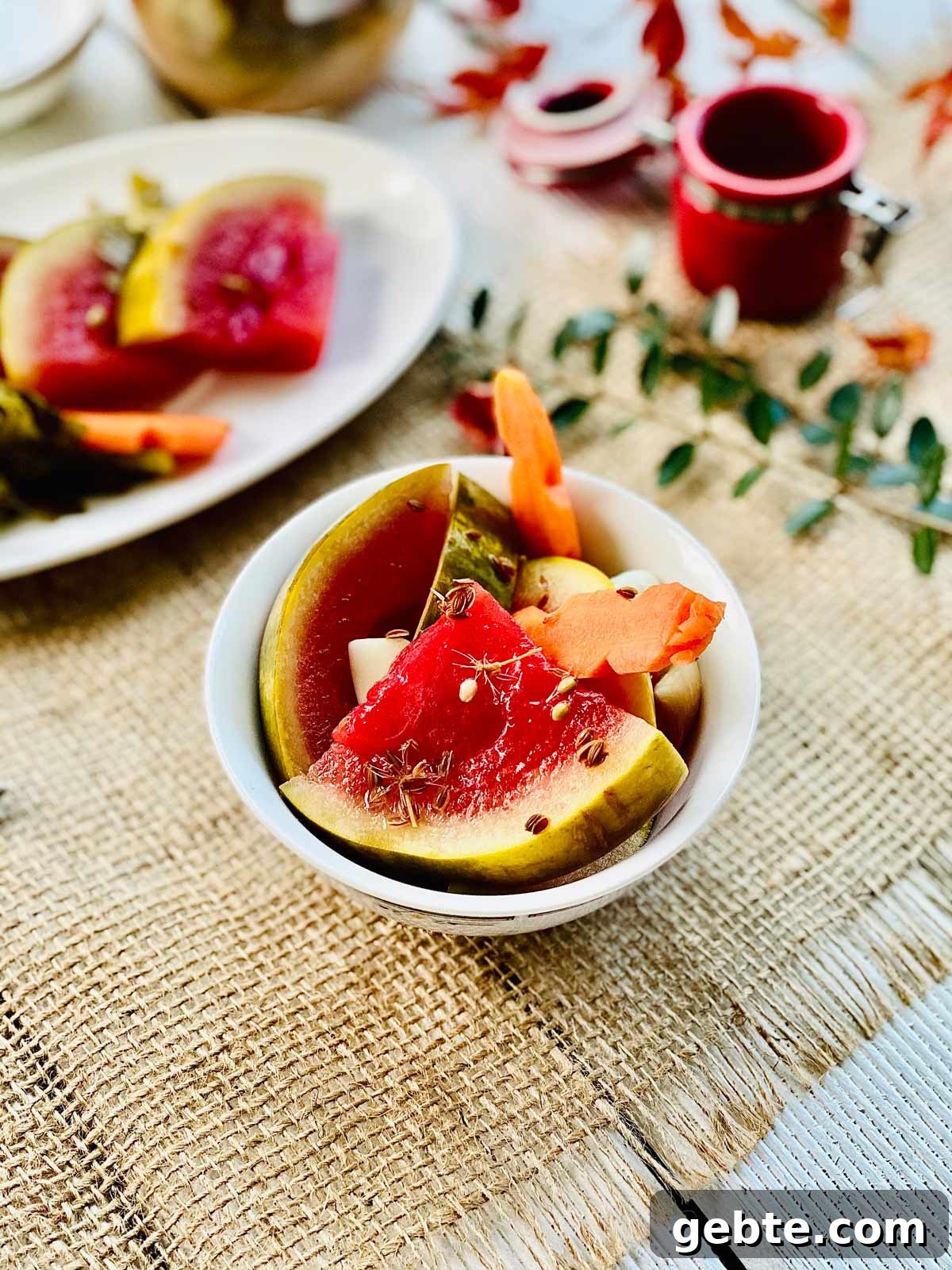
Pickled watermelon is a delightful treat—not just the rind, but the flesh as well. Simply slice the melon and pack it into jars for pickling. The result is wonderfully textured and flavored, and it pairs with many savory dishes. If you enjoy pickles, give this a try with pilaf, grilled or fried meats, or BBQ.
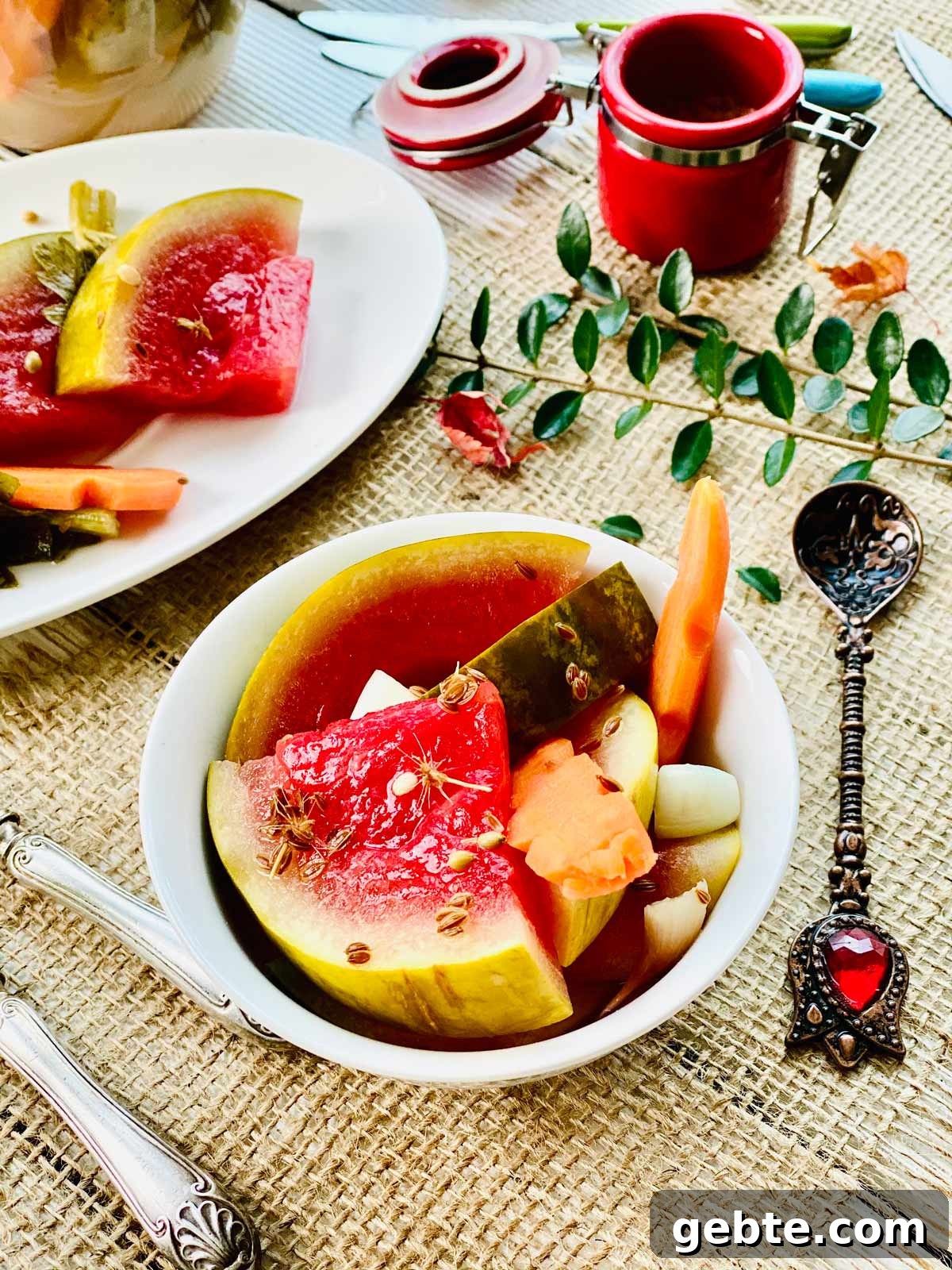
The texture of fermented pickled watermelon is unique and very enjoyable. The tangy, slightly fizzy flavor comes from natural fermentation, and once you try it you may find it becomes a regular on your table.
🧐 Does pickling always mean adding vinegar?
No. Pickling does not always involve vinegar. Historically many cultures preserved foods through lacto-fermentation using brine (salt dissolved in water). Salted brine suppresses harmful bacteria while encouraging beneficial lactic-acid bacteria to convert sugars into lactic acid, producing the characteristic tang of fermented pickles.
🧂Fermented food
Fermented pickles are a long-standing tradition across Eastern Europe and other regions. Fermented foods support digestion by contributing beneficial bacteria to the gut microbiome, which can be especially welcome alongside rich, hearty meals.
Preserving vegetables and fruits by salting and fermenting was essential before modern refrigeration. This practice extended the shelf life of seasonal produce so households could enjoy preserved flavors through cold winters.
Traditional salt-fermented pickles tend to be milder in acidity than vinegar-pickled versions and are valued for their probiotic qualities.
📖 Pickled watermelon origins
Pickled watermelon has a distinctive flavor and an interesting history. It was practiced by German communities in Russia, who sometimes fermented whole watermelons in wooden barrels. When glass jars became available, smaller batches and the red flesh were commonly preserved. In many other cultures, especially across Asia, pickling the rind is more common.
Salt-fermented pickles such as these spread with immigrant communities and regional foodways. Whether pickled watermelon will become more widespread is up to adventurous eaters—it’s certainly worth trying.
I prefer salt-fermented pickles for three reasons: they offer potential health benefits, they tend to be more flavorful than vinegar-only pickles, and they are simple to prepare.
🍉What are the health benefits of salt pickling?
Salt-fermented pickles are a natural source of probiotics, which can help support a healthy gut microbiome. They are an inexpensive way to add fermented foods to your diet. People with cardiovascular concerns should enjoy salt-fermented pickles in moderation due to their sodium content. This recipe uses about 1 tablespoon of salt per liter of water, a moderate concentration compared with some traditional recipes.
🥘 Ingredients
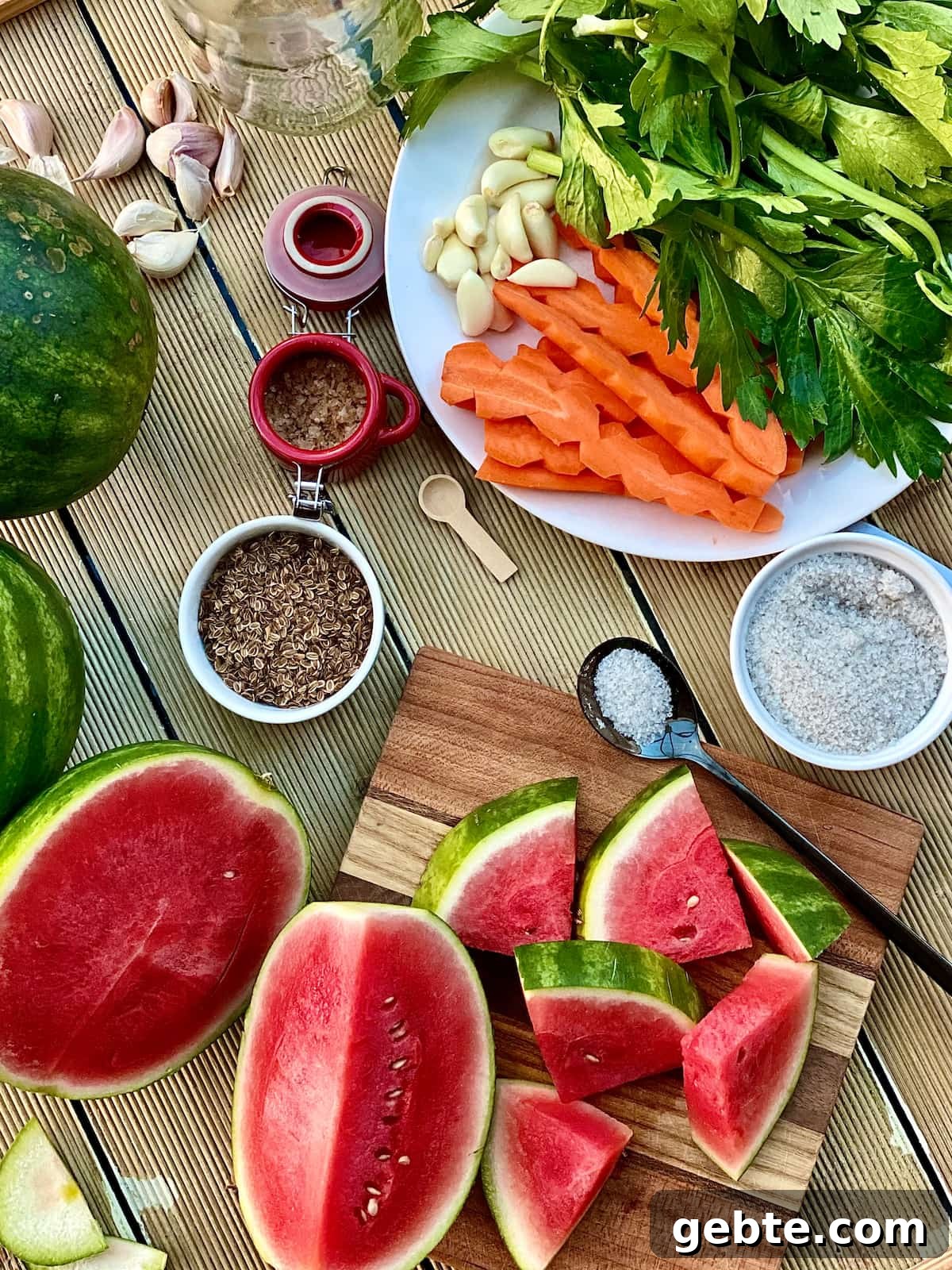
These are the core ingredients for a batch of salt-fermented pickled watermelon:
- watermelon – small to medium melons work well; avoid overly ripe fruits
- carrots – optional, but they add color and texture
- dill seeds – or dried dill branches; fresh dill tends to get soft
- celery – adds flavor and helps maintain firmness
- garlic – whole cloves are fine; you can leave the skin on
- horseradish root – helps keep pickles crisp
- salt – use non-iodized salt such as kosher, sea, or pickling salt
- water – measure to calculate the correct salt amount
📌Tips
Always measure the water amount after arranging your ingredients in jars so you can dissolve the correct quantity of salt. Too much salt will make the pickles overly salty; too little can affect texture and fermentation.
💭 Recipe FAQs
Fermentation time varies with temperature and taste. At room temperature in summer, expect about 3 days; colder conditions can extend fermentation to 5 days or more. Taste daily and stop when the sourness matches your preference.
During active fermentation, keep jars at room temperature. Placing a jar in a bright spot can speed fermentation, while a shaded spot will slow it. Once the desired tang is reached, tighten lids and store jars in the refrigerator for up to a few months, though most batches are consumed long before that.
Yes. Use non-iodized salt (kosher, sea, or pickling salt) and follow the recommended ratio. Incorrect salt type or quantity can lead to poor texture or slimy brine. Adjust salt upward if you intend to ferment for an extended time.
🤹What else can be salt-pickled?
Many fruits and vegetables can be salt-fermented. I pickle a wide variety, including apples, quince, garlic, and numerous vegetables. In some traditions whole watermelons were fermented in barrels with other produce like green tomatoes, carrots, and celeriac.
For home batches I chop the watermelon and add courgette (zucchini), carrots, celeriac, and other root vegetables for a mixed-ferment jar.
Other fruits and veggies suitable for salt pickling:
- green beans (briefly blanched to keep color);
- cauliflower;
- courgettes/zucchinis;
- garlic;
- onions (red or brown);
- swede;
- peppers;
- chilies;
- cabbage (green or red), chopped or whole;
- cucumbers (whole, sliced, or chunked);
- green mirabelle plums.
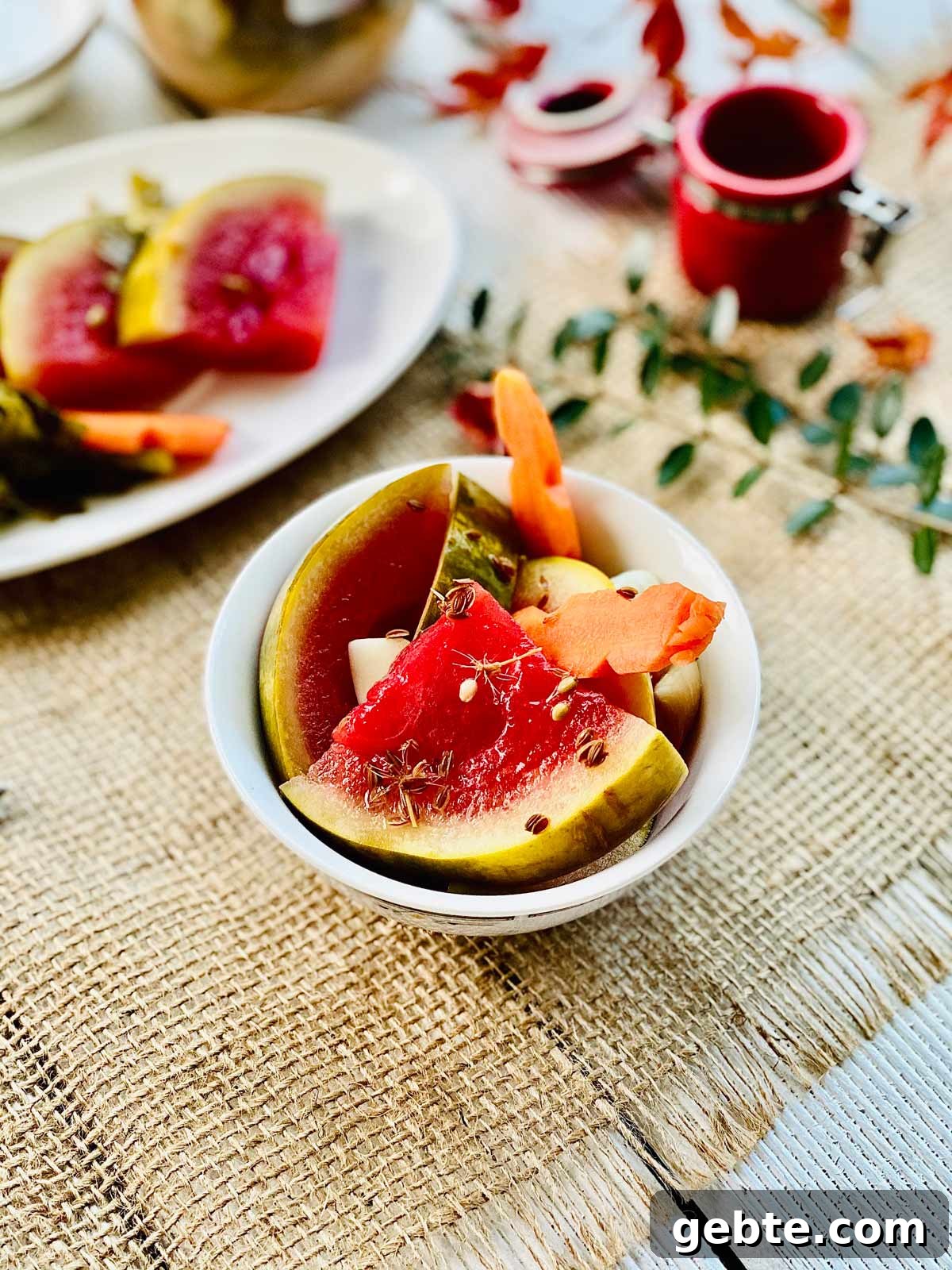
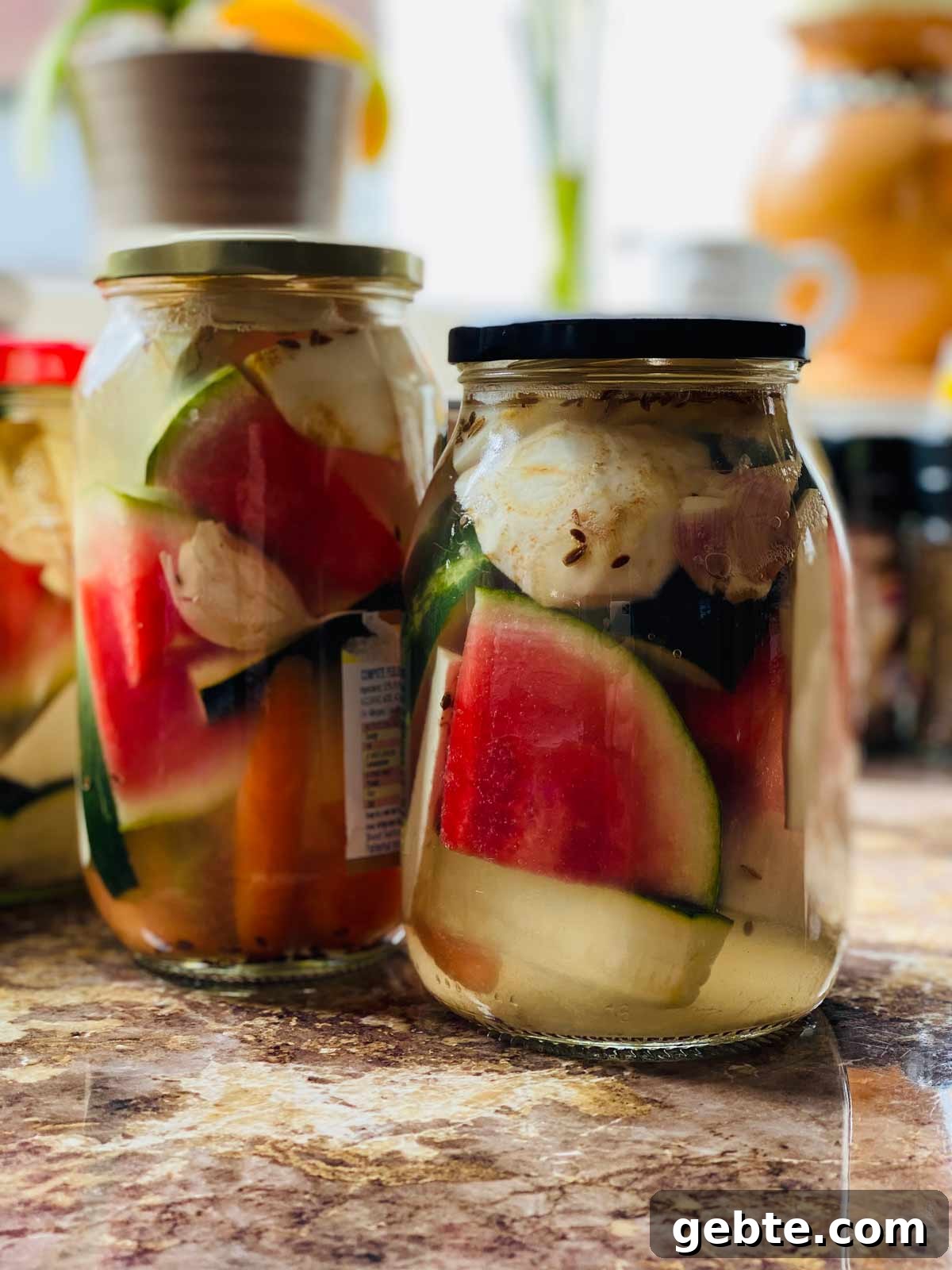
Here is an example of mixed jars combining watermelon with celeriac, zucchini, and carrot.
🍽️ Pickled watermelon pairs well with
- beans and hummus or other legume-based dips;
- smoked or roasted pork, sausages, and stews;
- egg, potato and mushroom brunches;
- Spanish omelette or similar egg dishes;
- hearty breakfasts or layered breakfast plates;
- potato salads and savory pastries.
👩🏻🍳More ways to enjoy watermelon
- watermelon and feta salad for a fresh savory-sweet option;
- use the rind in cooked or pickled preparations for zero-waste cooking.
Grab a few jars and start a simple ferment—pickling watermelon is easy and rewarding.
Have you tried this salt-pickled watermelon recipe? Leave a rating or a comment to share your experience.
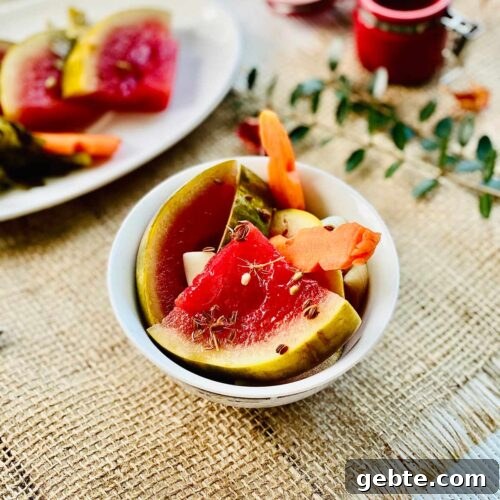
Pickled Watermelon Recipe
Equipment
- jars
- chopping board
- knife
- pot
- measuring jug
Ingredients
- 1 medium watermelon
- 3 stalks celery with leaves (optional)
- 4 cloves garlic
- 1 tablespoon dill seeds (dried or dill plant)
- 1 litre water
- 1 tablespoon salt (non-iodized or kosher)
- 2 medium zucchinis/courgettes, cut into chunks
- 4 medium carrots, organic
- 1 inch horseradish root, cut into pieces
Instructions
- Gather and prepare ingredients: wash, chop, peel as needed. Rinse jars with hot water; full sterilization is not required for short home ferments.
- Place celery stalks and garlic at the bottom of each jar if using. Pack melon slices into the jars, adding zucchini and carrot pieces between melon pieces. Add dill seeds and horseradish root pieces among the fruit and vegetables.
- Fill jars with water to cover the contents, then pour the water into a measuring jug to determine the exact volume for salting.
- Dissolve 1 tablespoon (about 25 g) of salt per litre of water. Warm the brine slightly to help dissolve the salt and to speed fermentation if desired.
- Pour the salted brine back into the jars, seal lids, and gently shake each jar. For the first days of fermentation, open lids twice daily or keep lids loosely placed between brief tightenings to release gases. Shake jars a few times a day.
- Taste daily. When the pickles reach the desired sourness, tighten lids and transfer jars to the refrigerator to slow fermentation. Serve chilled as a side or garnish.
Video
Notes
- The number of jars required depends on jar size and the melon size.
- Use one or two small garlic cloves per 500 ml jar.
- If one jar has less melon, fill the gap with extra carrot or zucchini to ensure the jar is compact and covered by brine.
- Salt guidance:
- 2 liters water – 50 g salt
- 1.5 liters water – 37 g salt
- 1 liter water – 25 g salt
- 0.5 liter water – 12.5 g salt
- 0.25 liter water – 7 g salt
Nutrition
|
Carbohydrates: 32 g
|
Protein: 3 g
|
Fat: 1 g
|
Sodium: 610 mg
|
Potassium: 607 mg
Tried this Recipe? Tag me Today!
Share your results on social media and mention the recipe author if you like.