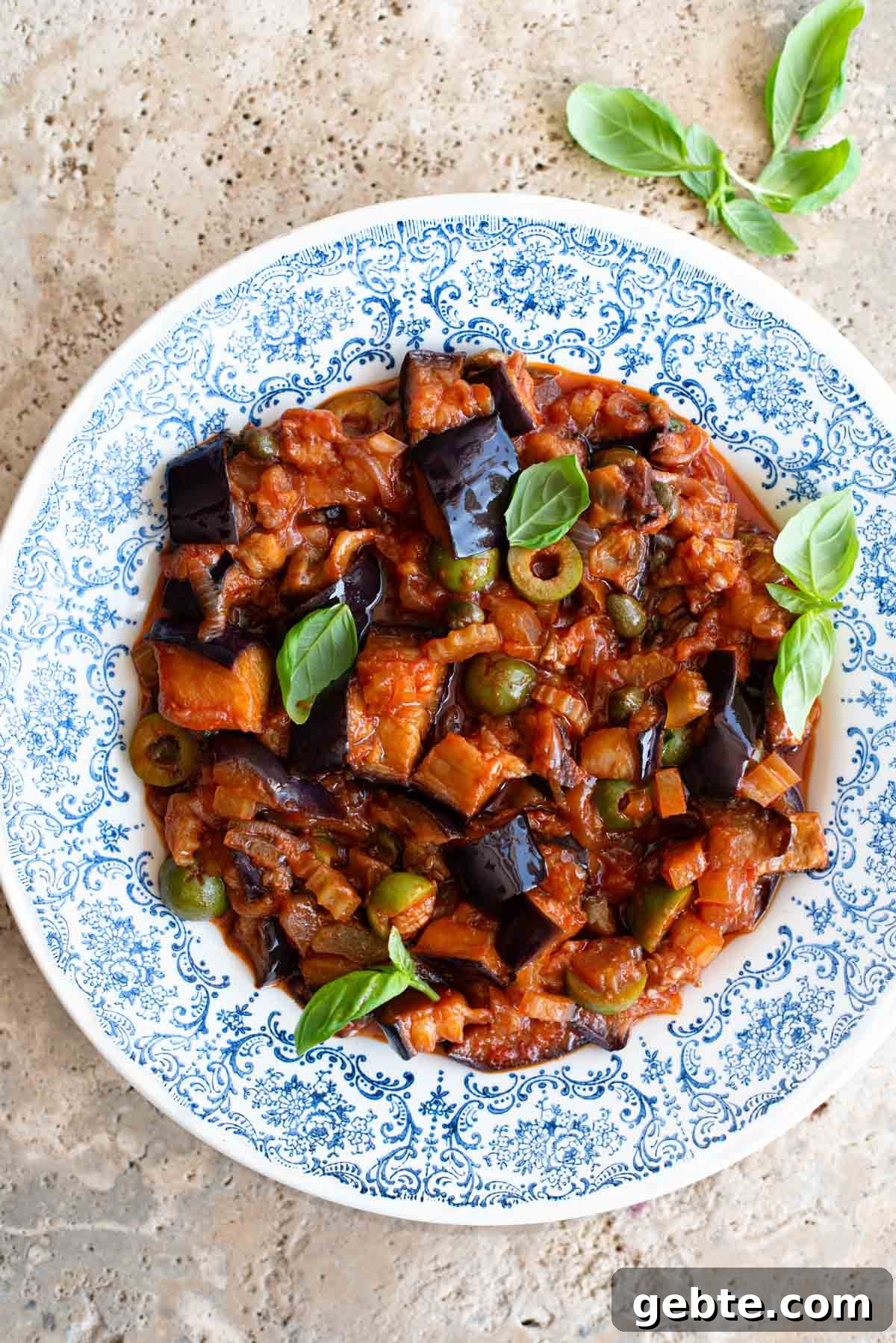
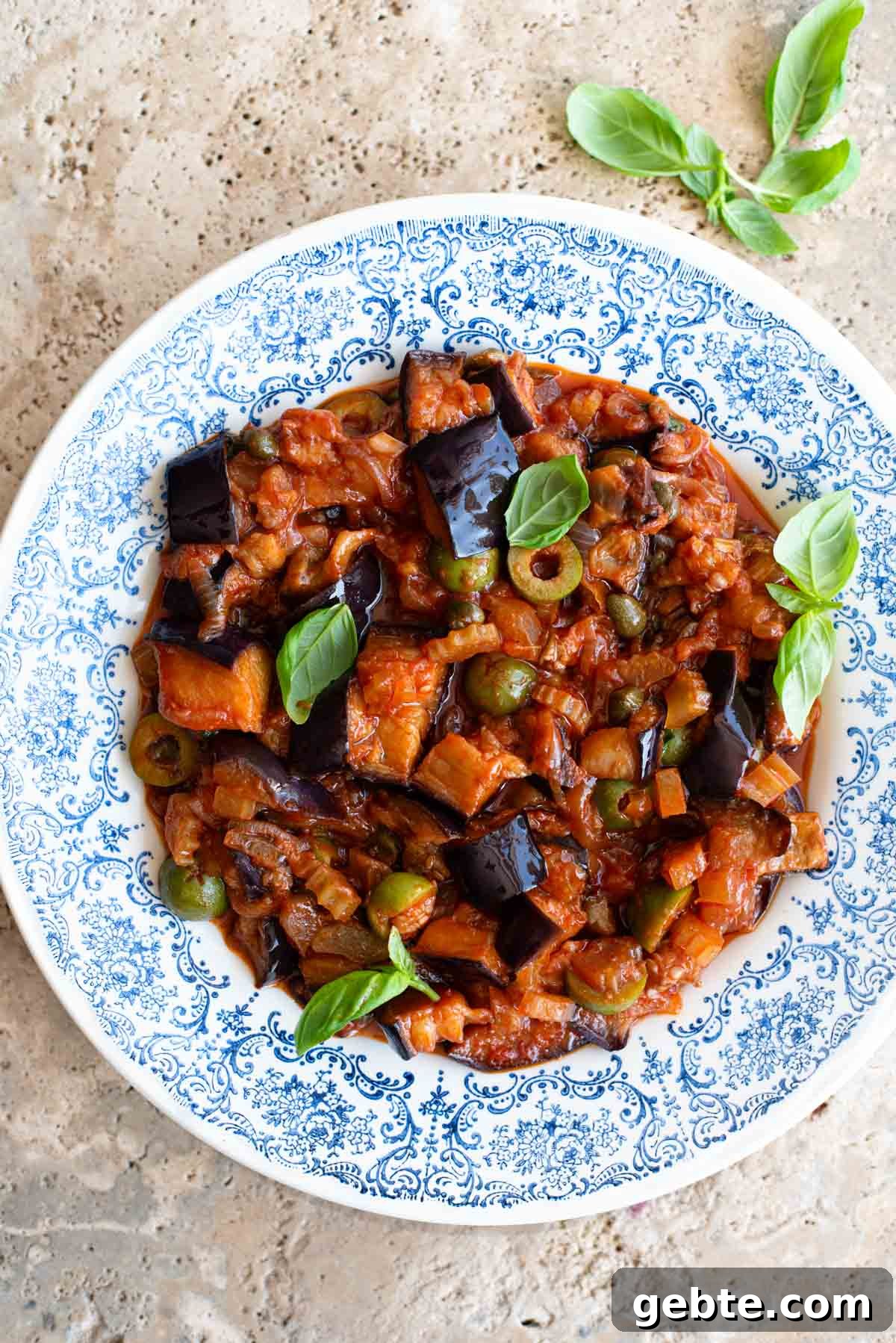
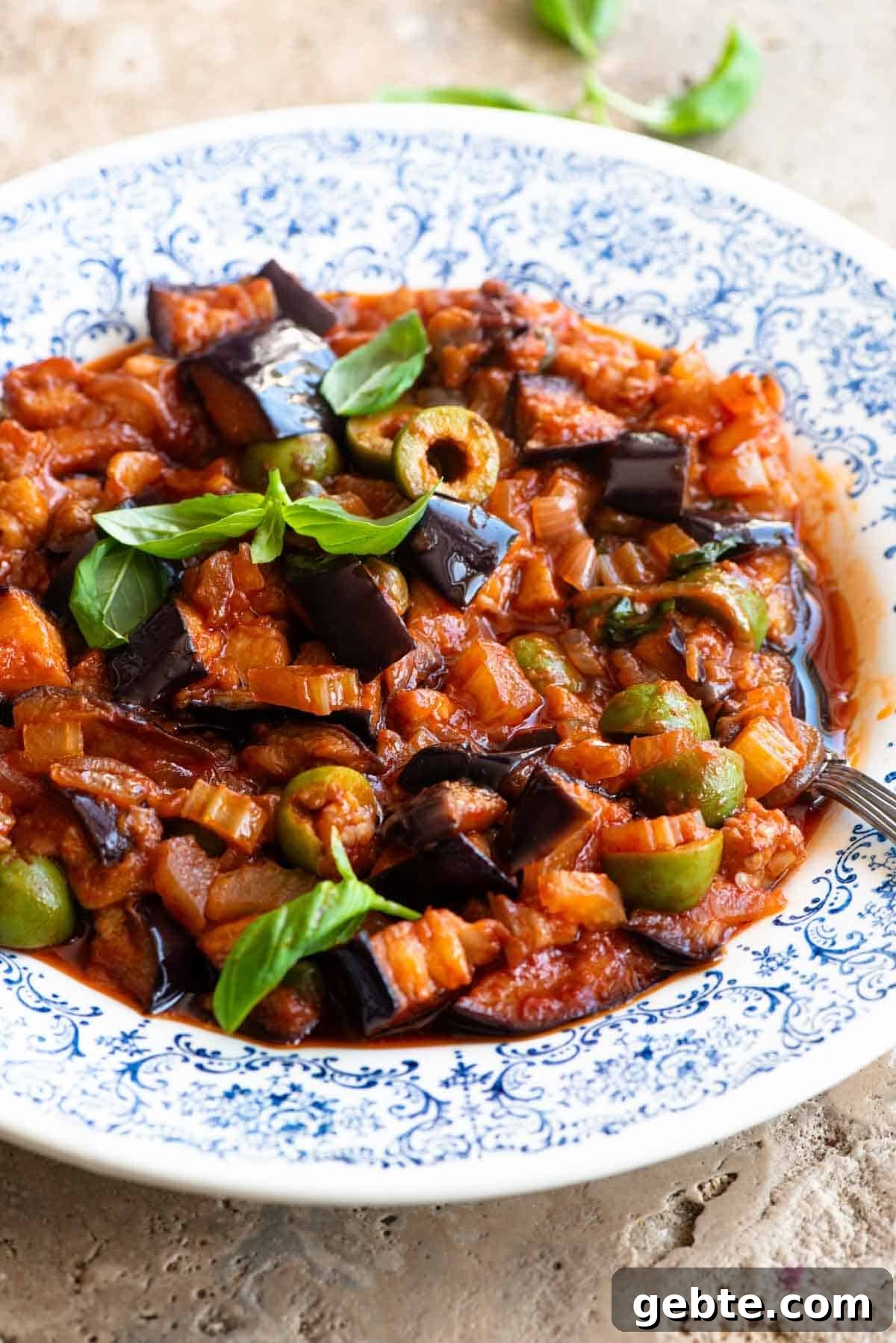
La Caponata is a classic Sicilian dish of fried eggplant simmered in an agrodolce (sweet-and-sour) sauce with briny olives, capers, celery, onions and tomatoes. It’s packed with layered flavour and works beautifully as an appetizer on crostini, an antipasto, or a side to meat or fish.
Quick recipe snapshot
- Traditional Sicilian recipe using summer produce.
- Great to prepare ahead — it tastes even better the next day.
- Easy to adapt and very versatile.
- Full of rich, layered flavour.
Eggplant caponata belongs to the Sicilian cucina povera tradition and has many regional variations. This version is inspired by preparations around Palermo and is easy to adapt so you can create your family favourite.
Sicily is full of amazing food, from cannoli and arancini to granita and involtini. If you’ve visited the island, you’ll know its produce and simple techniques make for unforgettable dishes — caponata is one of them.
Table of Contents
- Quick recipe snapshot
- Ingredient notes
- Visual walk-through of the recipe
- Recipe tips
- How to serve caponata
- Variations
- More delicious ways to use eggplant
- Full Recipe
Ingredient notes
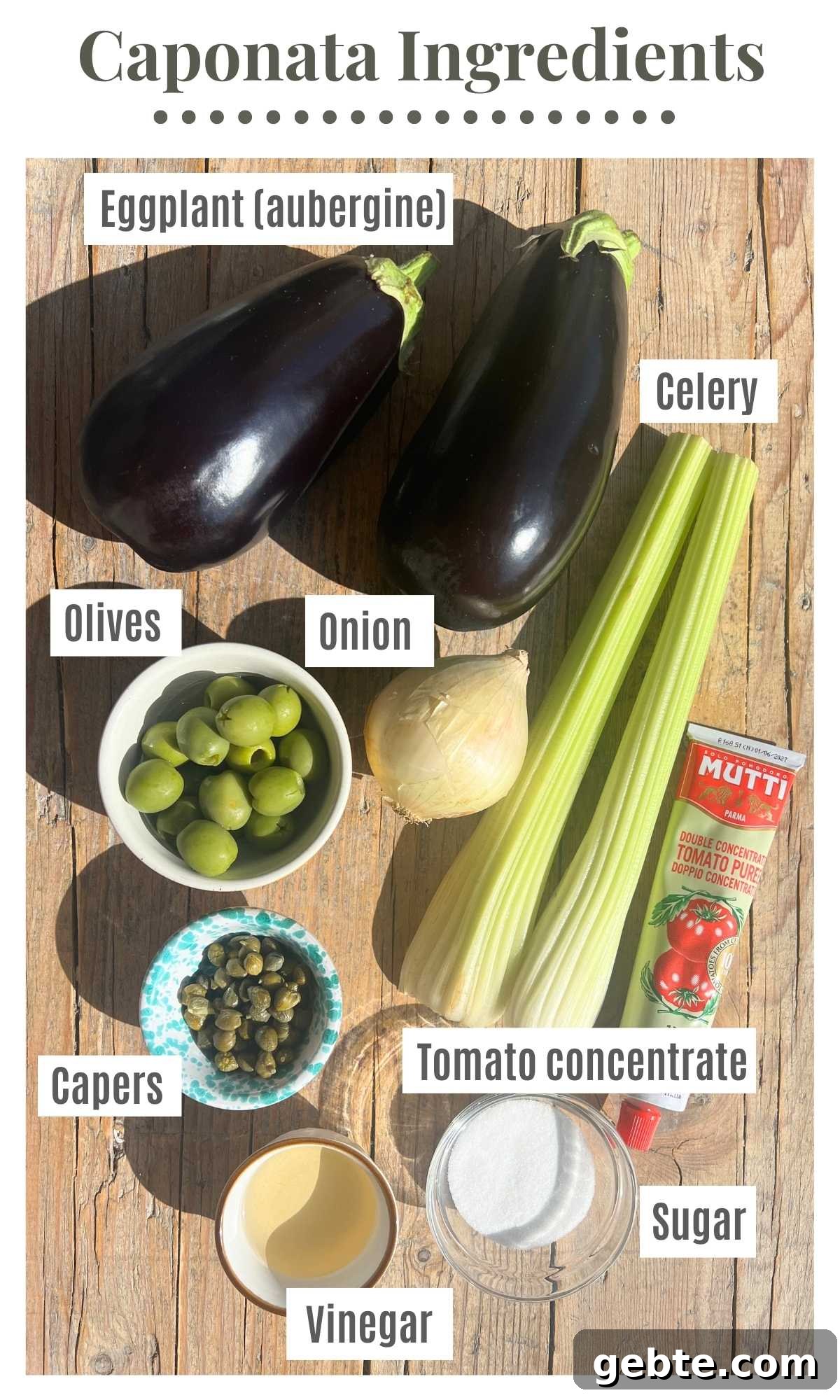
- Eggplant (aubergine) – choose firm, ripe eggplants with minimal bruising. Use 2 medium-large or 3–4 small eggplants.
- Tomato paste – concentrated tomato paste works well; you can substitute passata or plum tomatoes and adjust the quantity to taste.
- White onion – offers a sweet, clean flavour; brown onion is an acceptable substitute.
- Olives and capers – capers in brine and green Sicilian olives (such as Nocellara) are traditional, but use what you prefer.
- Sugar and white wine vinegar – regular white sugar is fine for the agrodolce balance.
Visual walk-through of the recipe
Step 1 – Cut the eggplant into medium cubes and place them in a colander. Generously salt and leave for 30 minutes to 1 hour. Rinse under cold water briefly, then dry thoroughly with a clean kitchen towel.
Step 2 – Fry the eggplant in batches in hot oil until lightly golden, then drain on kitchen paper to remove excess oil.
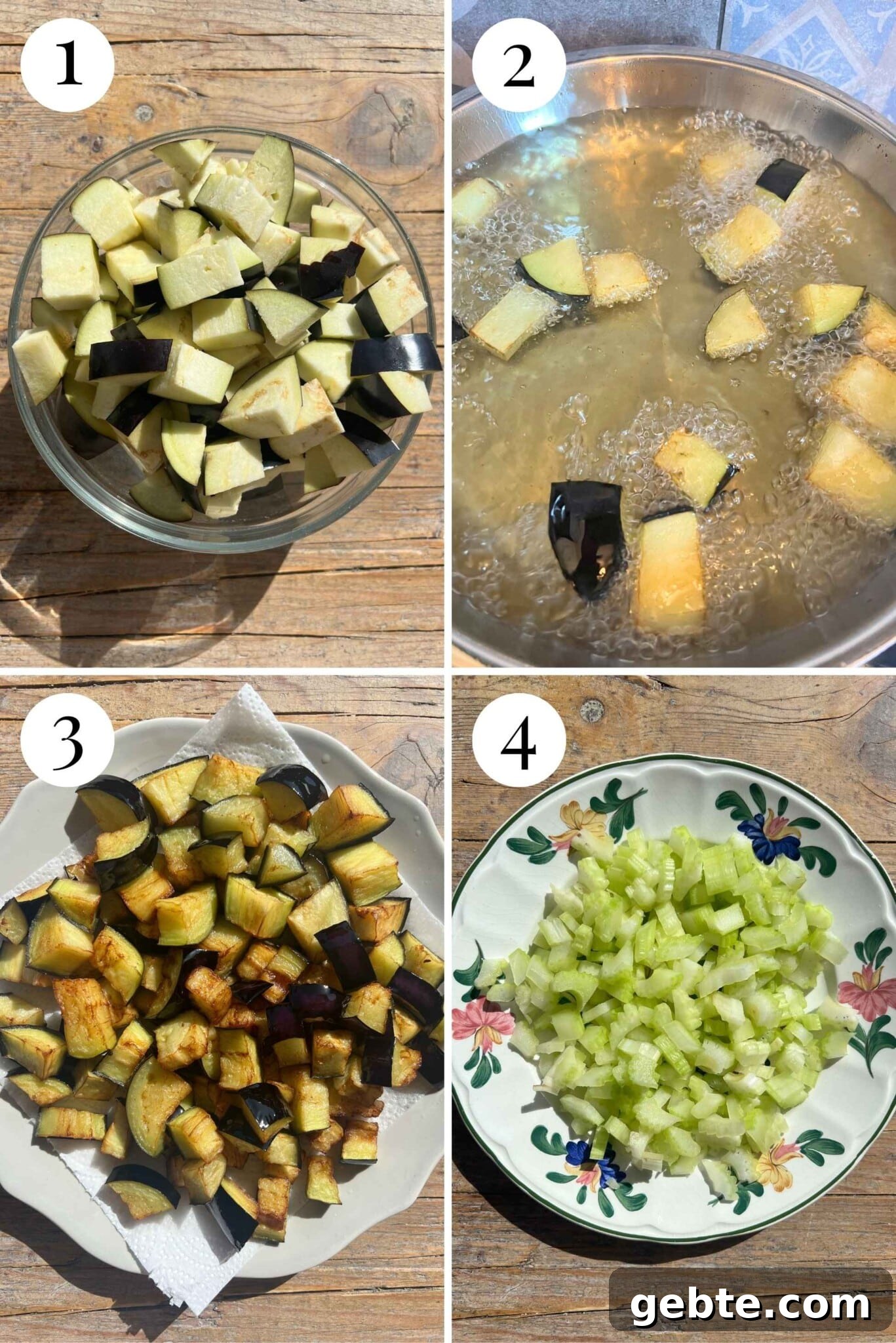
Step 3 – Cut the celery into small pieces and boil in salted water for about 7–10 minutes until tender. Remove it with a slotted spoon and reserve some of the cooking water.
Step 4 – Sauté the sliced onion in a little olive oil until softened, then add the celery, olives and capers and stir to combine.
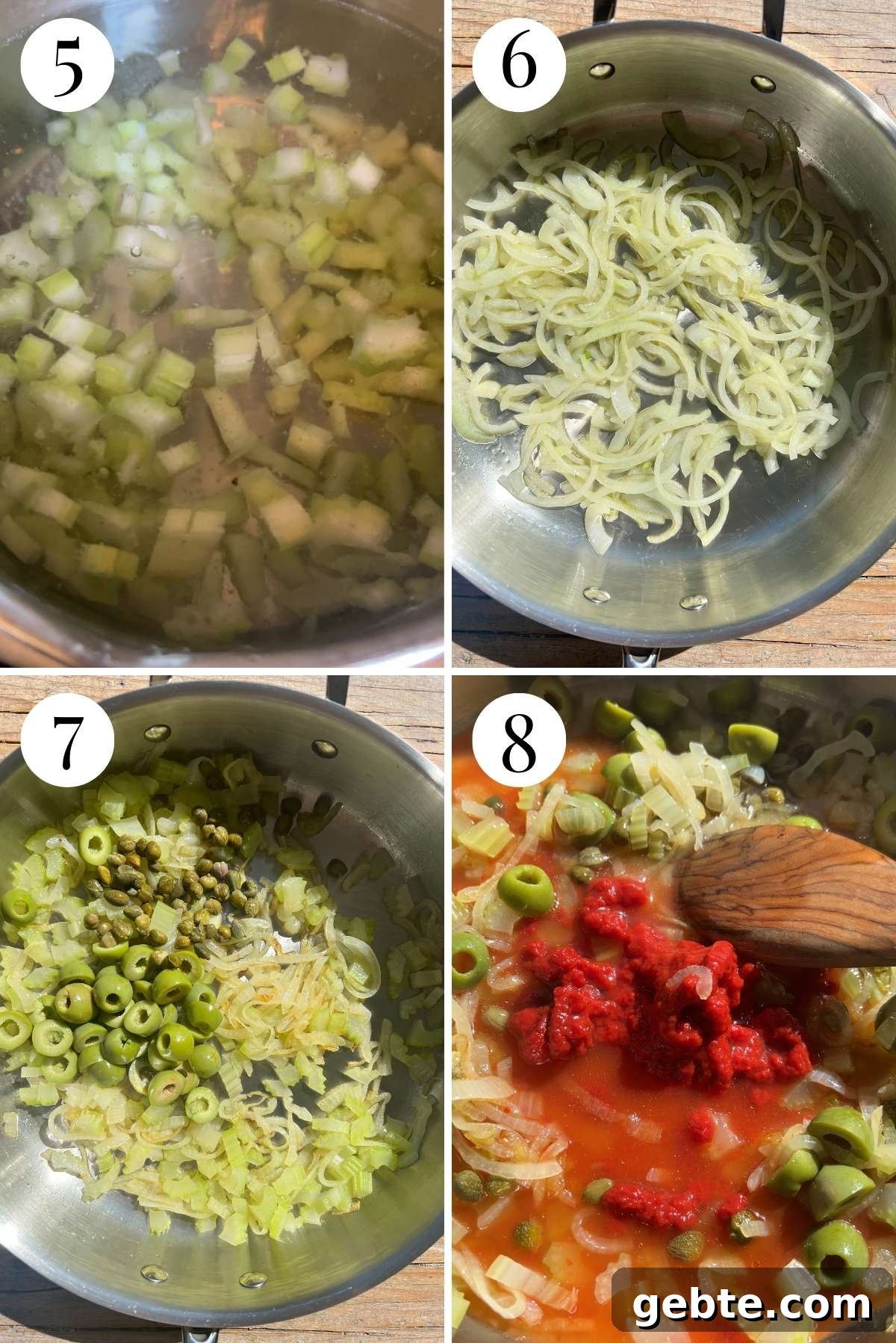
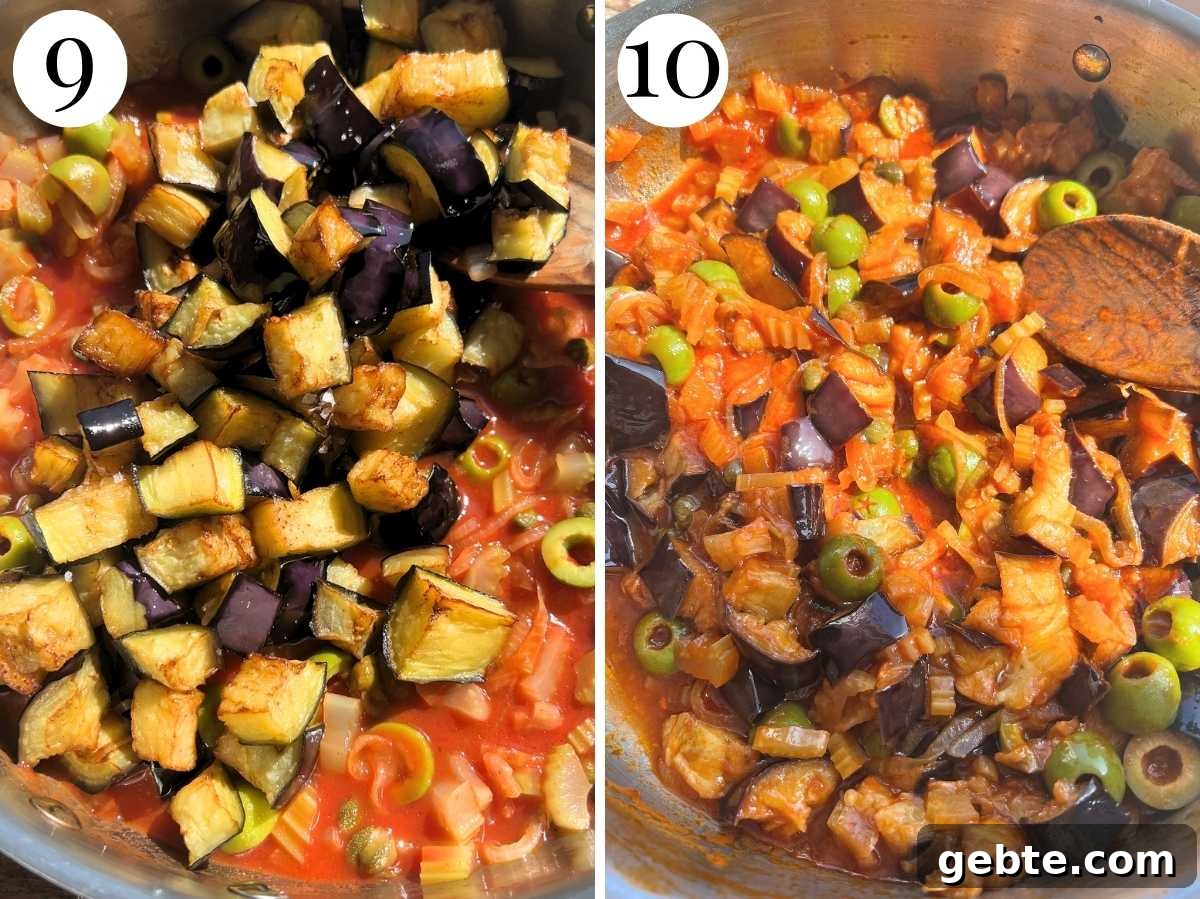
Step 5 – Add the tomato paste with a little reserved celery water and stir. Mix the sugar and vinegar, add this agrodolce mixture to the pan, then return the fried eggplant and a handful of fresh basil (if using). Cover and simmer for about 20 minutes until the flavours meld.
Recipe tips
Salt the eggplant: Salting helps draw out moisture so the eggplant fries faster and absorbs less oil.
Boil the celery: Briefly boiling celery softens it and mellows its flavour so it doesn’t overpower the dish.
How to serve caponata
Serve caponata at room temperature as an antipasto with grilled crostini, cured meats and cheeses, or as a condiment alongside meat or fish. It pairs particularly well with roasted or grilled protein where the sweet-and-sour contrast brightens richer flavours.
Variations
Pine nuts and raisins: A common Sicilian addition for texture and a touch of sweetness; add with the eggplant.
Bell peppers: Fried red peppers are often included and complement the eggplant well.
Cocoa powder: An unusual but traditional addition near Palermo — unsweetened cocoa powder (1–2 tablespoons) is added to the agrodolce for depth.
Other vegetables: Use caponata to use up seasonal vegetables — add small diced potatoes, zucchini, or fresh tomatoes as desired.
More delicious ways to use eggplant
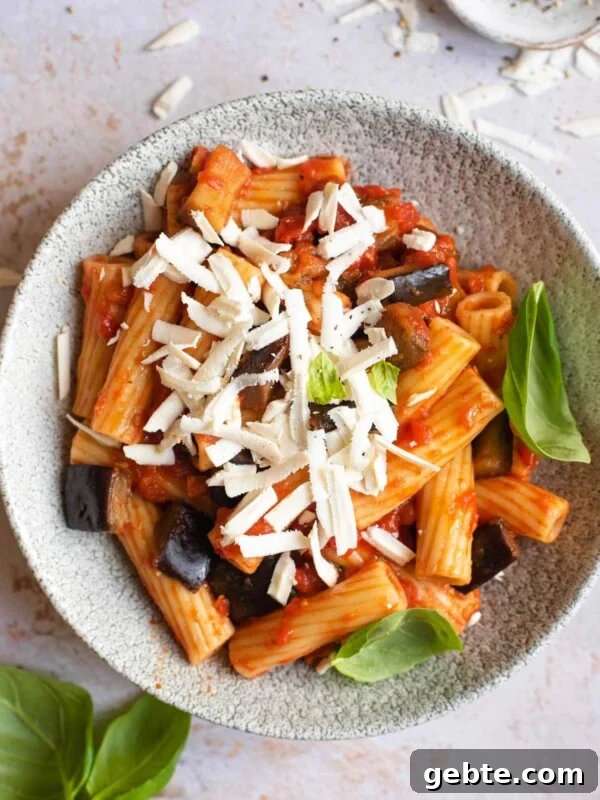
Pasta
Pasta Alla Norma (Eggplant Pasta)
Antipasti
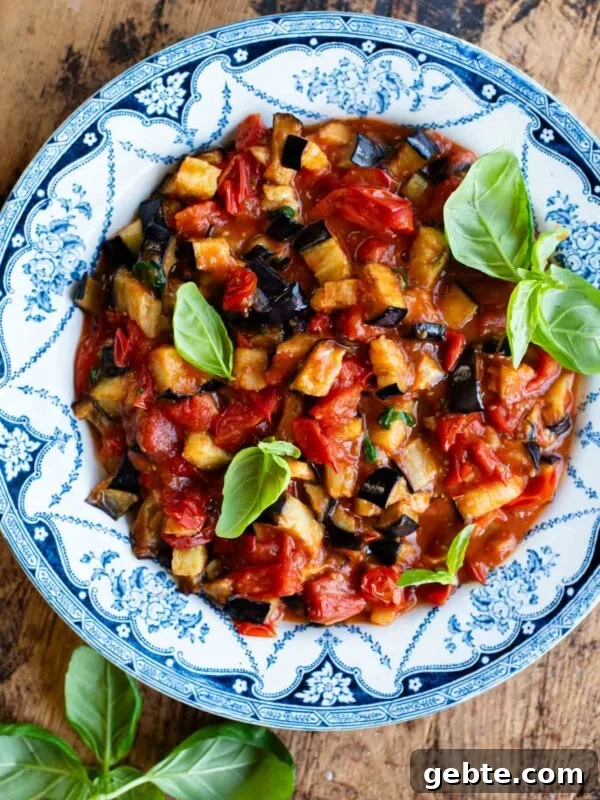
Melanzane a Funghetto (Fried Eggplant in Tomato Sauce)
Mains
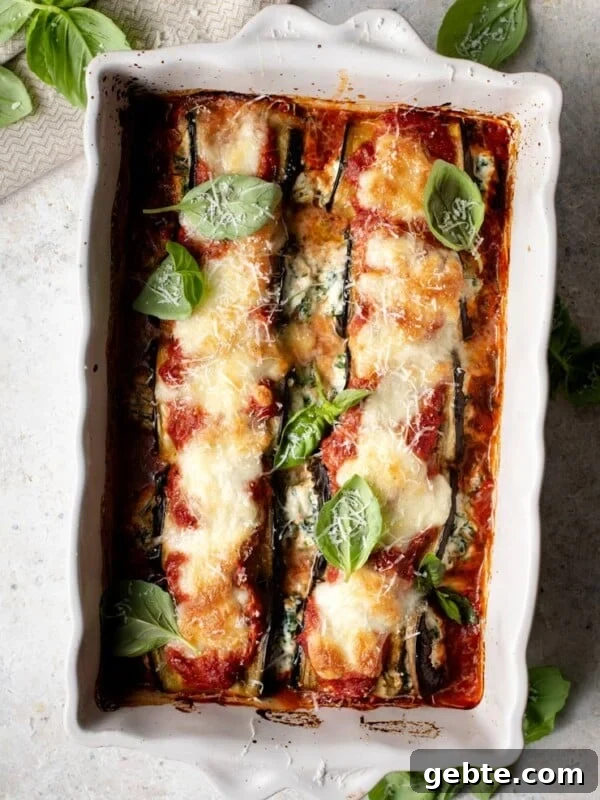
Eggplant Rollatini with Spinach and Ricotta
Mains
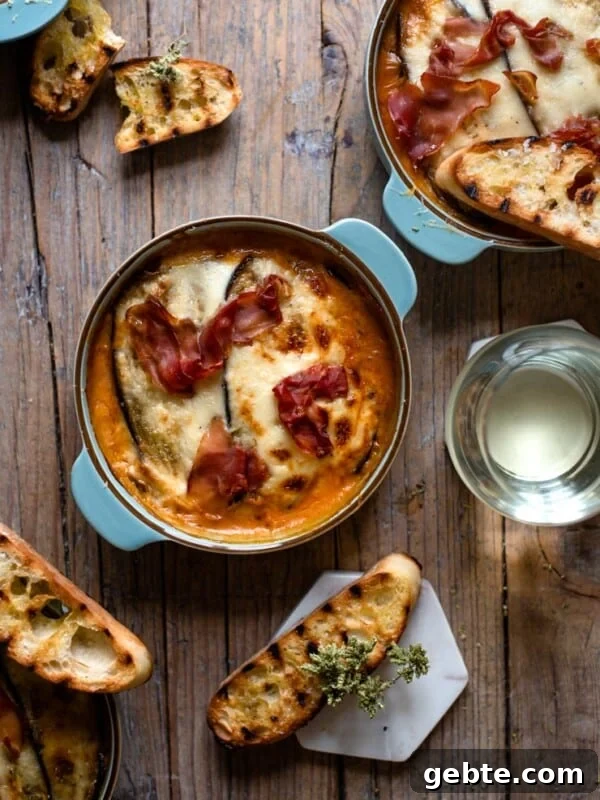
Eggplant Lasagna with Prosciutto and Mozzarella
If you try this eggplant caponata, please rate the recipe and leave a comment to share how it turned out — feedback is always appreciated.
Eggplant Caponata
By Emily
Equipment
- Colander
- Clean kitchen towel
Ingredients
- 2 large eggplants, cut into medium-sized cubes
- 2 celery stalks, washed and cut into small pieces
- 1 white onion, thinly sliced
- 2 tablespoons (30g) capers, in brine
- 1 cup (95g) green Sicilian olives (e.g. Nocellara)
- 3 tablespoons tomato paste (concentrate)
- 2 tablespoons (30ml) white wine vinegar
- 2 tablespoons (30g) white sugar
- Fresh basil (optional)
- Sunflower oil or other oil for frying
- Olive oil
- Salt
Instructions
- Cut the eggplant into medium-sized cubes and place in a colander. Generously salt and leave for 30 minutes to 1 hour; if possible, weigh it down with a plate.
- While the eggplant rests, wash and chop the celery. Bring salted water to a boil, add the celery and cook about 7–10 minutes until tender. Remove with a slotted spoon and reserve the cooking water.
- Rinse the eggplant briefly under cold running water, then dry well. Heat oil in a pan at least 1 inch deep and fry the eggplant in batches until lightly golden. Drain on kitchen paper and sprinkle with a little salt.
- Heat 1–2 tablespoons olive oil in a large pan and sauté the sliced onion for about 5 minutes until softened. Add the celery, olives and capers, stirring to combine.
- Add the tomato paste with about 1 cup (250ml) of the reserved celery water and stir. Mix the sugar and vinegar and add this agrodolce to the pan. Return the fried eggplant and add a small handful of fresh basil if using. Cover and simmer for 20 minutes so the flavours meld.
- Turn off the heat, uncover and taste for seasoning, adding more salt if needed. Allow to cool to room temperature before serving; caponata often tastes better the next day.
Notes
- Once cooled completely, store caponata in the fridge for up to 3–4 days.
- Make it the day before serving when possible — the flavours deepen overnight.
- Best served cold or at room temperature.
- Serving suggestions: crostini, antipasto platters, or as a side to meat or fish.
Helpful Info for All Recipes
- I typically use extra virgin olive oil unless specified otherwise.
- For canned tomatoes I often use well-regarded brands for the best flavour.
- Vegetables are assumed medium-sized unless noted.
- All recipes were developed using a fan (convection) oven where applicable.
- Nutrition is calculated automatically and should be treated as an approximation.
Nutrition
Calories: 236 kcal | Carbohydrates: 15 g | Protein: 2 g | Fat: 20 g | Fiber: 5 g
Nutrition information is an estimate.