
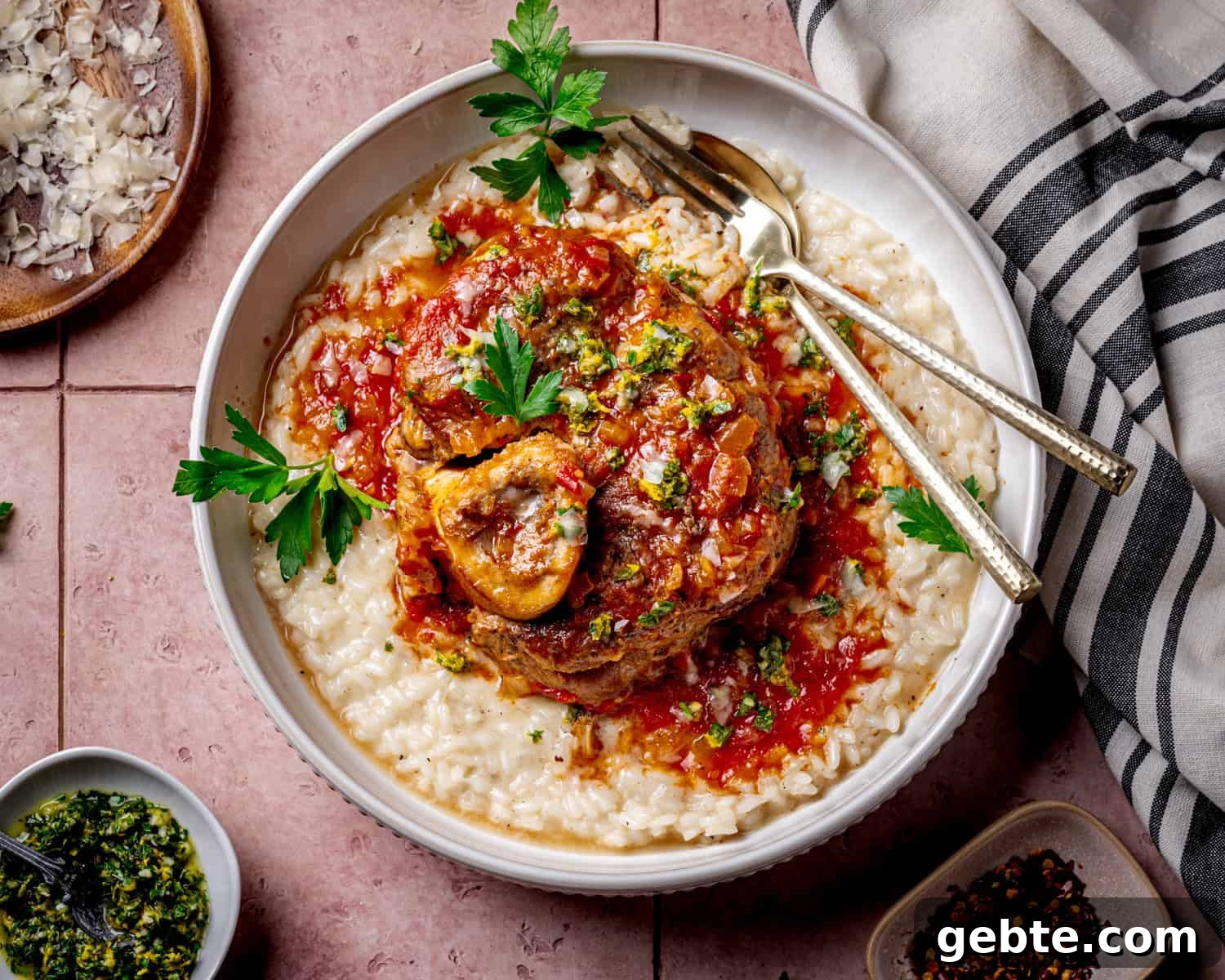
Ossobuco is one of our favorite Italian dishes. This classic from northern Italy features braised veal shanks cooked slowly in a wine-based sauce. Traditional ossobuco uses white wine and a soffritto of carrot, celery and onion to build the braising base. Our Braised Veal Shanks recipe is rich and deeply flavored, brightened with a fresh gremolata. In this version we use dry rosé and an orange-enhanced gremolata for a lighter, vibrant take that’s enjoyable year-round.

Prefer other veal dishes? Try Bone‑In Veal Milanese or Saltimbocca alla Romana for more Italian inspiration.
Why You’ll Love this Recipe
- A bright, vibrant twist on a classic ossobuco.
- Light enough to enjoy year‑round.
- Subtle orange notes to lift the dish.
- Braised in rosé for lively, fresh flavors.
- Pairs well with many sides and accompaniments.
Origins of Ossobuco
Ossobuco (osso buco) is a traditional dish from Milan. The classic preparation slow braises veal shanks in a soffritto of carrot, celery and onion, with wine and stock, often finished with gremolata — a mix of garlic, parsley and citrus zest. It’s commonly served alongside creamy polenta or saffron risotto.
Braising renders the meat incredibly tender and flavorful. Regional variations exist: Naples’ version sometimes omits tomatoes, Verona favors red wine, and many modern adaptations add their own touches while staying true to the dish’s spirit.
Our Recipe for Ossobuco
This recipe respects the classic while offering a lighter profile: rosé wine, vegetable stock and orange zest in the gremolata provide freshness without losing the comforting richness of a traditional braise. It’s ideal for spring and summer but delicious any time of year.
Ingredients
Key ingredients for Braised Veal Shanks:
- Veal shanks: tender and ideal for long braising.
- Kosher salt & black pepper.
- All-purpose flour: optional for a touch of body.
- Extra-virgin olive oil: for searing and starting the braise.
- Yellow onion, celery, carrot: the soffritto base, finely chopped.
- Rosemary, bay leaves: aromatic herbs to support the braise.
- Cinnamon stick: a small addition to deepen aroma and flavor.
- Dry rosé wine: brings brightness and subtle fruit notes.
- Tomato paste & crushed tomatoes: add depth without overpowering.
- Vegetable stock: keeps the dish lighter than beef or veal stock.
- Parsley, orange zest, garlic, lemon juice: combine for a fresh gremolata.
See the recipe card below for exact quantities.
Substitutions
Common alternatives:
- Veal shanks: beef or pork shanks work, though veal is preferred for tenderness.
- Flour: omit or use a gluten‑free substitute if needed.
- Stock: chicken stock is a fine substitute; beef or veal stock will make the sauce heavier.
- Wine: dry white wine can replace rosé; red wine yields a deeper, richer braise.
How to Make Braised Veal Shanks with Fresh Gremolata
The dish is mostly hands‑off: after initial searing and building the braising liquid, it cooks slowly in the oven until tender.
Equipment
Essential tools:
- Large Dutch oven or oven‑proof braising dish.
- Heavy skillet for searing.
- Kitchen twine to tie the shanks so they hold together while cooking.
Step-by-Step Instructions
Prepare and sear the veal shanks
- Pat shanks dry, tie them with twine, and season with salt and pepper. Heat 2 tablespoons olive oil in a Dutch oven or skillet over high heat and sear the shanks in batches until golden on all sides, about 3–4 minutes. Set aside.
Make the braising liquid
- Preheat the oven to 350°F. In the same pot, add remaining olive oil and cook the finely chopped onion, celery and carrot over medium heat until the onion is translucent (about 5 minutes). Add rosemary, bay leaves, the cinnamon stick, ½ cup wine and the tomato paste; stir until combined, about 30 seconds.
- Return the shanks to the pot. Add the remaining rosé, crushed tomatoes and vegetable stock so the liquid rises about three‑quarters up the shanks. Bring to a boil, cover, and remove from heat.
Braise the veal shanks
- Place the covered pot in the preheated oven and cook for 2½ hours. Check at 1 and 2 hours to ensure the liquid hasn’t reduced too far; add a little stock or water if needed.
Prepare the gremolata
- Mix finely chopped parsley, orange zest, minced garlic and lemon juice in a small bowl. Set aside until serving.
Serve
- Remove shanks from the braising liquid, discard the twine, and plate. Spoon some braising liquid over each shank and finish with a generous sprinkle of gremolata. Enjoy the marrow from the bone spread on the meat or toasted bread if desired.
Variations
Ways to adapt the recipe:
- Make a richer sauce by removing bay leaves and cinnamon, pureeing the braising liquid, then reducing and finishing with butter.
- Use different proteins: chicken hind quarters or beef short ribs both work well and alter cook time.
- For a deeper winter dish, braise with red wine and beef stock for a heartier flavor.
Storage
How to store leftovers: Refrigerate in an airtight container up to 5 days.
How to reheat: Warm covered in an oven‑safe dish at 375°F for about 25 minutes or until heated through.
Freezing: Yes — freeze and defrost before reheating.
Top tip
Bone marrow is a highlight of ossobuco. Scoop it from the bone and spread on meat or crusty bread, or stir it into the sauce for extra richness.
Troubleshooting
Check the braise after about an hour to ensure the liquid level remains adequate. Add stock or water if the meat becomes exposed; otherwise the recipe rarely has issues as written.
What to Serve With Braised Veal Shanks (Ossobuco)
Classic pairings include saffron risotto or creamy polenta. The braising liquid also works well over pasta or mashed potatoes. To keep the meal balanced, serve lighter vegetable sides such as broccolini, peas, asparagus or green beans.
What Wines To Drink with Ossobuco
Although this version uses rosé for cooking, a medium‑to‑full bodied dry red is the best table pairing: Barolo is ideal, with Sangiovese or Chianti Classico close behind. If you prefer white wine, choose a bold Chardonnay.

Mangiamo Cookbook
Our cookbook Mangiamo features 60 Italian recipes with beautiful photography inspired by Italian roots and travel.
FAQ
Traditionally ossobuco is made with veal shanks. Variations use pork or beef, but veal is the classic choice.
Risotto alla Milanese is the most traditional accompaniment, though creamy polenta or mashed potatoes are common alternatives.
Beef or pork shanks make good substitutes and braise similarly.
Related
Looking for other classic Italian recipes? Try slow‑roasted leg of lamb, red wine braised short ribs, herb‑stuffed shrimp, or classic meatballs in tomato sauce.
Pairing
Favorite sides to serve with ossobuco include Milanese‑style saffron risotto, brown butter and sage polenta, sautéed asparagus, or parmesan peppercorn mashed potatoes.
📖 Recipe
Braised Veal Shanks with Gremolata (Ossobuco)
This ossobuco uses rosé in the braise and a fresh gremolata with orange zest for bright, balanced flavors.
Ingredients
- 4 veal shanks (about 1–1.5 inches thick)
- 2 tsp kosher salt
- 1 tsp black pepper
- 4 tbsp olive oil, divided
- 1 rosemary sprig
- 3 bay leaves
- 1 small cinnamon stick
- 1 medium yellow onion, finely chopped
- ½ cup carrot, finely chopped
- ½ cup celery, finely chopped
- 1 bottle dry rosé wine
- 1 tbsp tomato paste
- 14.5 oz (1 can) crushed tomatoes
- 1 cup vegetable stock
- ¼ cup Italian parsley, finely chopped
- Zest of 1 orange, finely chopped
- 2 cloves garlic, minced
- Juice of 1 lemon
Instructions
- Pat the veal shanks dry, tie with kitchen twine, and season with salt and pepper. Heat 2 tbsp olive oil in a large Dutch oven over high heat and sear the shanks until golden on all sides, about 3–4 minutes. Set aside.
- Preheat the oven to 350°F. In the same pot, heat the remaining olive oil over medium heat and cook the onion, celery and carrot until the onion is translucent, about 5 minutes. Add the rosemary, cinnamon stick, bay leaves, ½ cup rosé and the tomato paste; stir until incorporated, about 30 seconds.
- Return the shanks to the pot. Add the remaining rosé, crushed tomatoes and vegetable stock so the liquid comes ¾ up the sides of the shanks. Bring to a boil, cover, then remove from heat.
- Place the covered pot in the oven and cook for 2½ hours, checking at 1 and 2 hours to ensure there’s enough liquid. Add stock or water if the level drops too low.
- While the shanks braise, combine parsley, orange zest, garlic and lemon juice to make the gremolata. Set aside.
- When done, remove shanks, discard the twine, and plate. Spoon some braising liquid over the meat and finish with gremolata. Serve with risotto, polenta, pasta or mashed potatoes and a simple vegetable side.
Nutrition (per serving)
Calories: 793 kcal; Carbohydrates: 21 g; Protein: 79 g; Fat: 28 g; Saturated fat: 6 g; Fiber: 4 g; Sugar: 10 g; Cholesterol: 298 mg; Sodium varies with stock used.