
This website uses affiliate links that may earn commission from purchases. This is at no additional cost to you.
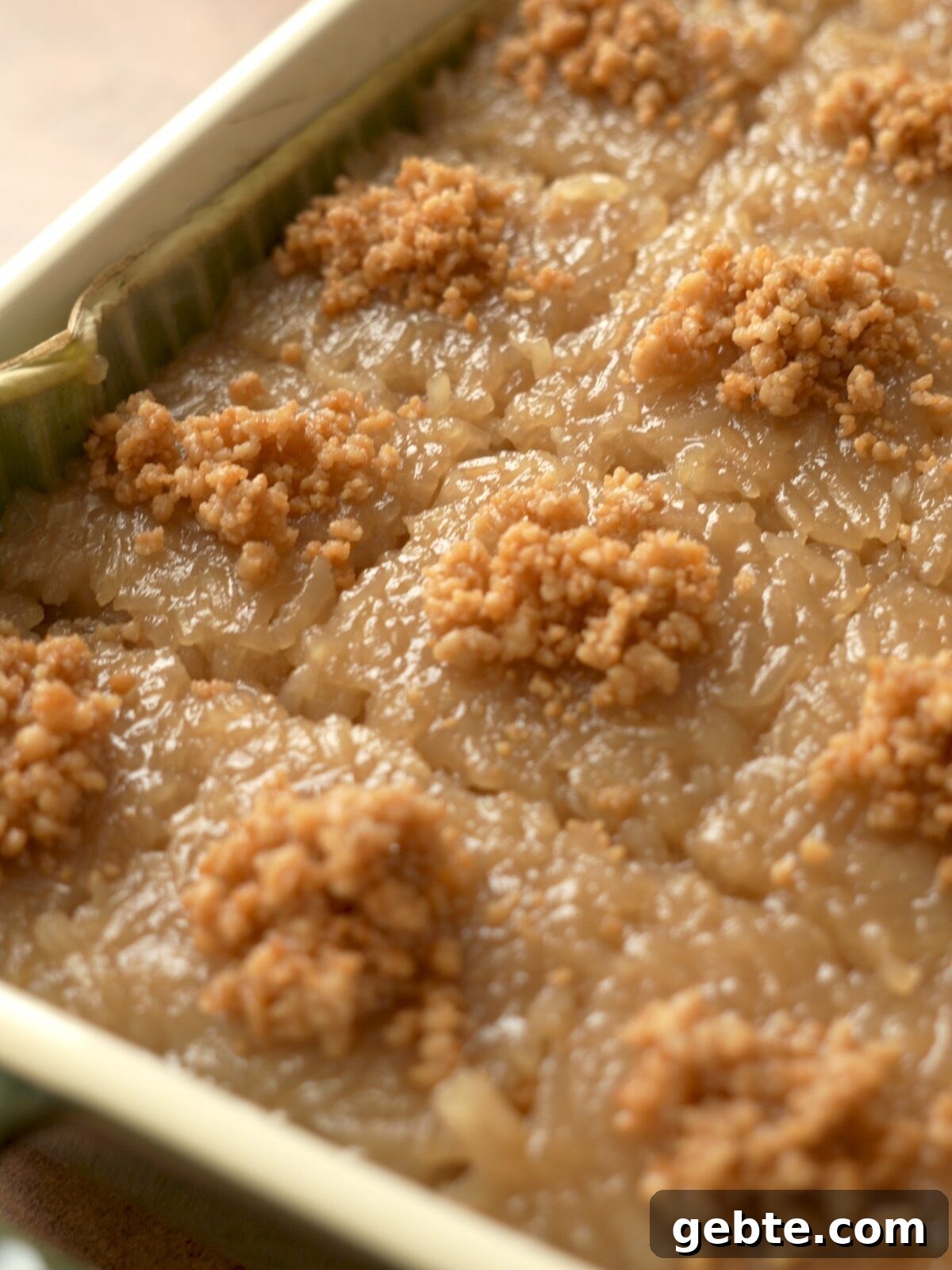
Of all the kakanin (Filipino rice desserts), biko is my absolute favorite. The caramelized sweetness paired with tender sticky rice makes it irresistible. I just finished a fresh batch and had to share.
If you haven’t tried biko, give it a go — it’s straightforward to make with familiar ingredients and naturally gluten-free, which makes it a great choice for potlucks and gatherings with varied dietary needs.
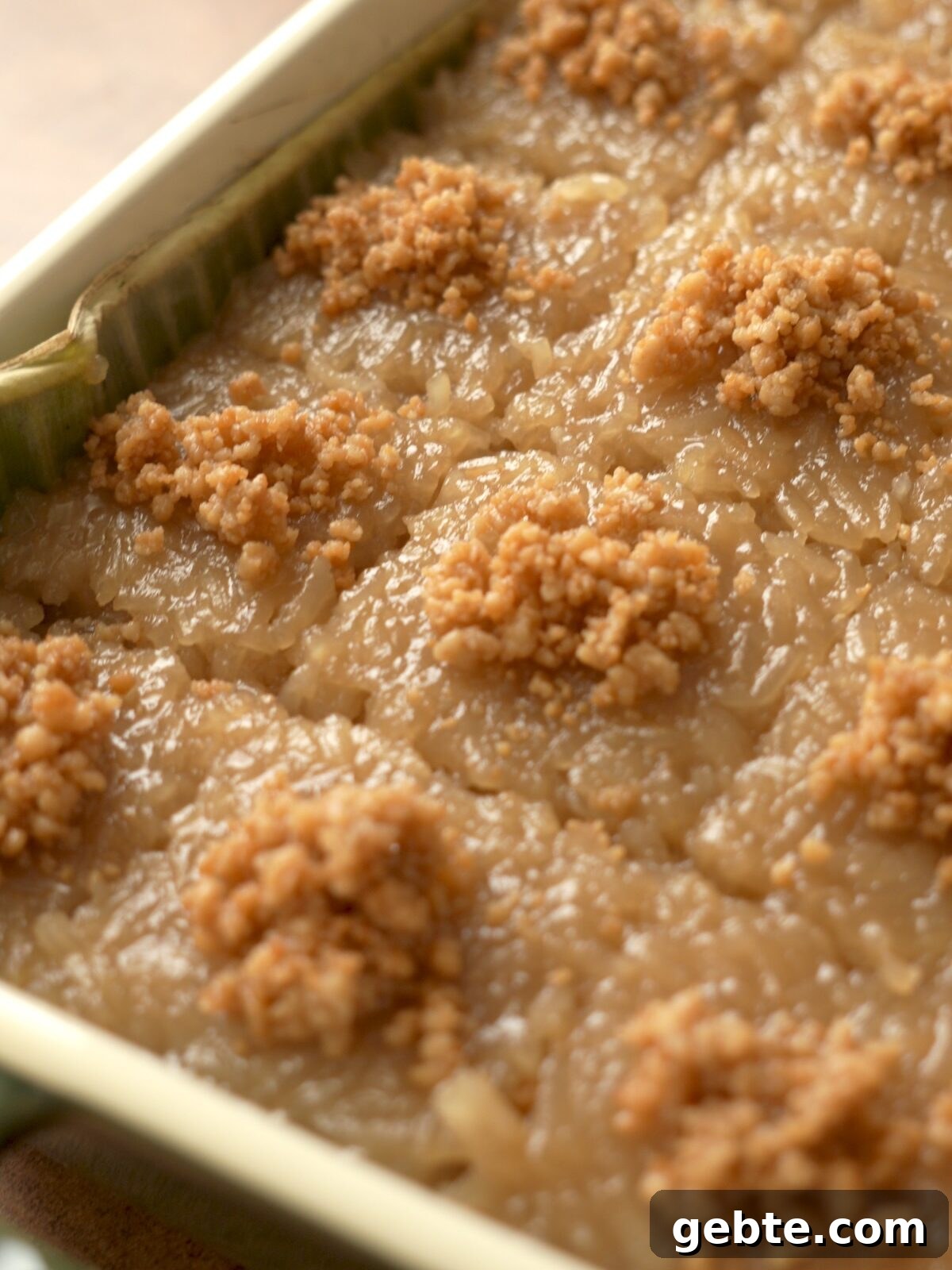
What is Biko?
Biko is glutinous (sticky) rice cooked with coconut milk and brown sugar, traditionally finished on banana leaves and often topped with latik (coconut curds). It’s a beloved Filipino dessert and a staple at family gatherings.
The dish is naturally gluten-free and reliable for bringing to events where guests avoid gluten. The subtle banana leaf aroma is one of my favorite parts — it brings a nostalgic, distinctive flavor that complements the sweet rice.
Latik is the classic topping — when fried until crispy it adds a delightful crunch. If you want to make latik at home, there are short guides available that explain the process step-by-step.
Glutinous Rice vs. Sweet Rice vs. Sticky Rice
Glutinous rice is often labeled as “sweet rice” or “sticky rice.” They refer to the same type of rice used for biko. “Thai sticky rice” is commonly available and works well for this recipe. I prefer long-grain sticky rice for texture, though short-grain will still work — and it contains no gluten.
What baking dish should I use?
Use an 8×8″ or 8×10½” baking dish, or a regular baking sheet. I like a shallow sheet pan because more surface area can be lined with banana leaf, which intensifies that lovely aroma and flavor. If using a sheet pan, two quarter sheets or one half sheet are ideal so more biko contacts the banana leaf.
Coconut Milk vs Coconut Cream vs Coconut Beverage
This recipe uses canned coconut milk. Coconut milk and coconut cream are both made from coconut and water; coconut cream is thicker and higher in fat. Canned coconut milk is what chefs usually mean in recipes. Coconut beverage refers to shelf-stable plant milk alternatives and is not the same as canned coconut milk; avoid substituting it unless you understand the texture and flavor differences.
How to Make Biko Step by Step
At a glance: cook the glutinous rice, then combine it with coconut milk, brown sugar, and salt. Simmer slowly until the mixture thickens and turns a rich brown. Transfer to a banana leaf–lined dish, let cool, slice, and serve. Photos are included to guide each stage, and the full ingredient list and precise measurements follow in the recipe card below.
Start by cooking 2 cups of glutinous rice with 2 cups of water in a rice cooker or on the stove — about 30 minutes. Most glutinous rice does not require rinsing before cooking. Use a proper kitchen measuring cup for accuracy.
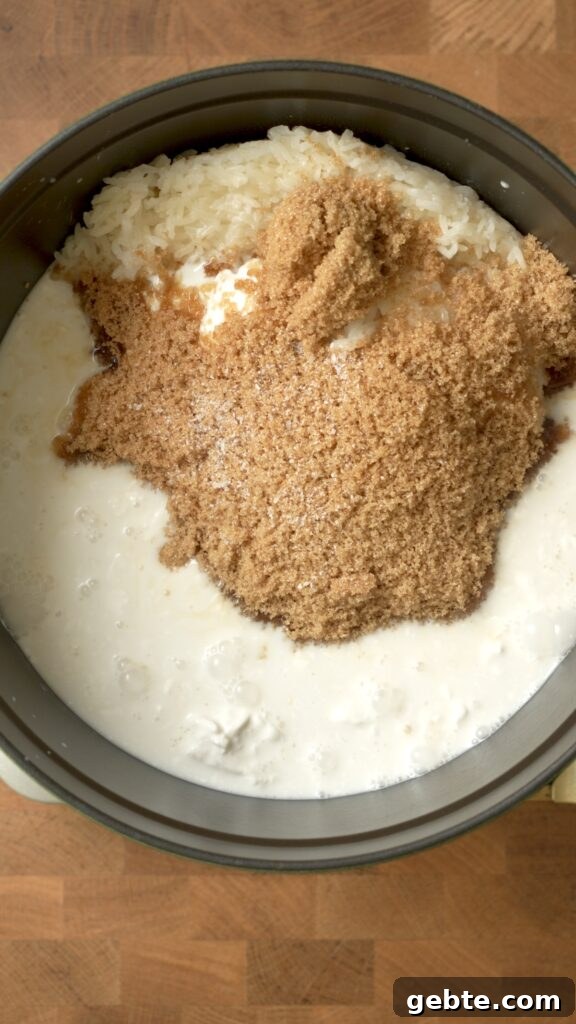
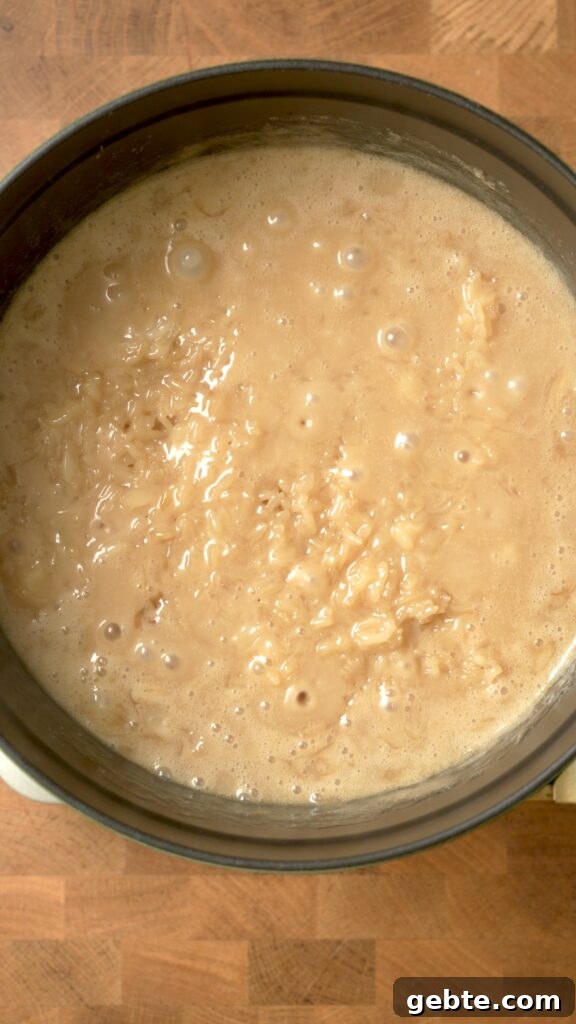
In a large pot, combine the cooked rice with coconut milk, brown sugar, and a pinch of salt. Simmer over low heat, stirring frequently, until the mixture becomes glossy and develops a deep brown color — about 15 to 20 minutes.
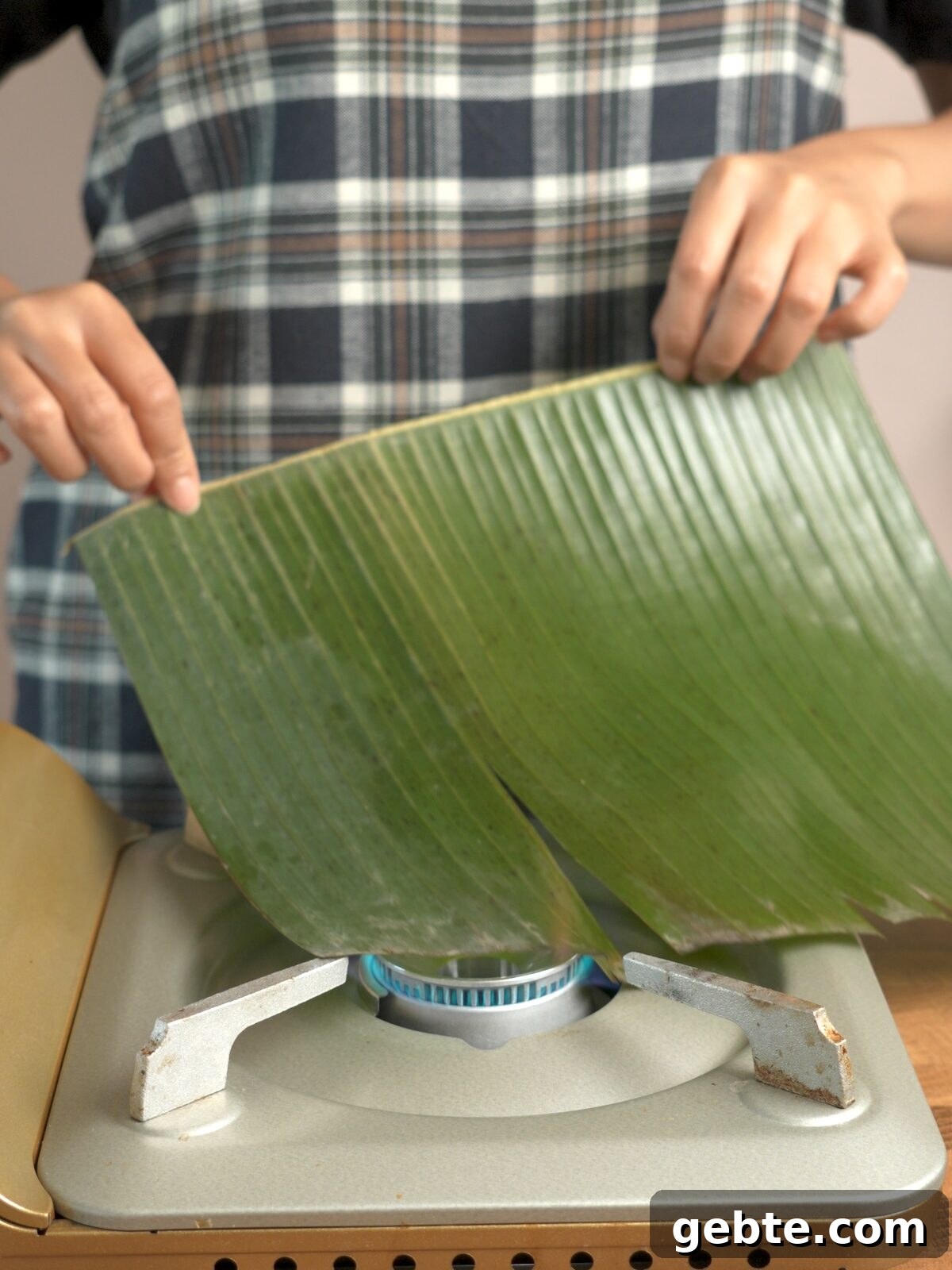
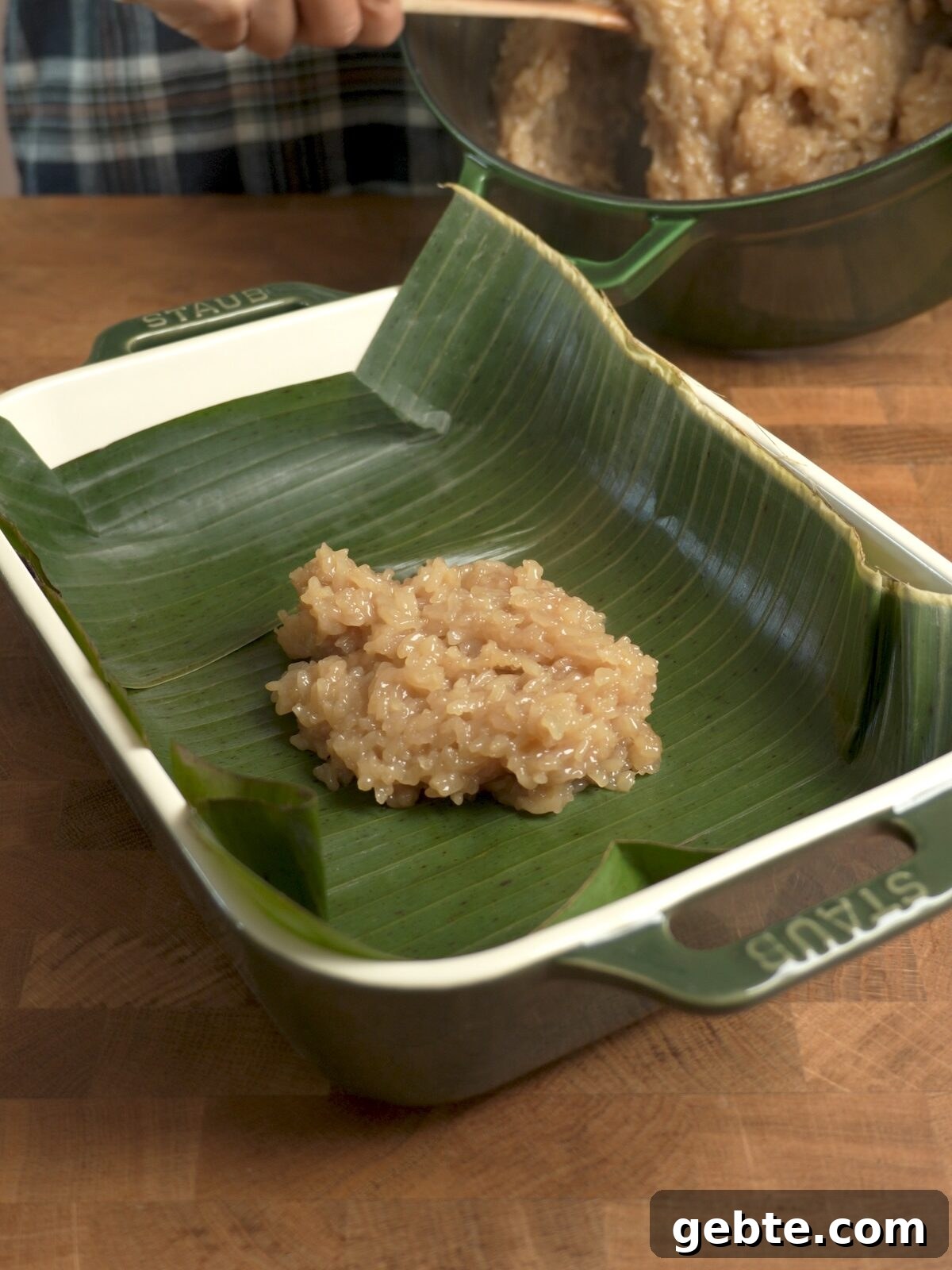
Prepare banana leaves by rinsing and wiping them clean. Briefly pass them over an open flame on both sides until they become glossy and fragrant — don’t char them. The heat softens the leaves and releases their aroma, making them pliable and non-stick when used to line your baking dish.
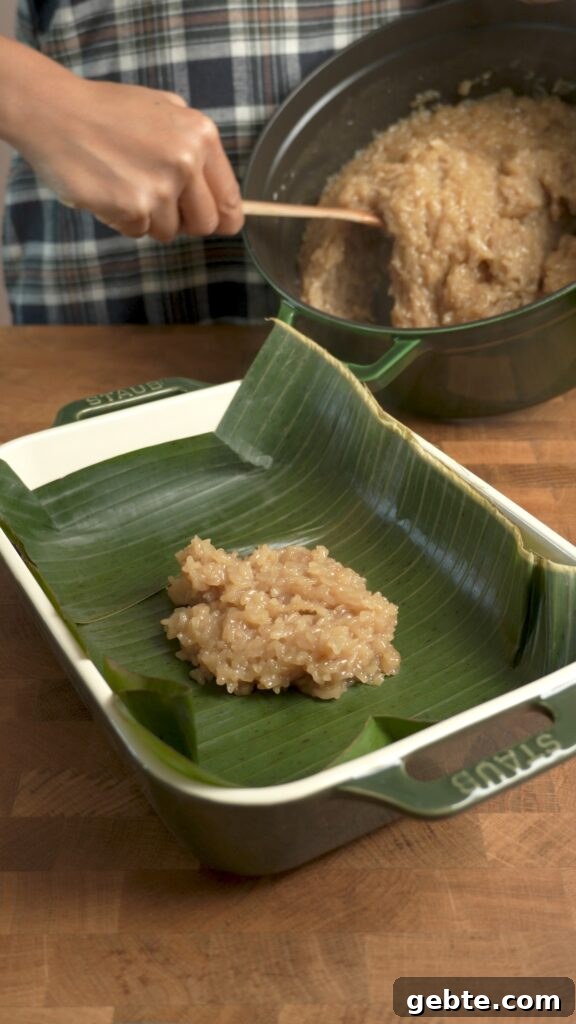
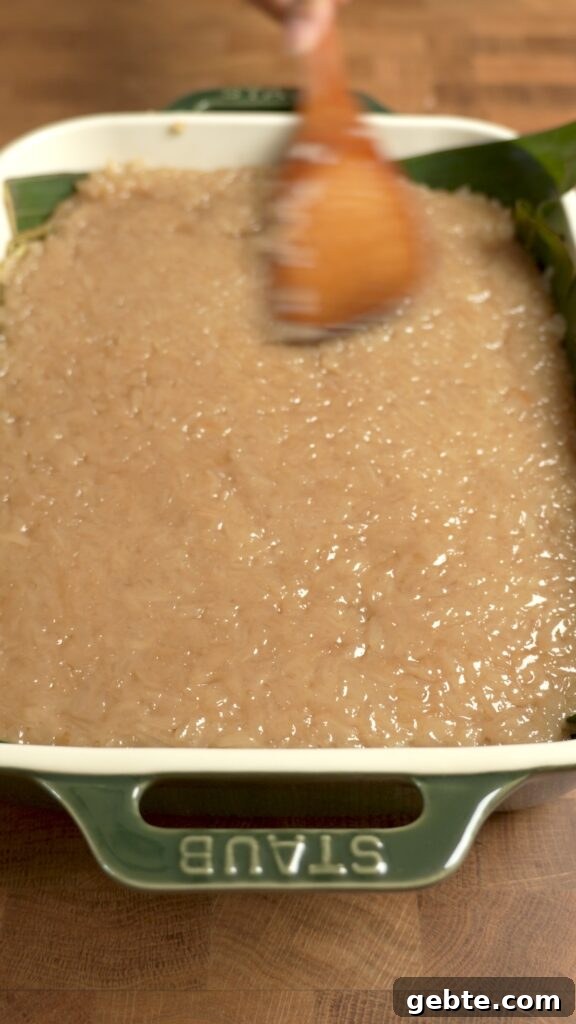
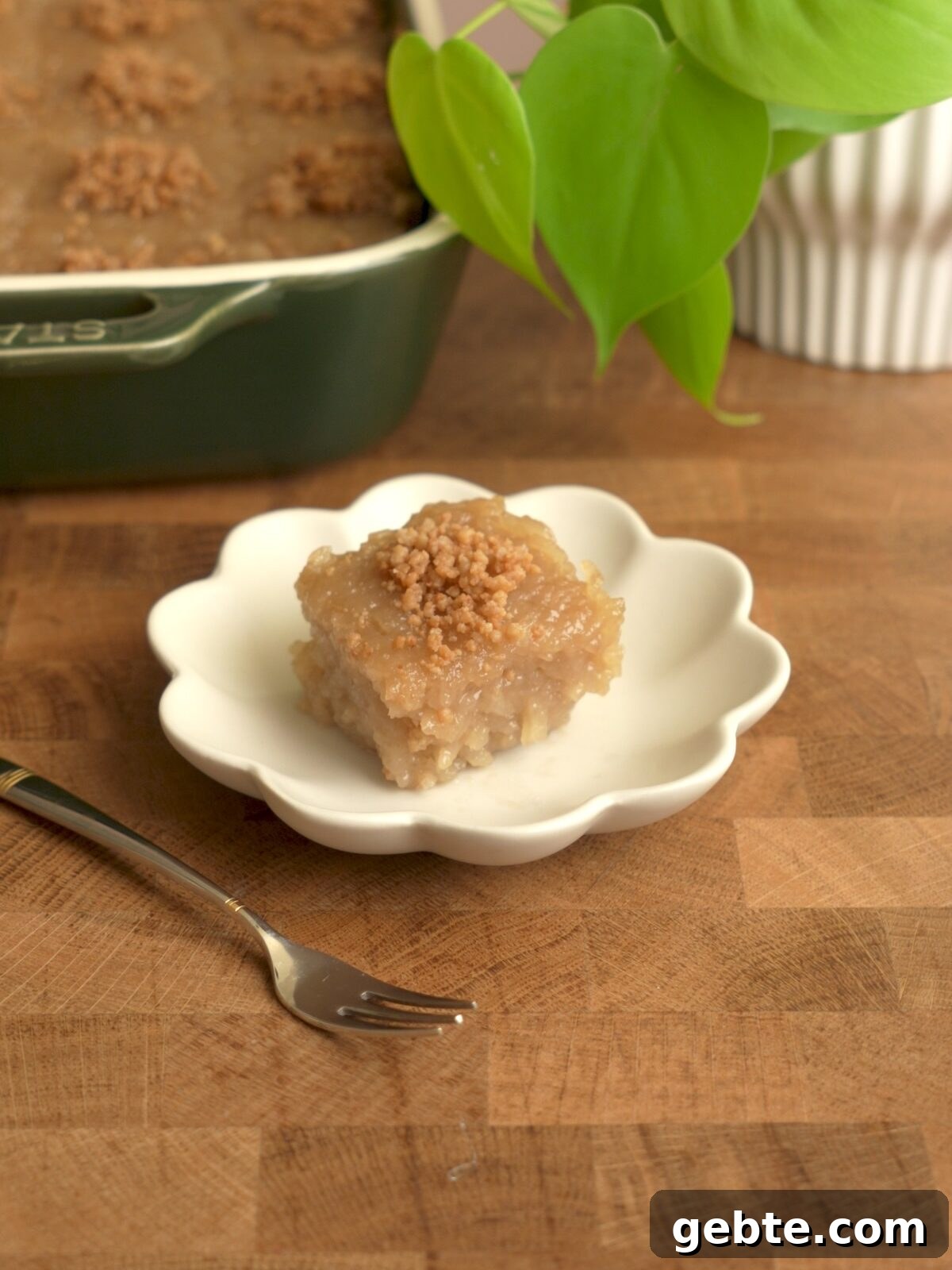
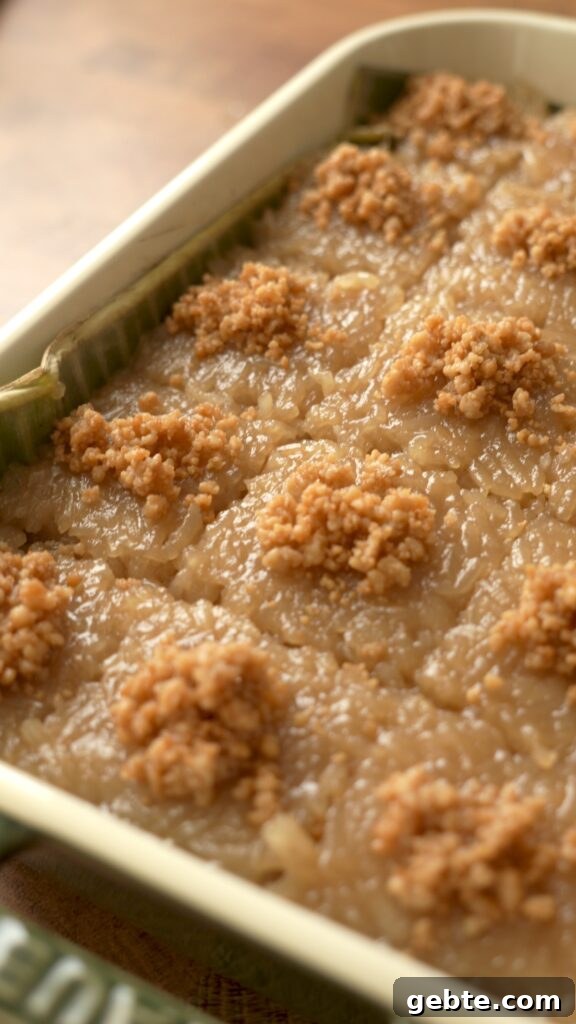
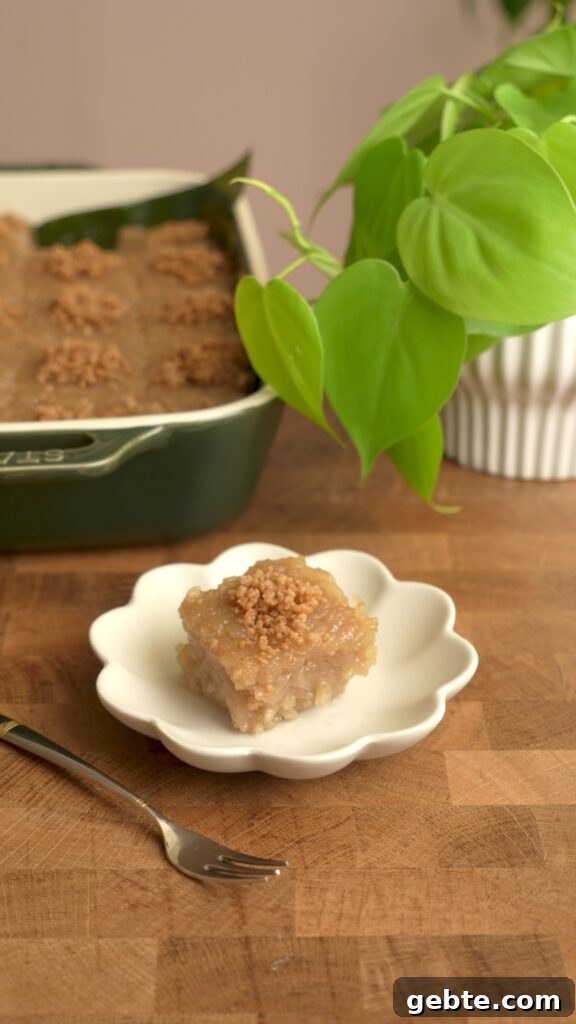
Pour the cooked rice mixture into the lined pan, spread and flatten evenly. Let it cool to set, then slice into squares. Top with latik, toasted coconut, or other toppings to taste — grated coconut is traditional; feel free to experiment.
FAQs
The essentials are glutinous (sticky) rice, coconut milk, brown sugar, and a pinch of salt. Common toppings include latik or toasted coconut.
Coconut milk provides the characteristic flavor and creaminess. You can try plant-based milks as substitutes, but results will differ from the traditional texture and flavor.
Use glutinous rice and cook it slowly with the coconut-sugar mixture so the grains absorb the liquid and the mixture becomes thick and glossy.
Biko is delicious both warm and chilled. It’s often enjoyed fresh and warm, but many like it cold after refrigerating.
Yes — common variations add ingredients like jackfruit (langka) or ube for different flavors and colors.
Yes. You can make biko ahead and store it airtight in the refrigerator. Reheat gently or serve chilled.
Popular toppings include latik (coconut curds), toasted coconut flakes, or sesame seeds. These add texture and extra flavor.
Yes. Biko is made with glutinous rice, which does not contain gluten. Always check labels of other ingredients to confirm they are gluten-free.
Use glutinous rice (malagkit), also called sticky rice. Regular long-grain rice won’t produce the same chewy, sticky texture.
It’s done when the mixture is thick, glossy, and pulls slightly away from the pan. If it’s still wet, continue cooking until the liquid has mostly evaporated and the caramel coats the grains.
Recipe
Last updated October 2025
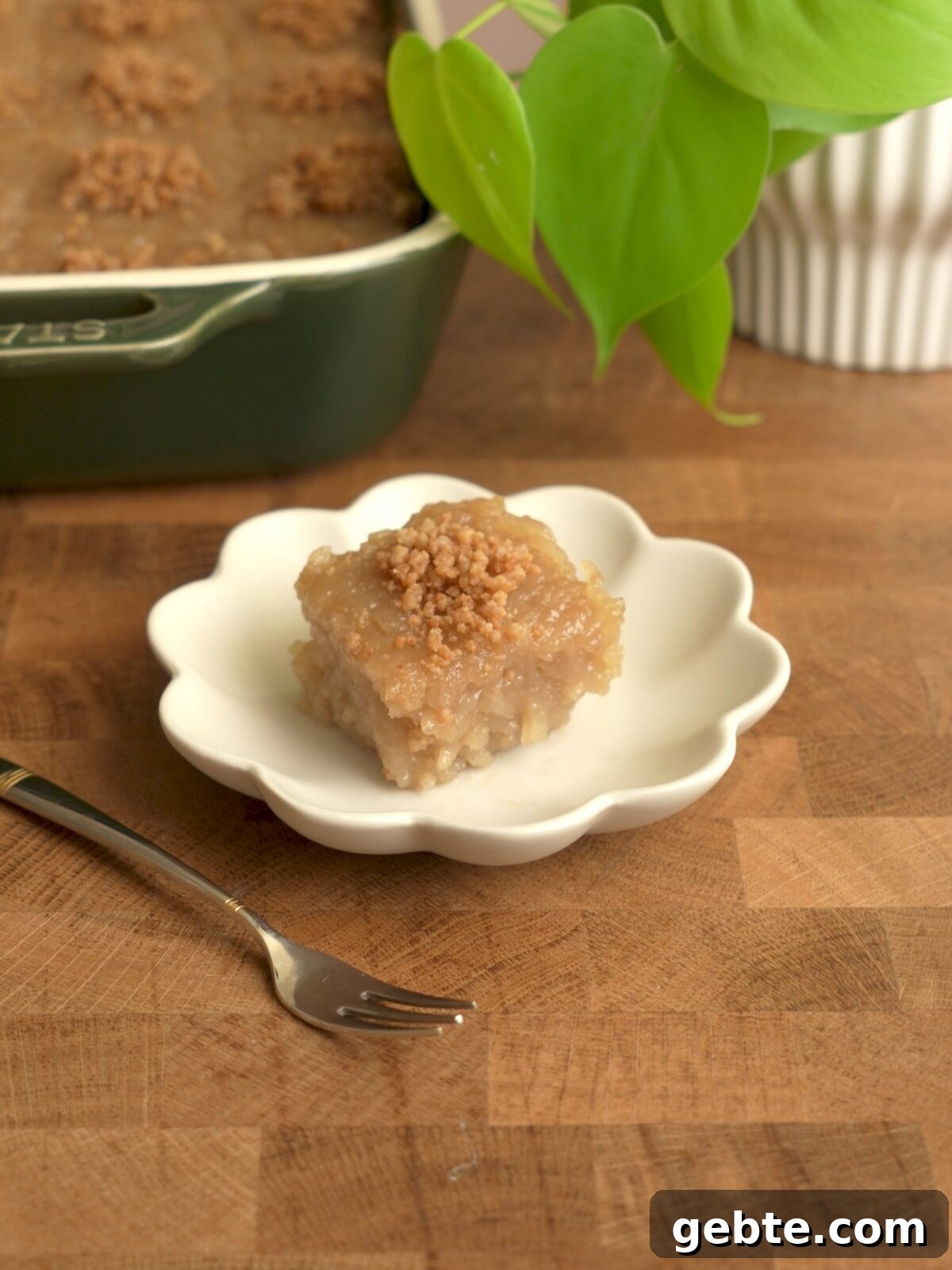
Biko
Ingredients
- 400 grams (2 cups) (uncooked) glutinous rice
- 2 cups water
- 300 grams (1½ cups) brown sugar
- 2 cans coconut milk
- ½ teaspoon salt
- banana leaf optional
Equipment
-
8×10½” baking dish or a regular baking pan.
Method
-
Cook the glutinous rice with 2 cups of water in a rice cooker or on the stove for about 30 minutes. No rinsing is usually needed.
-
In a large pot, combine the cooked rice, coconut milk, brown sugar, and salt. Simmer over low heat, stirring frequently, until the mixture turns glossy and a deep brown, about 15–20 minutes.
-
Rinse and wipe banana leaf, then pass it quickly over an open flame until it becomes shiny and fragrant. Line your baking dish with the leaf; this is optional but adds aroma and prevents sticking.
-
Pour the rice mixture into the lined dish, flatten, and let it cool. Slice and serve. Top with latik, grated coconut, or your preferred topping.
Other Recipes You’ll Love
This biko recipe is part of a kakanin series featuring Filipino rice-based desserts. Other favorites include:
- Puto — a soft, fluffy rice cake often topped with a salty slice of cheese.
- Cassava Cake — a chewy cake made from cassava and finished with a custard topping.
- Kutsinta — a steamed, sticky rice cake with a chewy texture that my siblings fight over.
- Palitaw — a simple and approachable rice cake that’s great for beginners.