
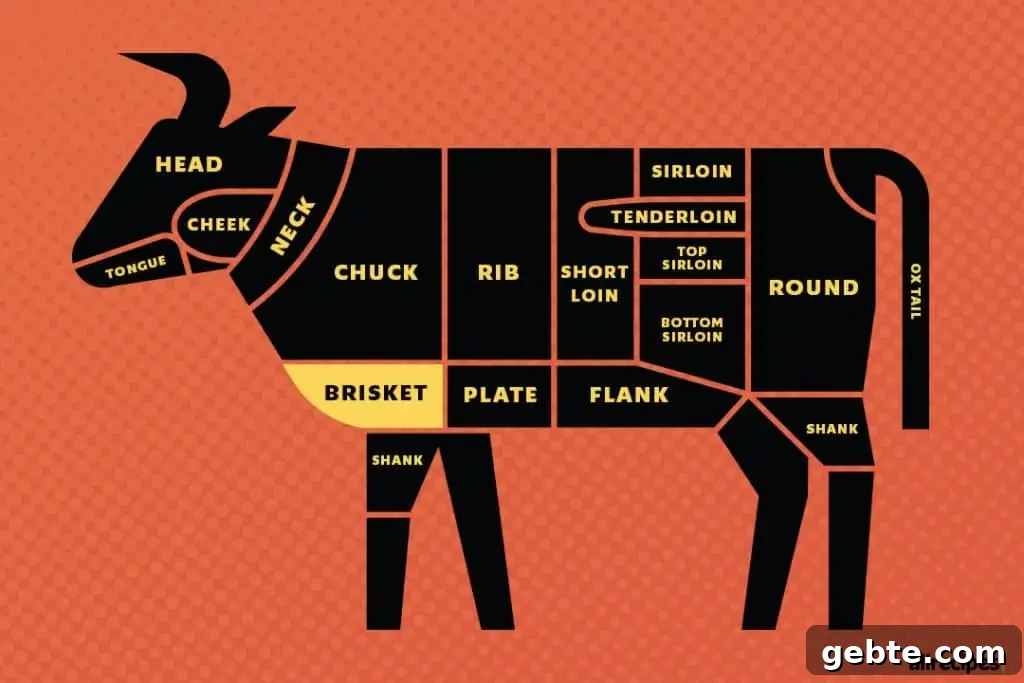
If you want to know exactly where brisket comes from on a cow, you’re in the right place.
In this guide you’ll learn:
- Which part of the cow produces brisket
- The differences between the point and the flat cuts
- How brisket is used and cooked, and tips for buying and storing it
What Part of the Cow Is Brisket?
Brisket comes from the lower chest of the cow, the area that supports a great deal of the animal’s weight. Cows lack collarbones, so the chest relies on large superficial and deep pectoral muscles for support. Those muscles contain abundant connective tissue and fat, which define brisket’s texture and flavor.
Because brisket is rich in collagen and fat, it develops deep, beefy flavor when cooked slowly. Whole briskets are often sold intact, but they can be separated into two main sections known as the point and the flat.
What is Brisket?
Brisket is one of the eight primal beef cuts identified during butchering. It is a triangular, muscular piece taken from the lower chest and includes both the superficial and deep pectorals. The chest muscles are dense with connective tissue that compensates for the lack of a collarbone and allows the animal to bear its weight.
That connective tissue makes brisket relatively tough until it’s cooked low and slow, at which point the collagen breaks down into gelatin, producing tender, juicy meat with rich flavor. The higher fat content also contributes to mouthfeel and taste; brisket contains oleic acid, a monounsaturated fat associated with positive effects on cholesterol when consumed as part of a balanced diet.
Because the fat in brisket has a fairly low melting point, it bastes the meat during long cooking, which helps explain brisket’s widespread popularity among smokers and braised dishes around the world.
The Different Types of Brisket
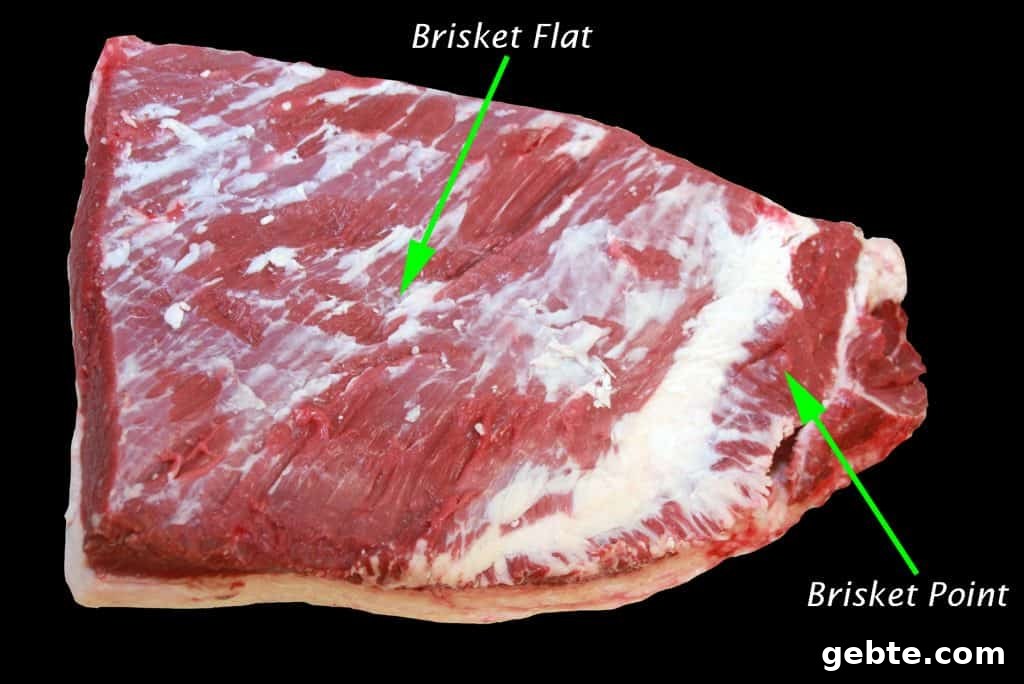
A whole brisket can be separated into two primary cuts: the point and the flat. Each differs in shape, fat content, and ideal uses in the kitchen.
The Brisket Point
The point, sometimes called the deckle, is the thicker, fattier end of the brisket. It contains more connective tissue and intramuscular fat than the flat, which gives it a stronger, beefier taste when cooked. Because of its higher fat content, the point yields rich flavor and is often used for chopped or ground brisket preparations like burnt ends or burger blends.
Visually, the point is wider and thicker, tapering to a smaller end that forms the “point.” When selecting a point, look for a deep red color with creamy white fat—avoid cuts with grayish or yellowed fat.
The Brisket Flat
The flat comes from the portion of the brisket closer to the ribs and is leaner and more uniform in shape than the point. It’s long, thin, and ideal for even, attractive slices—making it the preferred choice when presentation matters. The flat typically carries a layer of fat on one side called the cap, which helps keep the meat moist during cooking.
When preparing a flat, many cooks leave most of the cap in place, trimming only excess fat. A cap thickness between roughly 1/4 inch and 1 inch is common, depending on personal preference and cooking method.
Is Corned Beef the Same as Brisket?
Corned beef and brisket are related but not identical. Corned beef is made from raw brisket that has been cured—typically with a salt brine and spices—so its texture and flavor differ from fresh brisket. Brisket sold in the meat case is raw and unseasoned, while corned beef has undergone a preservation and flavoring process that gives it a distinctive taste and firmer texture.
The historic name “corned” comes from the coarse salt crystals originally used to cure the meat; they resembled kernels of corn.
How is Brisket Used in Dishes?
Brisket shines both as a standalone main and as an ingredient in other dishes. Sliced brisket works beautifully for plated barbecue servings, while chopped or shredded brisket is excellent in sandwiches, tacos, grilled cheeses, and mac and cheese. The point lends itself to rich, chopped preparations, while the flat slices attractively for plated meals.
How to Choose a Beef Brisket
When shopping for brisket, consider size, source, and which part you want.
1. Know How Much You Need
Plan roughly 1 to 1.5 pounds of raw brisket per person, depending on appetite and sides. For example, feed six people with an 8–10 pound whole brisket, accounting for weight loss during cooking.
2. Shop Quality
Buy brisket from a reputable butcher when possible; they can recommend the best size and whether to buy a whole packer brisket (point plus flat) or just the flat.
3. Know Point vs. Flat
Decide whether you want the fattier, more flavorful point or the leaner, more uniform flat—or purchase both together as a whole brisket if you want the benefits of each.
How To Cook Beef Brisket
Brisket adapts to many cooking methods, but it rewards low-and-slow techniques that convert collagen into gelatin. Smoking over wood or charcoal is a classic method, especially in regions like Texas where smoked brisket is iconic. A spice rub and indirect heat produce a flavorful bark and tender interior.
Braising—cooking brisket slowly in liquid—is another popular approach, common in many European and home-cooking traditions. Braising yields a fork-tender, saucy result and is often used for pot roasts and similar dishes.
How Long Does It Take To Cook Beef Brisket?
Cooking time varies by weight and method. For smoking, a general estimate is about 1 to 1.5 hours per pound at approximately 250°F (121°C), though temperature-and-time can vary. Whole briskets can weigh up to 20 pounds, and brisket typically loses about one-third of its raw weight during cooking, so plan portions accordingly.
How to Slice Beef Brisket
Let the brisket rest after cooking, then slice against the grain to maximize tenderness. Slicing thin against the grain produces the most tender, easy-to-chew servings.
Should You Trim the Fat Off Brisket?
Trim excess fat, but avoid removing all of it. The remaining fat renders during cooking and keeps the meat moist and flavorful. Leave a reasonable layer on the cap to protect the meat during long cooks.
How to Serve Brisket
Brisket pairs well with classic barbecue sides—corn on the cob, potato salad, coleslaw, baked beans, and macaroni and cheese. It’s also excellent in sandwiches, tacos, and hearty pasta dishes.
How to Store Brisket
Store sliced brisket in an airtight container in the refrigerator. Properly stored leftovers will keep for about 3 to 5 days. Refrigerate within 1–2 hours after cooking to minimize bacterial growth.
Why is Brisket So Expensive?
Brisket is pricier because there are only two brisket cuts per animal, which limits supply. High demand for this flavorful, versatile cut also contributes to higher prices.
Different Ways to Cook Beef Brisket
Smoking is the most celebrated method for brisket, but you can also roast it in the oven, braise it in a slow cooker, or prepare it as corned beef through curing and slow cooking. Each method highlights different qualities of the meat—smoking for a smoky crust and deep flavor, braising for tender, saucy results.
Final Thoughts on Beef Brisket
Knowing where brisket comes from and how its structure influences cooking will help you choose the right cut and technique. Whether you prefer the fatty point for chopped dishes or the leaner flat for elegant slices, brisket rewards patience and low, slow heat with exceptional flavor and tenderness.
If you’d like more tips about grilling and brisket preparation, explore additional guides and recipes to refine your technique and discover new flavors.