
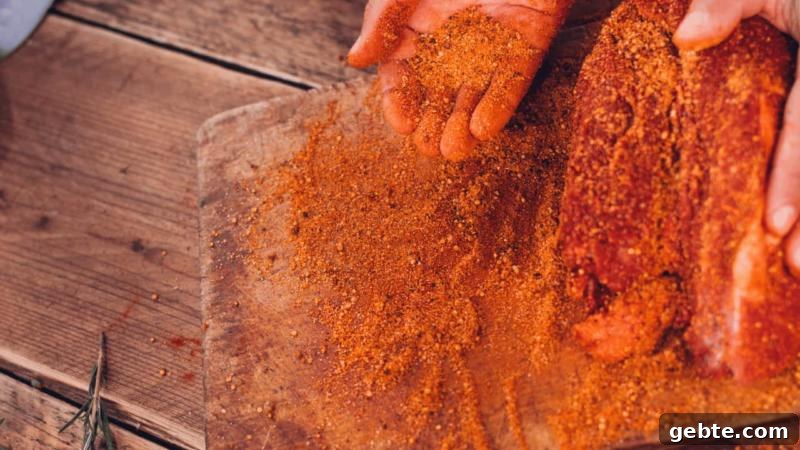
Dry rubbing spices and herbs into meat helps lock in moisture and builds a flavorful, tender finished dish.
A well-applied dry rub dries the surface slightly and forms a crust that helps retain the meat’s juices during cooking, resulting in a juicier, more satisfying bite.
You can mix your own dry rub from favorite herbs and spices or use a quality premade blend from the store. Whichever you choose, pay attention to the ingredients and use the rub appropriately to avoid over-seasoning or unintended curing effects.
Can You Leave Dry Rub on Too Long?
Yes — you can leave a dry rub on too long. As a general guideline, avoid leaving most dry rubs on raw meat for more than overnight unless the product specifically instructs a longer time. Rubs that contain significant amounts of salt or curing agents can draw moisture out of the meat and, over extended periods, begin to cure or partially “cook” the surface. That process can make the texture drier or change the mouthfeel in ways many people find undesirable.
Read product labels for recommended timing and follow those directions when using commercial blends.
Dry Rubs and Meat
Dry rubs are a convenient and effective way to add flavor and enhance the texture of many proteins. You’ll commonly see rubs used on ribs, roasts, steaks, and chicken. A typical dry rub combines salt with herbs, spices, and sometimes sugar to create a seasoning layer that adheres to the meat and helps form a flavorful crust when cooked.
Apply the rub just before cooking or up to the recommended time in advance. During preparation, practice safe handling: never reuse a rub that has been in contact with raw meat, and avoid cross-contamination between raw and cooked surfaces. Also be mindful of overall seasoning — it’s easy to oversalt or over-spice, so taste cautiously when finishing the dish.
Dry Rub Timeline
The ideal contact time depends on the specific rub and the cut of meat. Some mixes need only a couple of hours to impart flavor, while others are designed to rest on meat for a day or two under refrigeration. A common and safe rule of thumb is to avoid leaving a dry rub on raw meat for longer than overnight unless the manufacturer’s instructions state otherwise.
Leaving rub on too long — especially blends high in salt — can dehydrate or begin to cure the meat’s surface, changing texture and potentially creating a tougher or less pleasant mouthfeel.
Dry Rub Recommendations and Ideas
If you make your own rub, follow these simple tips for better results:
- Balance flavors: A small amount of sugar (brown sugar for depth) can balance savory and spicy notes and help with caramelization.
- Use whole seeds selectively: Grind mustard seed, coriander, or fennel in a spice grinder or mortar and pestle to release their aroma before mixing into your rub.
- Study commercial blends: Check ingredient lists on favorite products to learn what flavor profiles you enjoy and build your own variations at home.
- Store mixes properly: Keep homemade rubs in an airtight container in a cool, dark place. They will keep for a couple of months but gradually lose intensity over time.
Remember that salt acts as a curing agent. Leaving a salty rub on meat for extended periods can produce a cured texture and firmer bite. That effect can be useful for certain preparations but is usually unwanted for simple roasts or steaks.
Frequently Asked Questions
How long do you leave a dry rub on meat?
Timing varies based on the rub and the cut. As a general guideline, do not leave most dry rubs on raw meat for longer than overnight unless the label directs otherwise. Shorter times — a few hours — are often sufficient to impart good flavor for steaks and chops.
How do you apply a dry rub?
Pat the meat dry before applying the rub to help the seasoning adhere. Some cooks brush a thin layer of oil (such as olive oil) on the meat first to help the rub stick and to promote crust formation. Sprinkle the seasoning evenly and use your hands to massage the mixture into the surface so it adheres and begins to penetrate slightly.
What is a good dry rub for prime rib?
A classic prime rib rub often combines coarse salt and cracked black pepper with dry mustard, garlic powder, onion powder, thyme, and oregano. Optional extras like coriander or celery seed add complexity. Use a light coating of oil to help the rub cling to the roast.
How do you dry rub a steak?
Combine your chosen herbs and spices or use a premade rub, season both sides of the steak evenly, and press the rub into the meat. For best results, let the steak rest with the rub for at least a short while to allow flavors to settle, then cook to your preferred doneness.
Conclusion
Dry rubs are a versatile, simple technique for enhancing flavor and texture across many proteins. Use balanced blends, follow recommended timing, and handle seasoning safely to avoid over-curing or drying out the meat. Experiment with herbs, spices, and sugar to develop rubs you love, and remember: when in doubt, shorter contact times are usually safer for maintaining juiciness.