
Have you heard of photosensitive or phototoxic essential oils? Some essential oils can trigger a skin reaction when exposed to sunlight. This response, called photosensitivity or phototoxicity, can result in blistering where the oil was applied, severe sunburn, or long-lasting changes in skin pigmentation. It’s something to avoid.
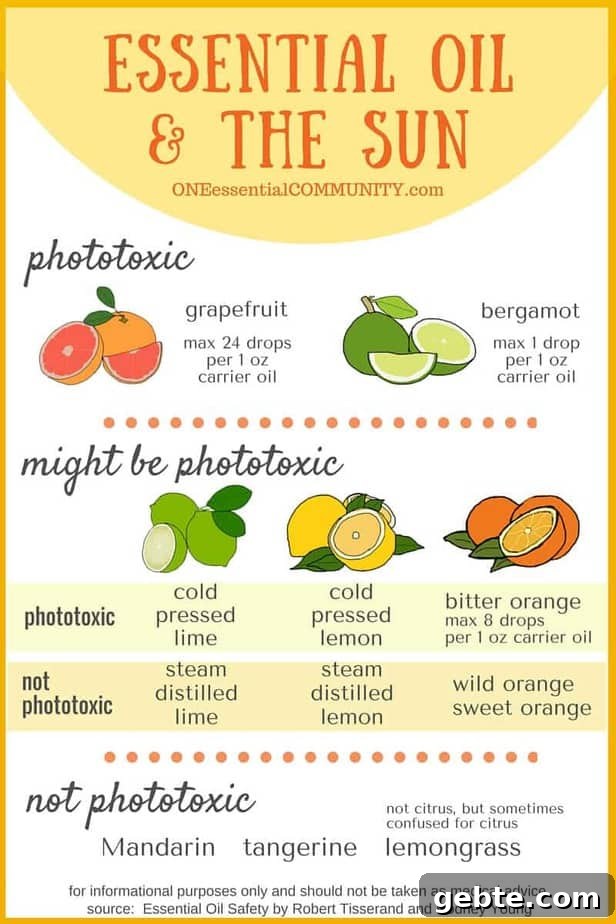
Many of the essential oils that can cause photosensitive reactions are citrus oils. However, not all citrus essential oils are phototoxic. According to the research summarized in Tisserand and Young’s book Essential Oil Safety, the following citrus essential oils are not phototoxic:
- Mandarin essential oil
- Wild orange / Sweet orange essential oil
- Tangerine essential oil
- Steam-distilled lemon essential oil
- Steam-distilled lime essential oil
- Lemongrass (often mistakenly listed as phototoxic, but it is not)
[popout_newsletter]
Which citrus oils are phototoxic?
- Bergamot essential oil
- Grapefruit essential oil
- Bitter orange essential oil
- Cold-pressed lemon essential oil
- Cold-pressed lime essential oil
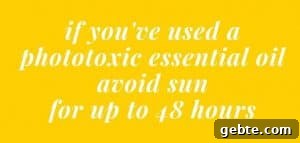
Be especially careful with bergamot and cold-pressed lime essential oils.
These phototoxic citrus oils are not all equally potent. For example, it takes 24 times as much grapefruit essential oil to match the phototoxicity of a single drop of bergamot. Below are maximum guideline numbers of drops per ounce of carrier oil before a phototoxic reaction is likely:
- Bergamot: 1 drop per ounce
- Cold-pressed lime: 4 drops per ounce
- Bitter orange: 8 drops per ounce
- Cold-pressed lemon: 12 drops per ounce
- Grapefruit: 24 drops per ounce
What does this mean? Can we still use phototoxic citrus oils when skin will be exposed to the sun?
Yes—if used safely. Here are several practical ways to use phototoxic essential oils on skin without increasing sun-related risk:
- Use fewer drops. Stick well below the recommended maximum. For example, the maximum for grapefruit is 24 drops per ounce. A 10 ml roller bottle is roughly one-third of an ounce, so the maximum for that size would be 8 drops; using fewer than 8 drops keeps the dilution safer for skin that may see sunlight.
- Cover the area with sun-protective clothing after applying the oil so UV light cannot trigger a reaction.
- Diffuse instead of applying topically. Diffusing provides aromatic benefits without skin exposure.
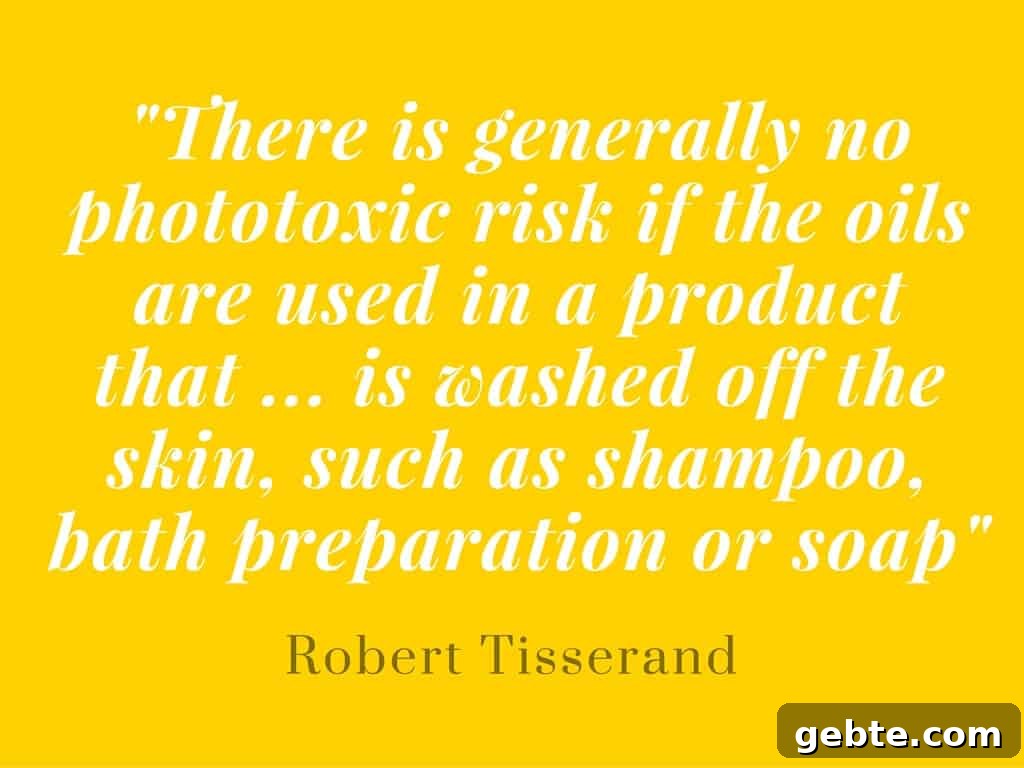
- Use phototoxic oils in products that are washed off. Incorporate these oils into soaps, shampoos, sugar scrubs, bath bombs, shower gels, or other rinse-off products so the oil is removed before sun exposure.
With attention to dilution and application, essential oils can still be a safe part of summer care. Here are a few favorite recipe ideas for the season:
- DIY Bug Spray that really works
- 25 of the best summer essential oil diffuser blends
- Homemade Peppermint Cooling Spray
- After Sun Spray made with essential oils
- Clever ways to reuse empty essential oil bottles
- Calming diffuser blends for stress
- DIY Peppermint Cooling Foot Cream
- DIY Stinky Shoe Spray with essential oils
Interested in more recipes, tips, and ideas for using essential oils?
Please join us…
we’re on Facebook here
we’re on Pinterest here
click here to sign up for our email newsletter
Please note: This information is provided for educational and entertainment purposes and is not medical advice. Products mentioned here have not been evaluated by the FDA. This content is not intended to diagnose, treat, cure, or prevent any disease. Always consult a medical professional for personal medical advice and never delay seeking professional care because of something read here.
Disclaimer: This site contains affiliate links. If you click certain links and buy a product, the site may receive a small commission at no extra cost to you. Thank you for your support.