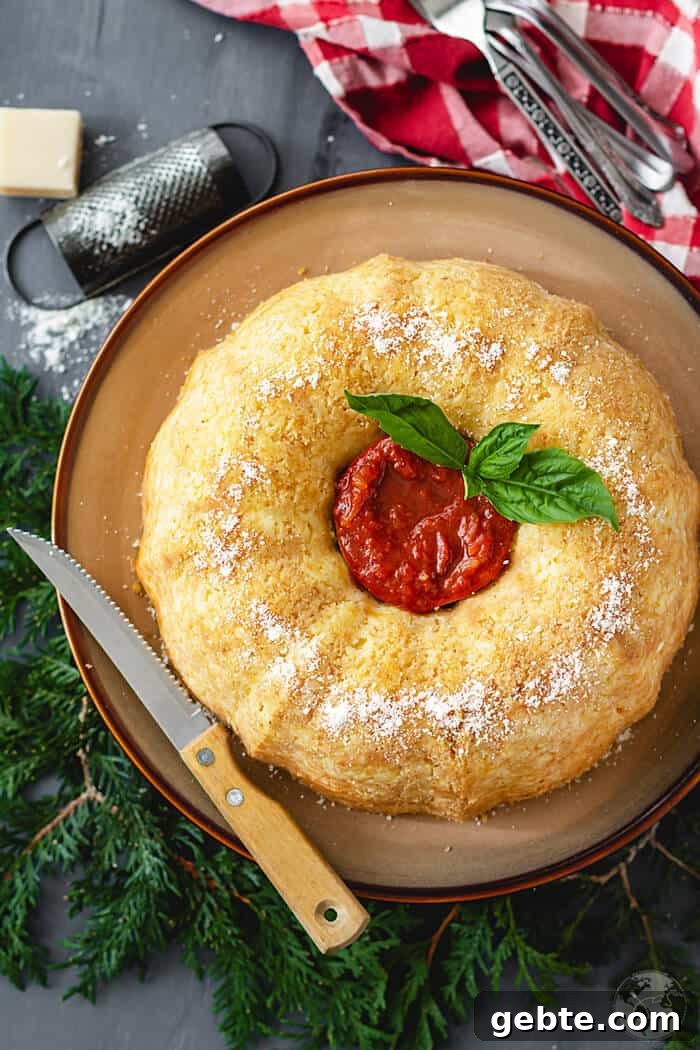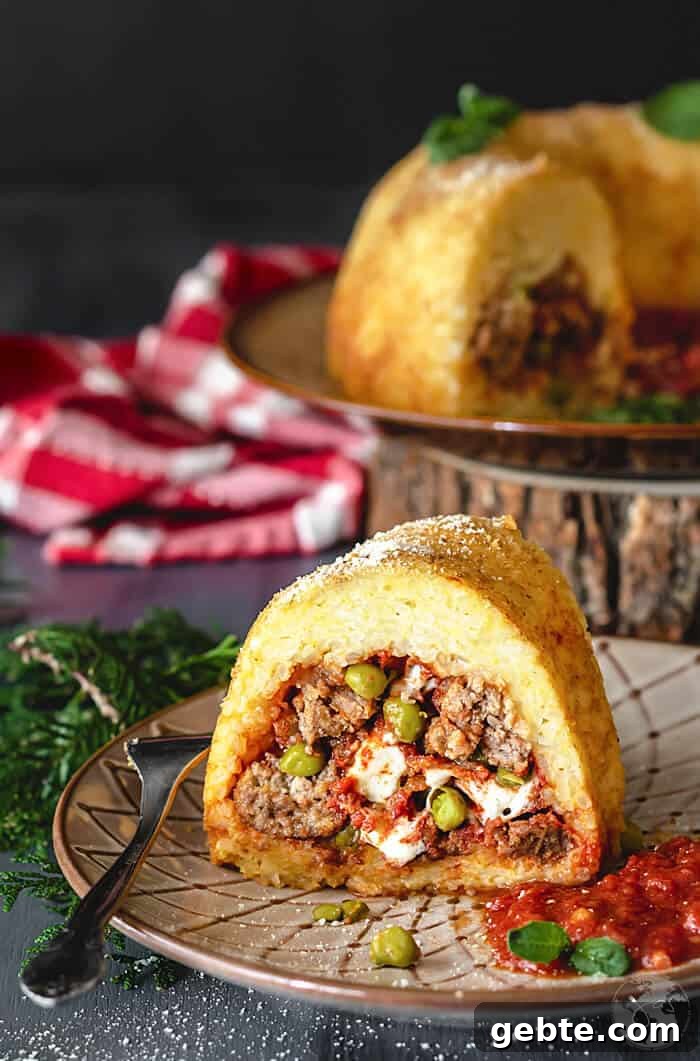
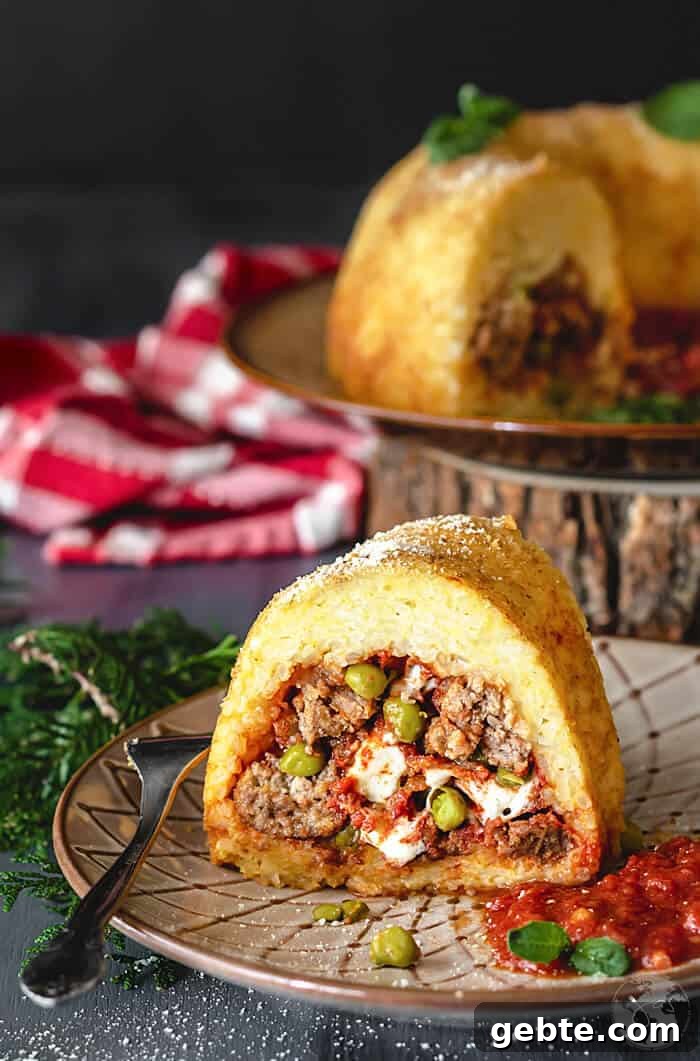
This beautiful sartù di riso brings all the flavors of Italy to your table. Sausage, meatballs, and rice timbale is a traditional Neapolitan dish bursting with flavor and perfect for holidays — impressive both in taste and appearance.

Sartù di Riso alla Napoletana is a hearty, comforting meal that will satisfy everyone. It’s ideal for when you want something warming and substantial.
Sausage, Meatballs, and Rice Timbale Recipe
Although it’s baked in a bundt pan, Sartu Napoletano is savory rather than sweet: a rice pie layered with sausage, meatballs, mozzarella, peas, and a rich tomato sauce. The center is gooey and satisfying, making this an excellent savory use of a bundt pan.
Sartù is a historic, layered dish with many regional variations dating back to the eighteenth century. Traditional versions can be quite elaborate — sometimes containing ingredients like chicken livers, dried mushrooms, lard, or boiled eggs. This version is a more approachable adaptation inspired by a modern recipe.

What is a timbale?
A timbale is a molded dish typically made from a starch such as rice or pasta; the term also refers to the pan used to shape and bake it.
Specialty ingredients
- Arborio rice — a short-grain rice prized for its creamy texture and higher starch content, ideal for this timbale.
- Breadcrumbs — they prevent the rice from sticking to the pan and add a pleasant crunch that contrasts the gooey center. Use gluten-free breadcrumbs if needed.
- Freshly grated Parmesan — it adds authentic flavor; the rind is even cooked with the tomato sauce for extra depth.
Plan ahead:
This sartù di riso is not a quick weeknight meal — it requires time and patience. However, many components can be made ahead and assembled before baking, which makes it manageable for holiday cooking or large family dinners. It’s a great dish for Thanksgiving, Christmas, or New Year’s Eve, and leftovers reheat well (if any remain).
Because it’s somewhat labor-intensive, most people prepare it infrequently, but the result is memorable and well worth the effort.
Tips for success
- If you can’t find bulk Italian sausage, use links with the casings removed and break the meat into bite-sized pieces.
- Use a non-stick or cast-iron skillet to brown the meatballs so they hold together.
- Generously grease the bundt pan with butter and coat it completely with breadcrumbs to prevent sticking.
- Store leftover timbale in the refrigerator for up to five days and reheat individual portions in the microwave or oven.
With sausage, meatballs, mozzarella, peas, and tomato sauce all enclosed in a rice shell, this dish is peak Italian comfort food.
Ingredients (Yields 8–10 servings)
- 1 pound Arborio rice (about 2 1/3 cups)
- 4 cups chicken broth
- 2 teaspoons salt
- 1 dried bay leaf
- 3 cups freshly grated Parmesan, divided
- 4 large eggs, at room temperature, divided
- 1/4 cup olive oil
- 8 ounces bulk hot Italian sausage
- 1 clove garlic, minced
- 1 shallot, sliced
- 2 sprigs basil
- One 2-inch piece Parmesan rind
- One 28-ounce can crushed tomatoes
- 3 tablespoons whole milk, at room temperature
- 7 tablespoons fine breadcrumbs, plus extra for coating the pan
- 1/2 teaspoon dried oregano
- 8 ounces ground beef
- Olive oil for frying
- 1 1/2 tablespoons unsalted butter, at room temperature
- 1 cup frozen peas, thawed
- One 8-ounce ball fresh mozzarella, diced
Equipment
- Cast-iron or non-stick skillet
- Saucepan
- Bundt pan or a 3 1/2-quart Dutch oven
- Mixing bowls
Instructions
- Combine the rice, chicken broth, salt, and bay leaf in a large saucepan. Bring to a boil, then cover and reduce heat to low. Simmer, stirring once, until the rice is slightly undercooked and the liquid is absorbed, about 8–10 minutes. Remove the bay leaf and cool the rice to room temperature.
- Stir 2 1/2 cups of Parmesan and three eggs into the cooled rice until well combined. Set aside.
- Heat olive oil in a medium saucepan over medium-high heat. Add the sausage and brown it, breaking it up as it cooks. Remove the sausage with a slotted spoon and set aside.
- Reduce the heat to medium. Add garlic and shallot and cook until fragrant and softened, about 1 minute. Add basil, Parmesan rind, and crushed tomatoes. Simmer on low, stirring occasionally, for 15–20 minutes. Remove basil and rind and reserve 2 cups of the sauce for the sausage.
- In a medium bowl, mix 2 tablespoons breadcrumbs, milk, and the remaining egg with a fork. Let sit 5 minutes to thicken, then stir in the oregano and the remaining 1/2 cup Parmesan. Add the ground beef and mix gently until just combined.
- Pour oil to a 1/2-inch depth in a skillet and heat over medium-high. Form the beef mixture into 1-tablespoon meatballs using damp hands. Fry in batches until golden and crispy, about 4 minutes, turning as needed. Transfer the fried meatballs to the bowl with the sausage and reserved sauce and toss to coat.
- Preheat the oven to 350°F. Grease the bundt pan with 1 tablespoon butter and coat thoroughly with 3 tablespoons breadcrumbs, leaving no bare spots to prevent sticking.
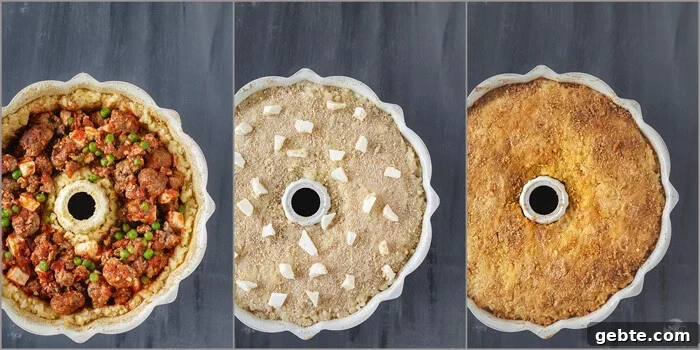
- Add the peas and diced mozzarella to the meat and sauce and fold gently. Spoon two-thirds of the rice into the prepared pan; using damp hands, press it evenly across the bottom and up the sides, leaving about 2 inches from the top.
- Fill the rice shell with the meat filling, pressing gently to pack. Cover the filling with the remaining rice, pressing to seal the top and edges. Sprinkle with the remaining 2 tablespoons breadcrumbs and dot with the remaining 1/2 tablespoon butter. Bake until lightly browned, about 45 minutes. Cool 15 minutes.
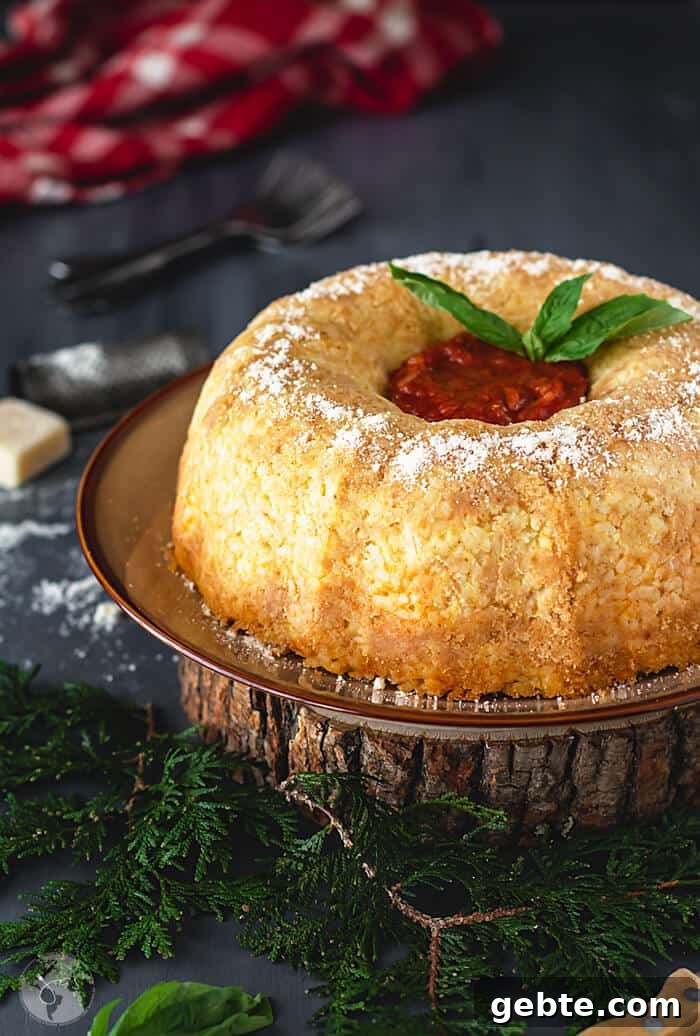
- Invert the pan onto a serving plate to unmold the sartù. Warm the remaining sauce and pour into the center well before serving.
Notes
- If bulk Italian sausage isn’t available, remove casings from links and break the meat into pieces.
- Browning meatballs in a non-stick or cast-iron skillet helps them keep their shape.
- Coating the bundt pan thoroughly with butter and breadcrumbs is essential to prevent sticking.
- Let the timbale rest at least 15 minutes before unmolding and serving.
- Store leftovers in the refrigerator for up to five days; reheat individual portions as needed.