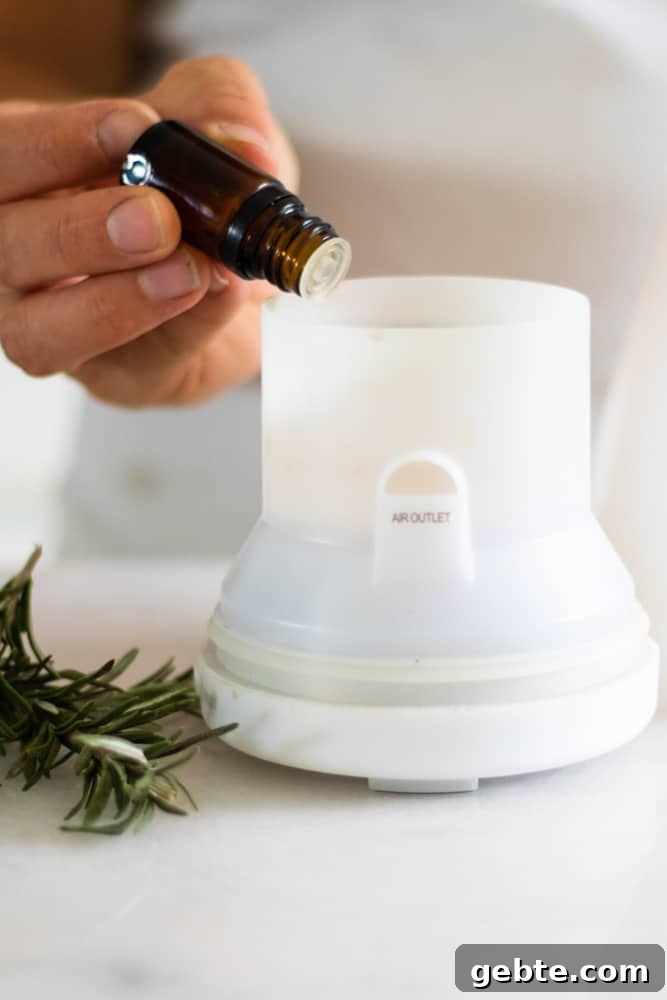
Rosemary essential oil is a versatile and valuable addition to a natural, sustainable home. From freshening the air to enhancing homemade hair care, its earthy, herbaceous aroma works well in diffusers, roller bottles, cleaning products, and many DIY personal care recipes.
Below we explore the benefits of rosemary oil, how to use it aromatically and topically, practical blends and recipes, and simple safety notes to keep in mind.
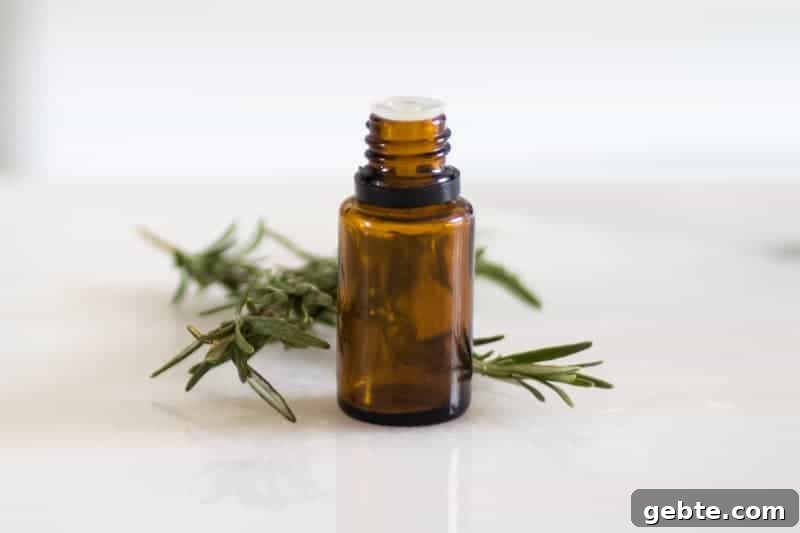
Rosemary essential oil is steam-distilled from rosemary leaves. It’s prized for natural fragrance and aromatherapy as well as for hair and scalp applications. While dried rosemary is a common kitchen herb, the essential oil delivers a concentrated, fresh herbal scent that is useful across many household and personal-care uses.
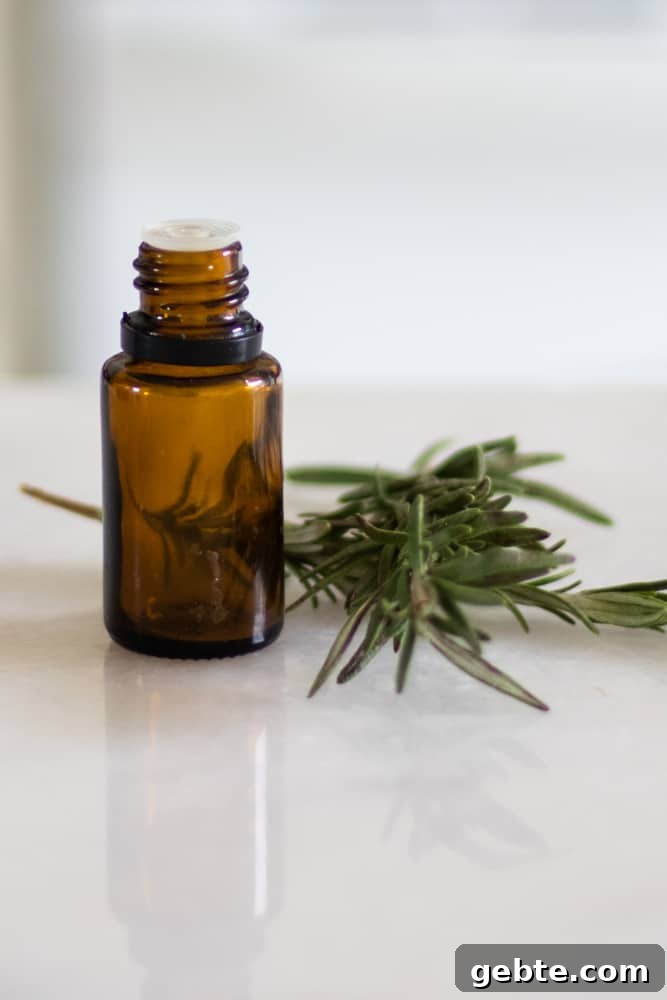
How to Use Rosemary Essential Oil
Rosemary essential oil can be enjoyed aromatically or applied topically when properly diluted. Its fragrance is herbaceous with subtle minty, spicy, and citrus notes. Below are practical, user-friendly ways to make the most of this oil both around the home and in your self-care routine.
Aromatically
Diffusing rosemary adds a clean, calming scent that helps freshen indoor air and mask unwanted odors. It pairs especially well with bright citrus notes like lemon or lime for a lively, clean aroma. Try these simple options:
- Add 4–6 drops to a diffuser to disperse the scent throughout a room.
- Create a homemade room spray by combining rosemary with water and a mild solubilizer or alcohol, then mist lightly for an instant air refresher.
- Add a drop to a cotton ball, tissue, or an essential-oil diffuser accessory such as a bracelet or necklace for on-the-go aromatherapy.
- For quick inhalation, simply open the bottle and inhale gently from a safe distance.
Rosemary Essential Oil Diffuser Blends
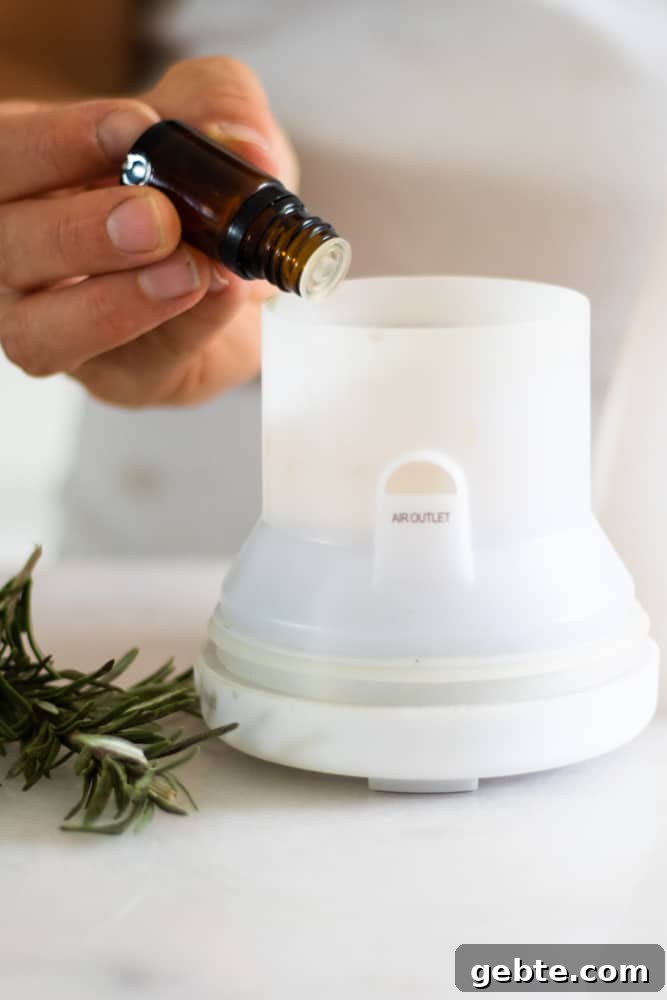
Clean Kitchen
4 drops lemon + 4 drops rosemary
In the Garden
2 drops peppermint + 2 drops rosemary + 2 drops wild orange
Fresh Air
2 drops lemon + 2 drops rosemary + 2 drops lime
Topically
Essential oils are concentrated and should be diluted before topical use. A general guideline is to dilute rosemary oil in a carrier oil for safe application. For example, dilute 10 drops of rosemary essential oil into 1/4 cup of carrier oil to create a lightweight body or scalp oil.
Another convenient option is to make a roller bottle: add 15–20 drops of rosemary essential oil to a 10 mL roller bottle and top off with a carrier oil. This delivers easy, pre-diluted application for targeted areas.
Rosemary Essential Oil Roller Bottle Recipes
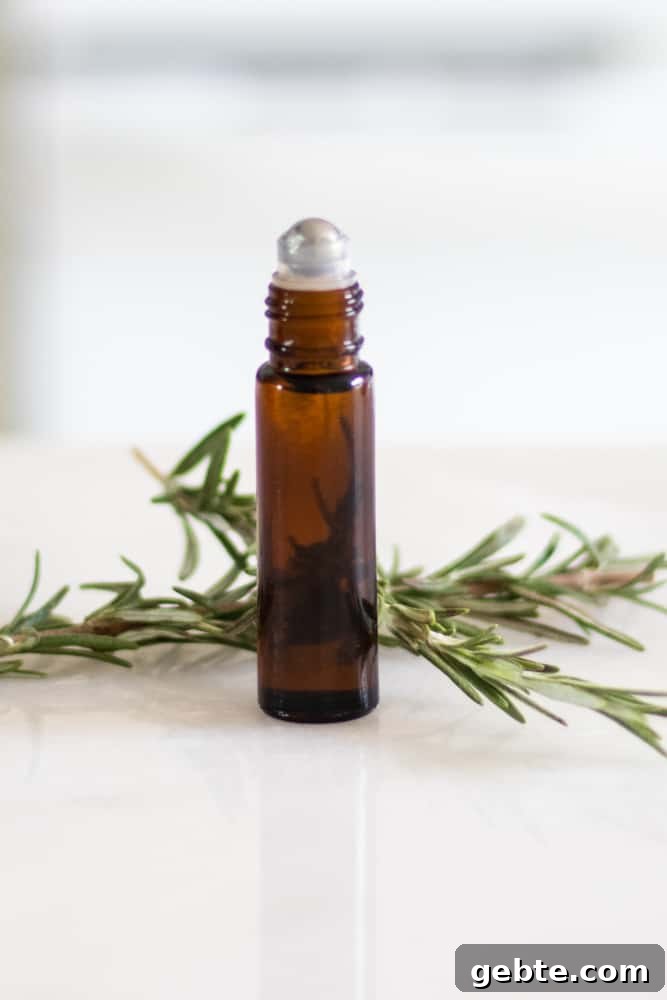
Chill
10 drops rosemary + 5 drops peppermint + 5 drops copaiba (diluted in carrier oil)
Deep Breath
10 drops eucalyptus + 5 drops rosemary + 2 drops frankincense + 2 drops lime (diluted in carrier oil)
Happy Day
10 drops lavender + 5 drops bergamot + 2 drops rosemary + 2 drops tangerine (diluted in carrier oil)
Rosemary Oil for Hair
Rosemary essential oil is a popular choice in hair care because of its fresh herbal scent and compatibility with common hair-care bases. It blends well into hair serums, shampoos, conditioners, and oil treatments. Use diluted rosemary as an addition to leave-in conditioners, hair masks, homemade shampoos, or scalp blends to impart a clean, invigorating scent and support a pleasant grooming routine.
For a simple hair oil treatment, mix a few drops of rosemary into a carrier oil or a nourishing oil blend and massage lightly into the scalp and lengths. Always patch-test new topical formulations to ensure skin compatibility.
10 Ways to Use Rosemary Essential Oil
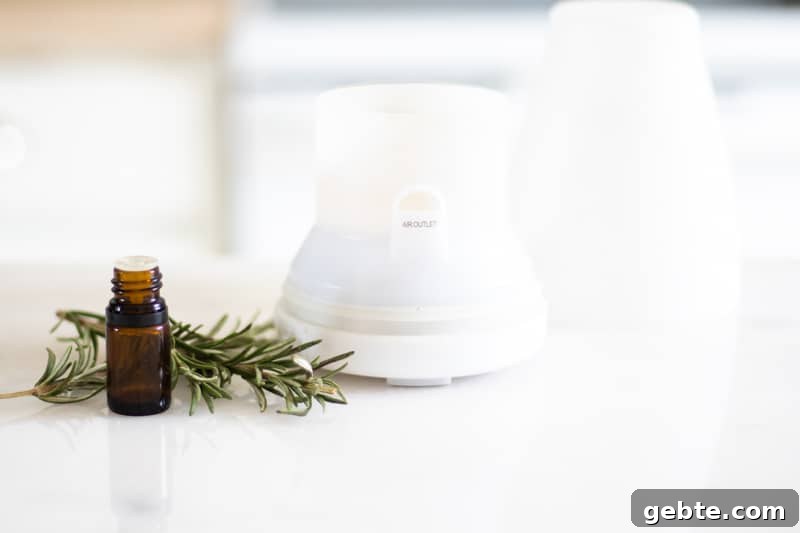
- Diffuse rosemary to refresh and calm a room with a natural, herbaceous aroma.
- Blend rosemary into diffuser or room spray mixtures for targeted scenting.
- Add rosemary to homemade shampoos for a clean, garden-fresh scent.
- Use in a DIY hair-growth or daily spritz formula for an easy scent boost.
- Create nourishing hair oils and masks that combine rosemary with carrier oils.
- Incorporate rosemary into beard-care products for a crisp, herbal fragrance.
- Add rosemary to homemade lotions or body washes for natural fragrance.
- Scent homemade candles or wax melts with rosemary for cozy, herbal ambiance.
- Blend rosemary into outdoor sprays for a fresh, herbal aroma during time outside.
- Include rosemary in homemade cleaning products to improve scent and create a pleasant cleaning experience.
Safety Notes
- Always dilute essential oils before applying topically using a carrier oil, lotion, or base product.
- Diffuse only in well-ventilated areas and avoid prolonged diffusion around children, pregnant people, or those with sensitivities without professional guidance.
- Store essential oils out of reach of children and pets, in a cool, dark place.
- If you have pets, leave a door open when diffusing so they can leave the room if the aroma is unpleasant—animals have more sensitive olfactory systems than humans.
Frequently Asked Questions
Rosemary essential oil is a concentrated steam-distilled extract from rosemary leaves. Rosemary-infused oil is made by steeping rosemary in a carrier oil and is less concentrated. Both have uses in skincare and haircare, but their potency and application methods differ.
Rosemary essential oil carries a fresh, woodsy, and minty-herbal aroma similar to a sprig of fresh rosemary. It blends nicely with citrus, herbal, and woody oils.
Rosemary pairs well with citrus oils such as lemon, lime, and orange; herbal oils like peppermint and eucalyptus; and woodsy oils such as frankincense and copaiba.
More Essential Oil Highlights
- Ginger essential oil: uses and recipes
- Peppermint essential oil: benefits and uses
- Grapefruit essential oil: diffuser blends and uses
- Bergamot essential oil: uses and benefits
Rosemary essential oil is a dependable staple for home and body care. Its fresh herbal scent, adaptability in blends, and ease of use in DIY recipes make it a great choice for both beginners and experienced essential-oil users. Start with one simple blend or a roller bottle and explore how rosemary can fit into your daily routine.
Key Takeaways
Rosemary essential oil belongs on your shelf. It offers a fresh, herbal aroma, blends well with many other oils, and integrates easily into homemade recipes for cleaning, hair care, and personal fragrance. Choose one idea from this post—a diffuser blend or a roller bottle—and give rosemary a try in your routine.