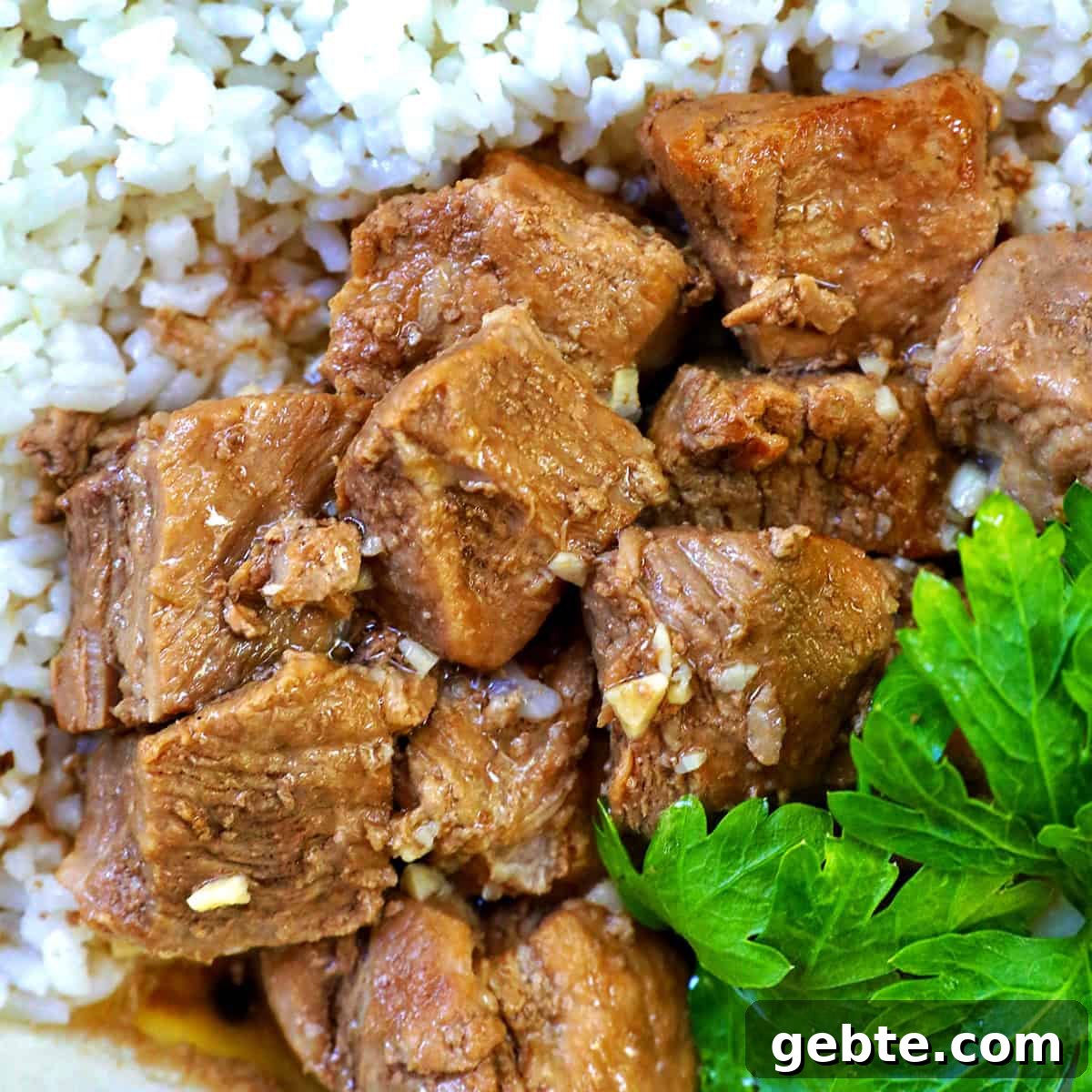
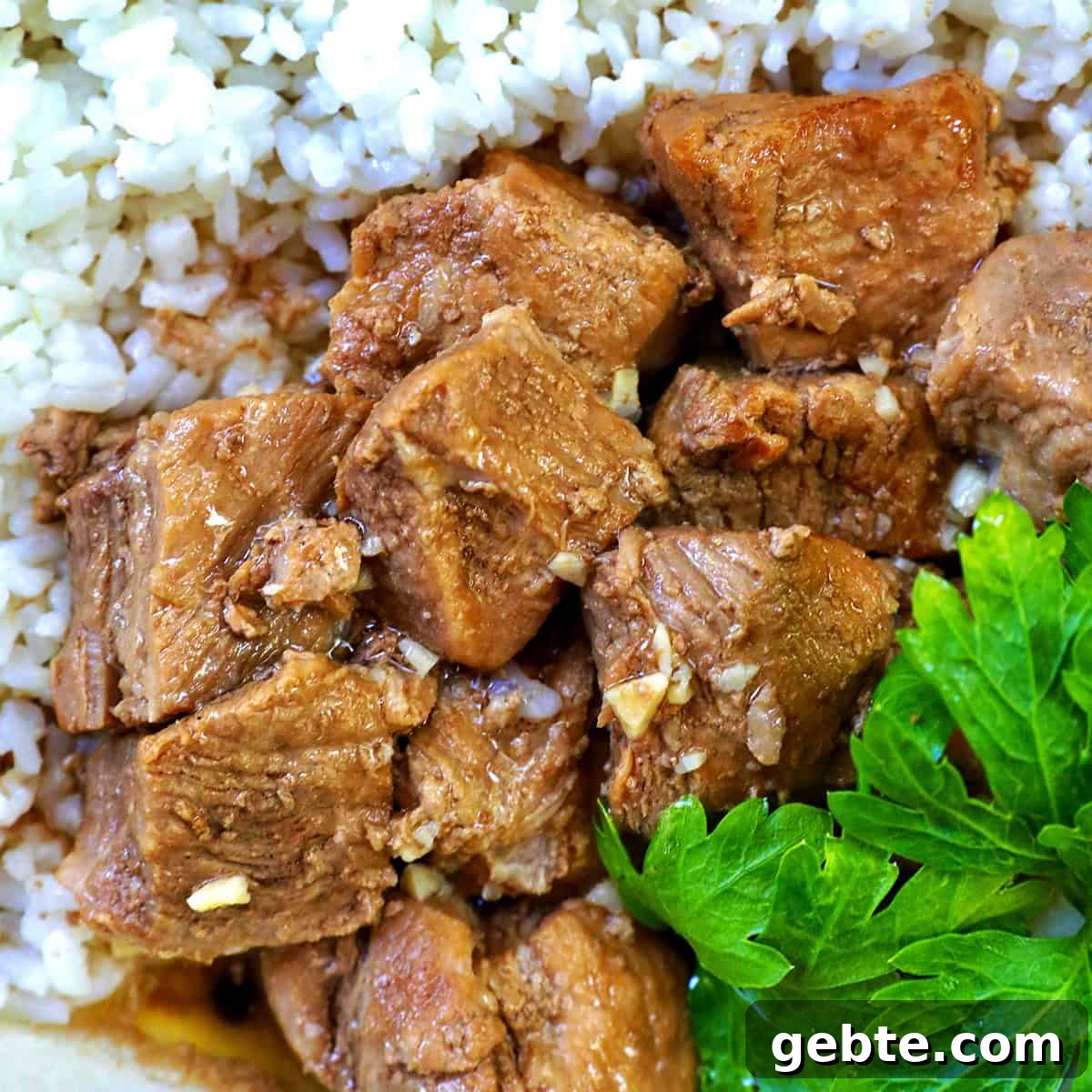
Tender, flavor-packed pork that is sweet, salty, sour, and tangy all at once. This Filipino Pork Adobo recipe is simple to prepare at home and makes a comforting, unforgettable family dinner.
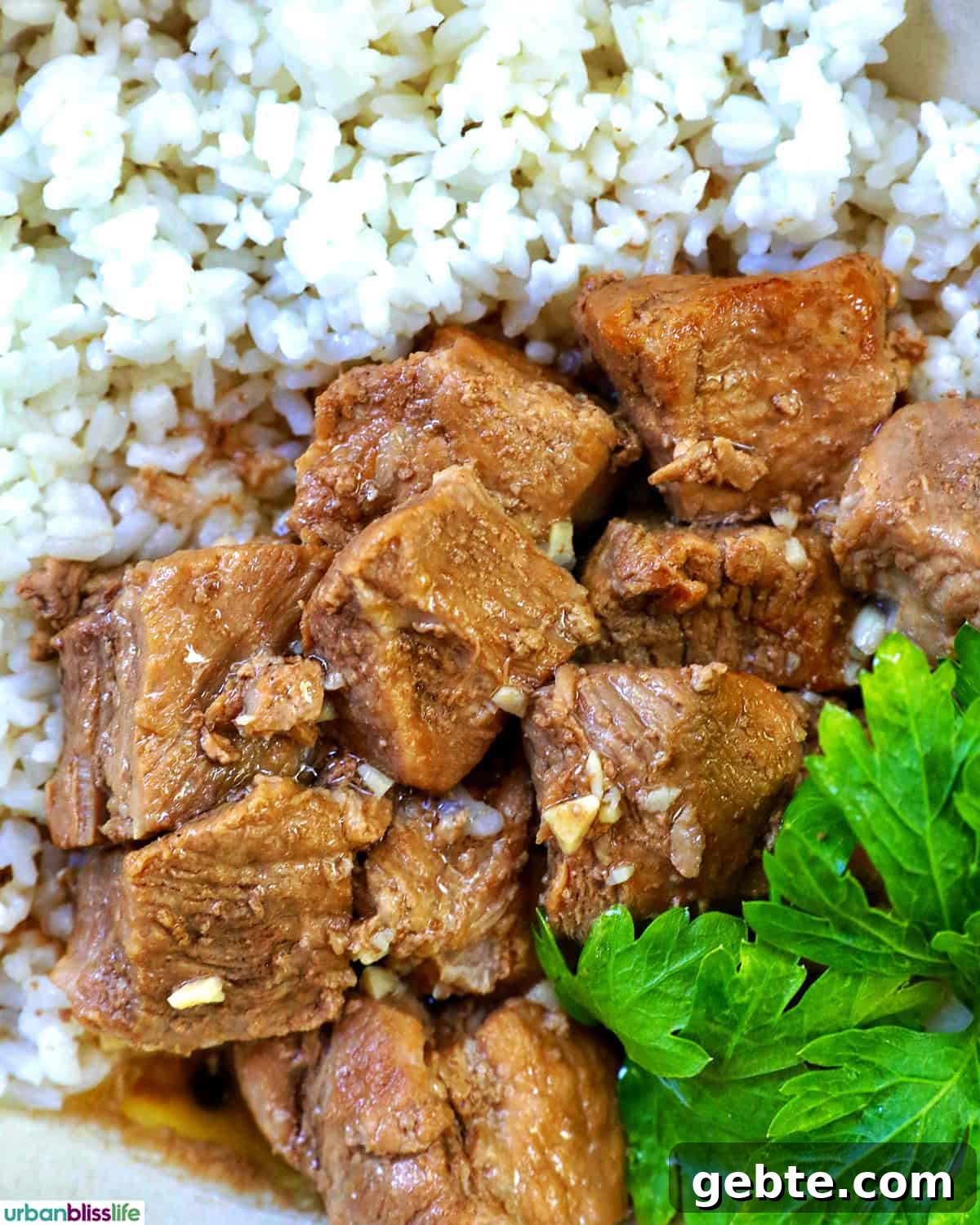
If you want a pork dish with bold, balanced flavors, Filipino Pork Adobo is a classic choice. Pork is slowly simmered in a combination of vinegar, a savory amino or soy base, garlic, bay leaves, and peppercorns, creating a rich, aromatic sauce that clings to tender pieces of meat.
This adobo strikes a pleasing balance of tang, salt, and a touch of sweetness. It’s equally satisfying on a busy weeknight or as part of a celebratory meal. The sauce is ideal spooned over rice and the leftovers often taste even better the next day as the flavors deepen.
Many Filipino families have their own version of adobo, and mine is rooted in the aromas and tastes I remember from childhood—garlic, vinegar, and peppercorns filling the kitchen. This recipe is a straightforward Filipino-American adaptation that uses easy-to-find ingredients and uncomplicated steps while preserving the heart of the dish.
Table of Contents
- About Filipino adobo
- Ingredient notes
- Step-by-step instructions
- Recipe tip
- Recipe FAQs
- Serving suggestions
- Wine pairings
- More Filipino recipes
- Filipino Pork Adobo Recipe
About Filipino adobo
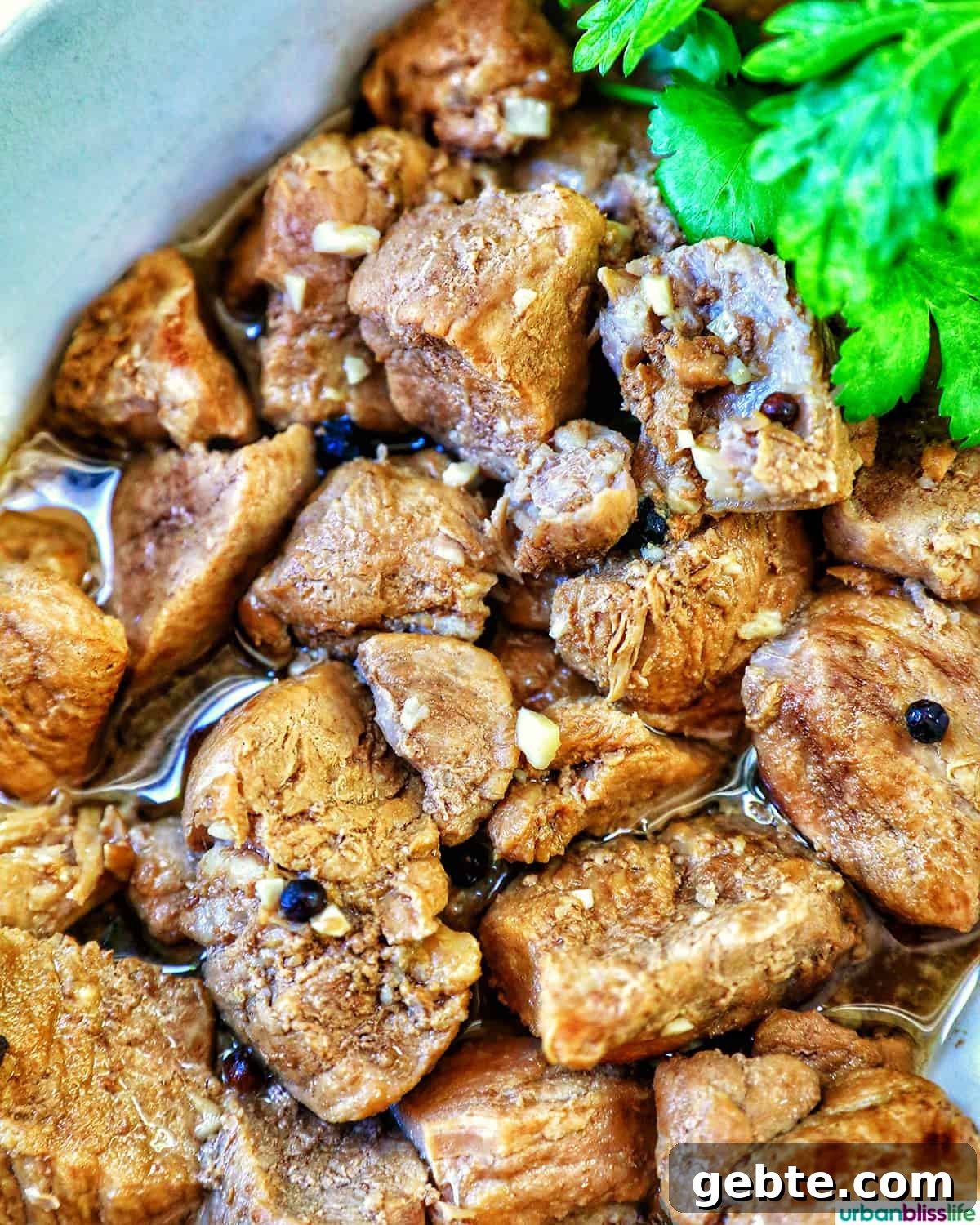
Adobo is often regarded as a signature Filipino dish. Its origins combine indigenous preservation techniques using vinegar with later cultural influences, making it a versatile and beloved staple. Every household has its own preferred method and ratios, so feel free to adjust the seasoning to suit your taste.
Why you’ll love this family favorite recipe

- Rich, savory sauce with tender, flavorful pork.
- Simple steps and straightforward ingredients.
- The slow simmer fills the kitchen with irresistible aromas.
- Perfect spooned over rice or sopped up with bread.
- Leftovers develop even more depth overnight.
- Ingredients are widely available in grocery stores and Asian markets.
- Substitutions are possible if certain ingredients aren’t available locally.
- Comforting and nostalgic for Filipino families living away from home.
Ingredient notes
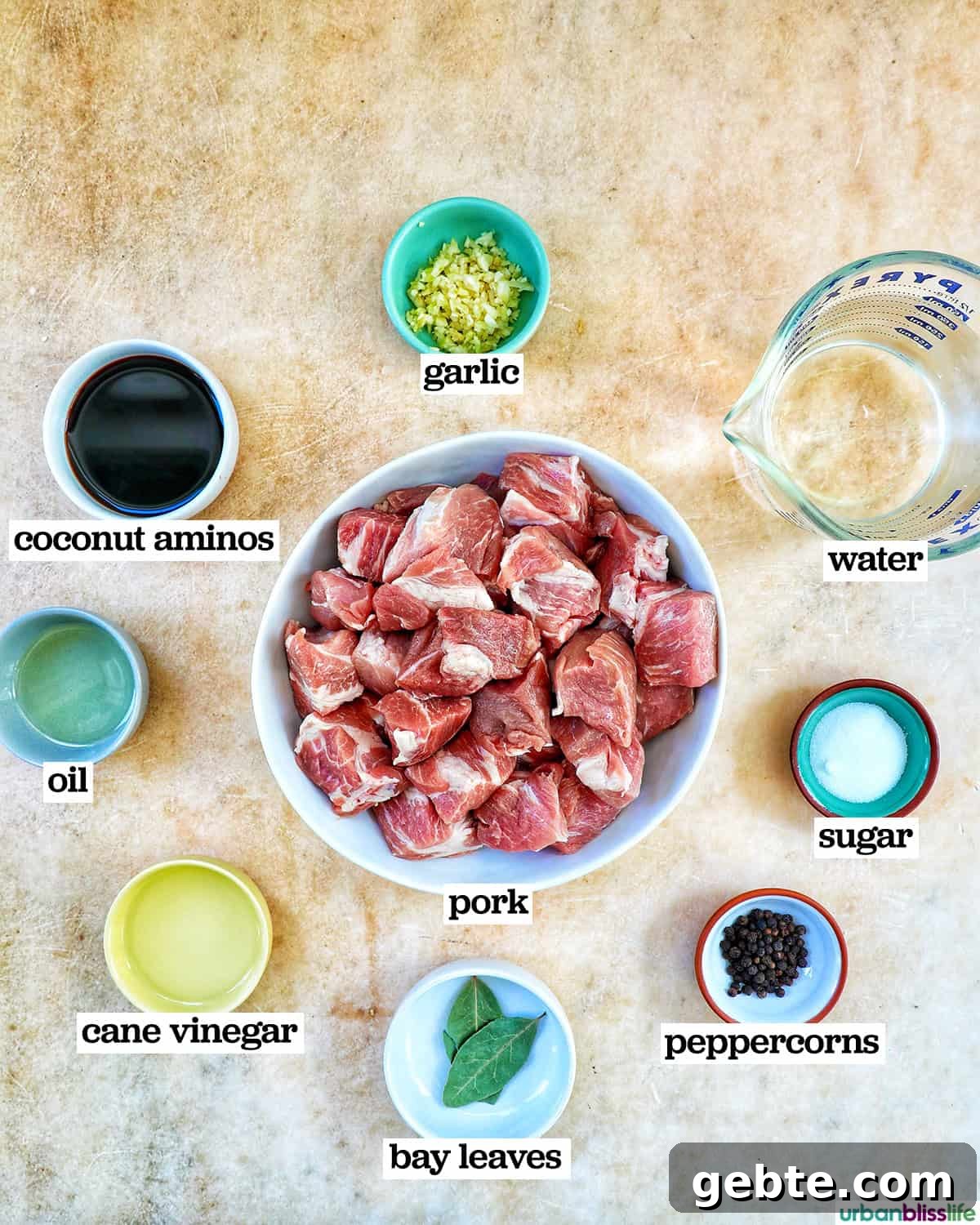
This recipe uses fewer than ten ingredients. Below are notes and common substitutions so you can adapt based on what you have.
- Pork – Pork shoulder is ideal for its balance of meat and fat and becomes very tender when simmered. Pork belly can be used for a richer finish.
- Coconut aminos or soy sauce – Coconut aminos is a soy-free, gluten-free option that creates a deep sauce. Regular soy sauce works well as an alternative.
- Vinegar – Cane vinegar is traditional in many Filipino kitchens; white vinegar is an acceptable substitute if needed.
- Garlic – Essential for authentic flavor. Mince generously for the best result, but reduce if you prefer milder garlic notes.
- Peppercorns and bay leaves – Whole peppercorns and bay leaves add the classic spice and aroma. If you prefer not to serve the peppercorns whole, tie them in cheesecloth to remove easily.
- Sugar – A small amount balances the tang and saltiness of the sauce.
- Water or broth – Water is used to create the cooking liquid; chicken or beef broth can be substituted for added richness.
Step-by-step instructions
The printable recipe card below lists precise measurements and full instructions. These step highlights show the main stages of cooking so you can visualize the process.
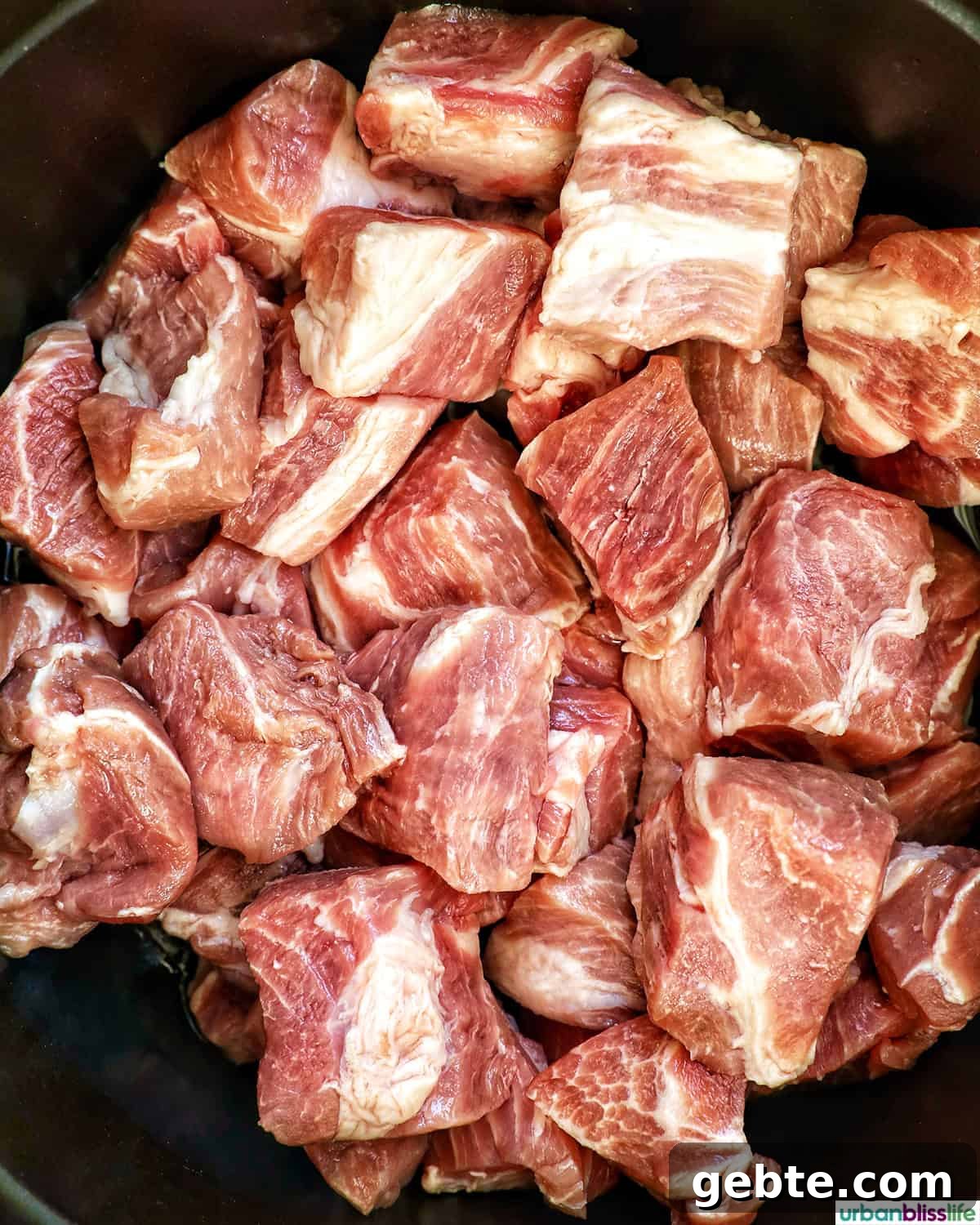
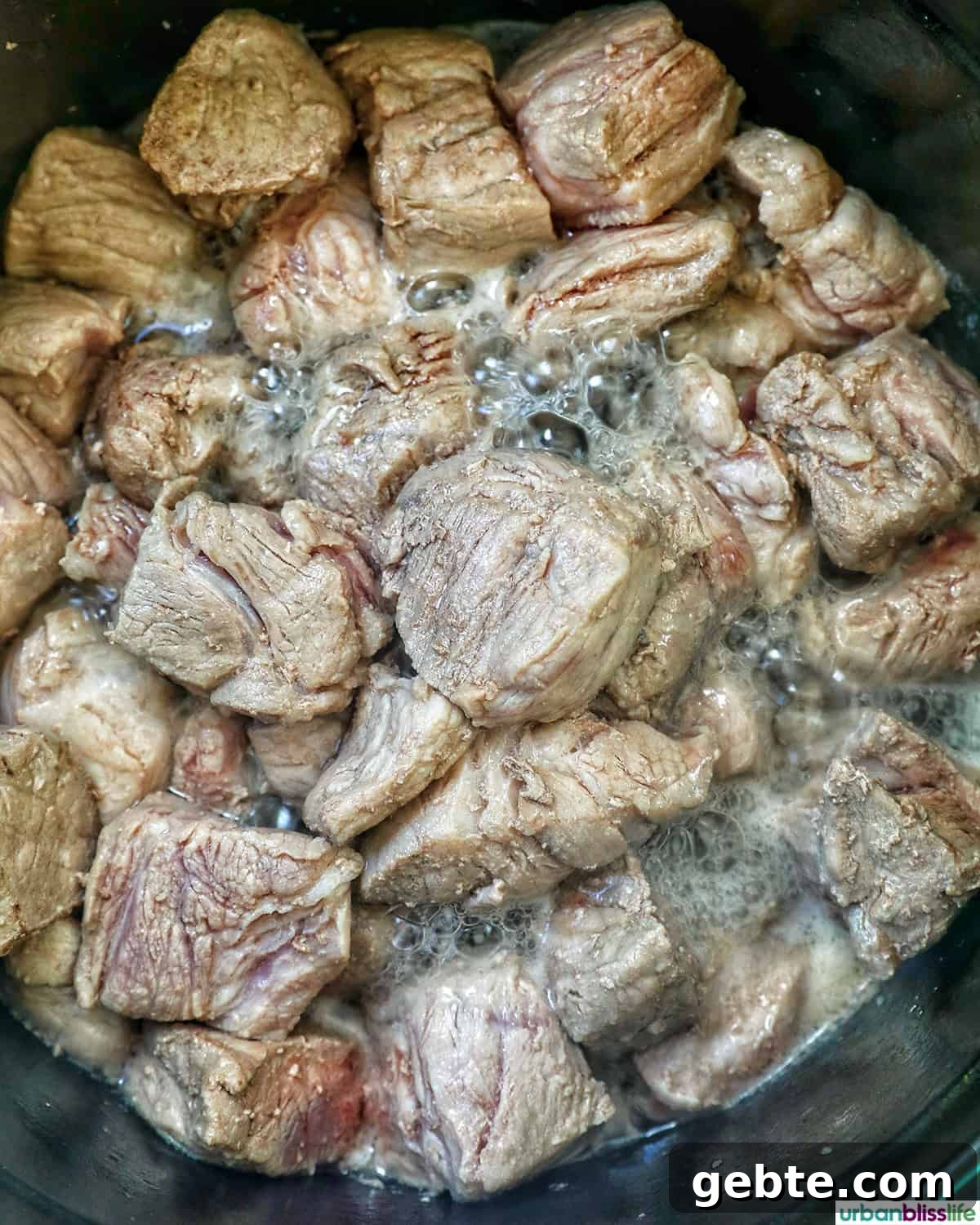
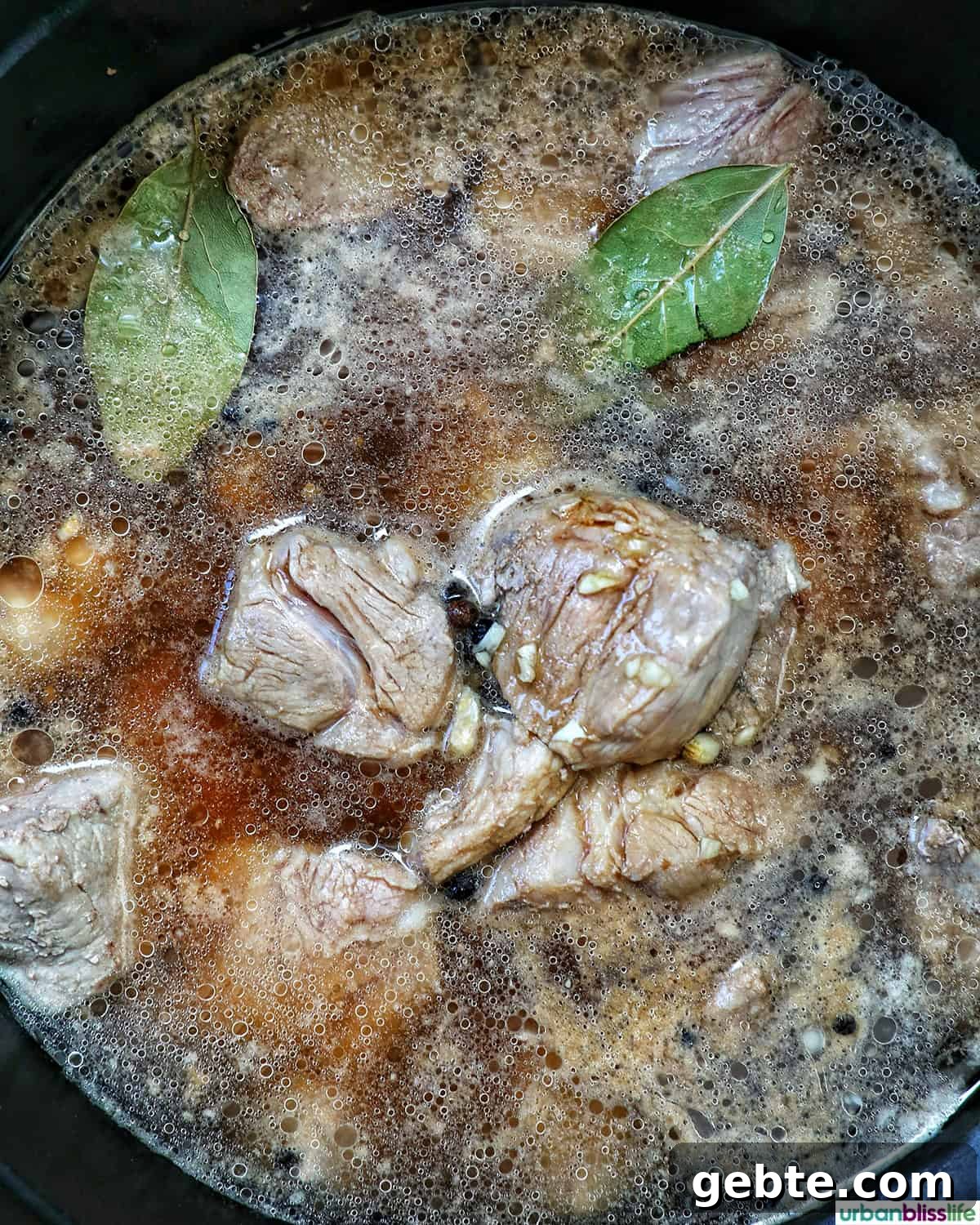
- Heat oil in a Dutch oven over medium-high heat.
- Add the pork pieces and sear until browned on all sides.
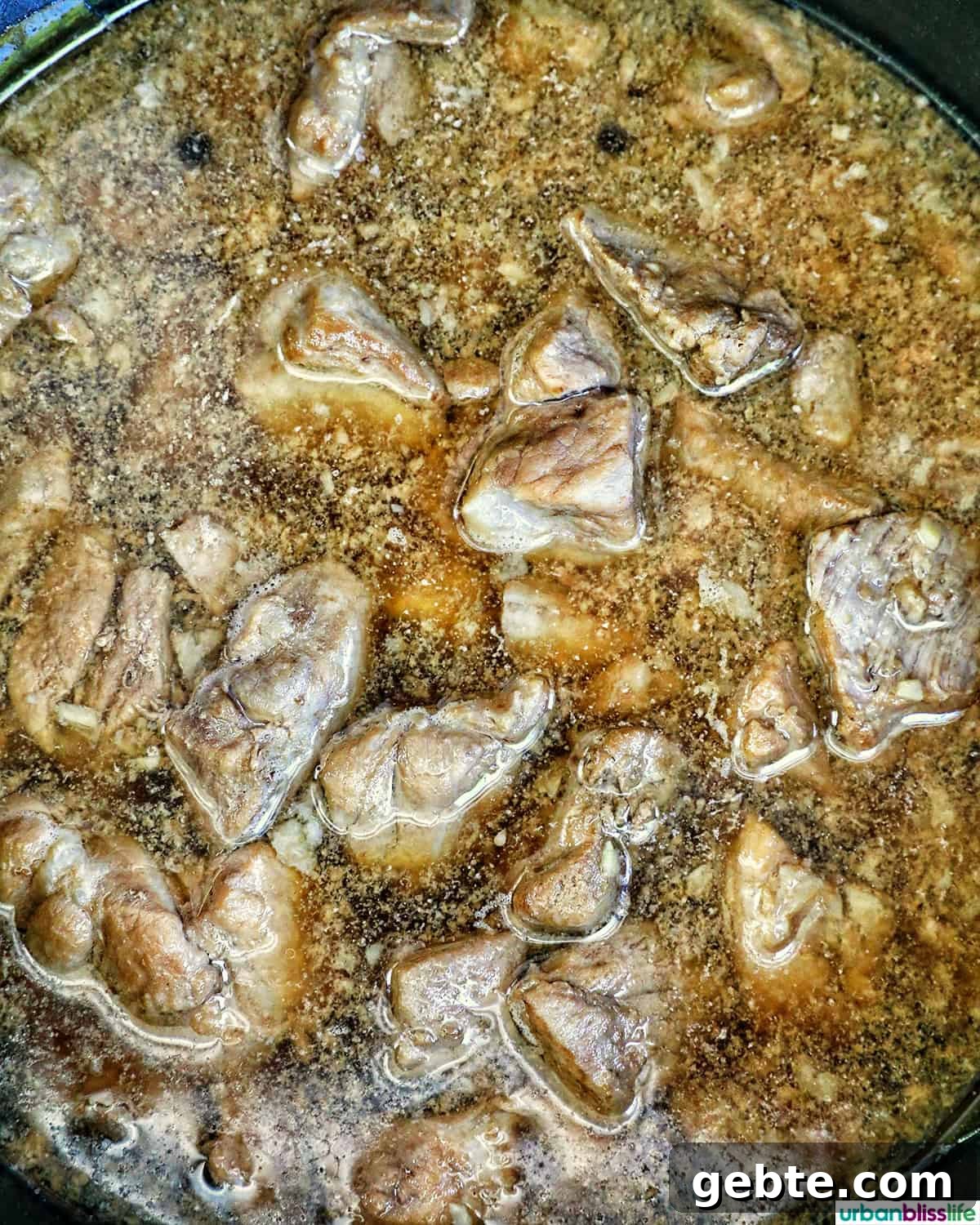
- Pour in vinegar and coconut aminos (or soy sauce), then add minced garlic, bay leaves, whole peppercorns, sugar, and water.
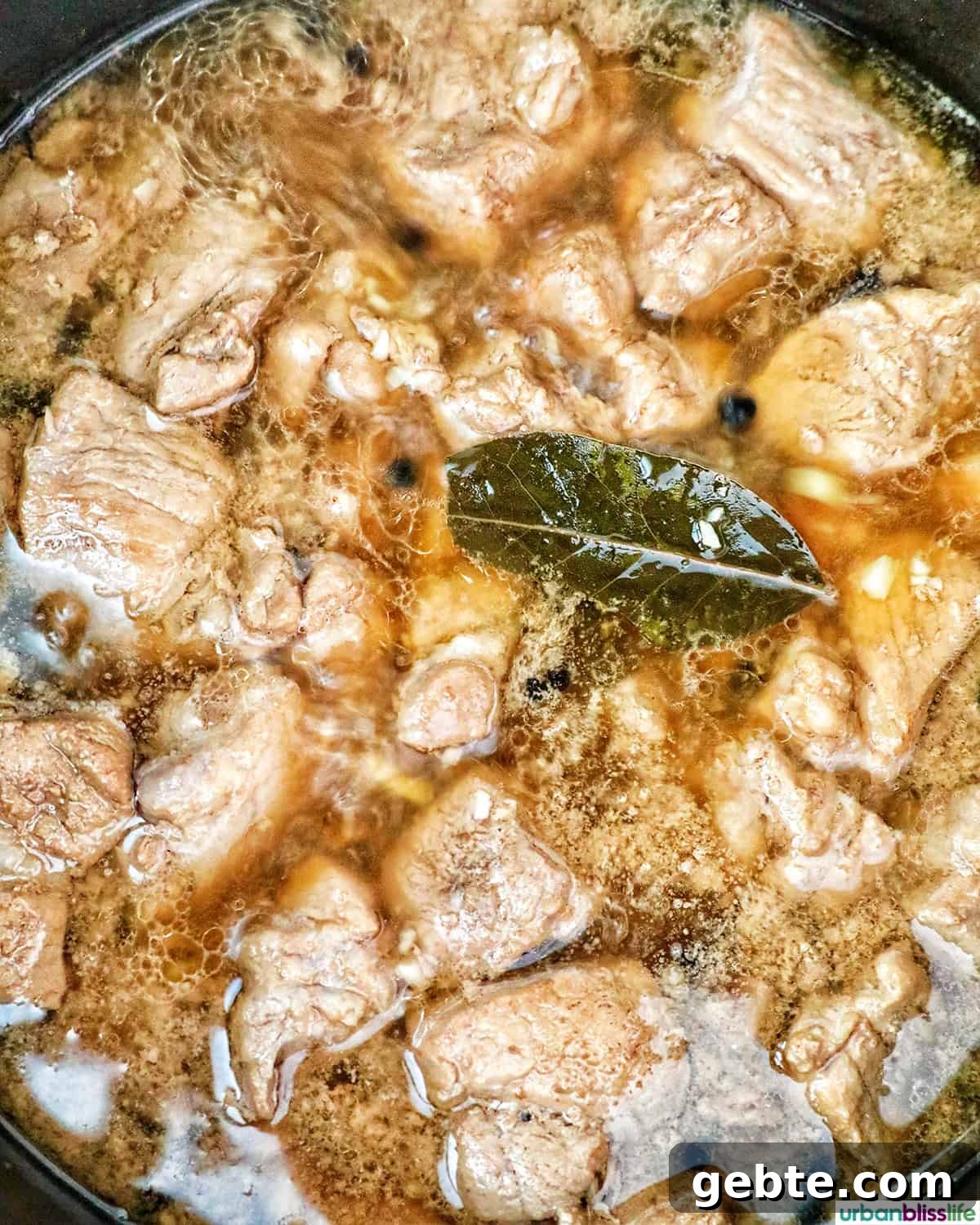
- Bring the mixture to a low boil, then reduce heat to medium-low. Cover and simmer for 1 hour.
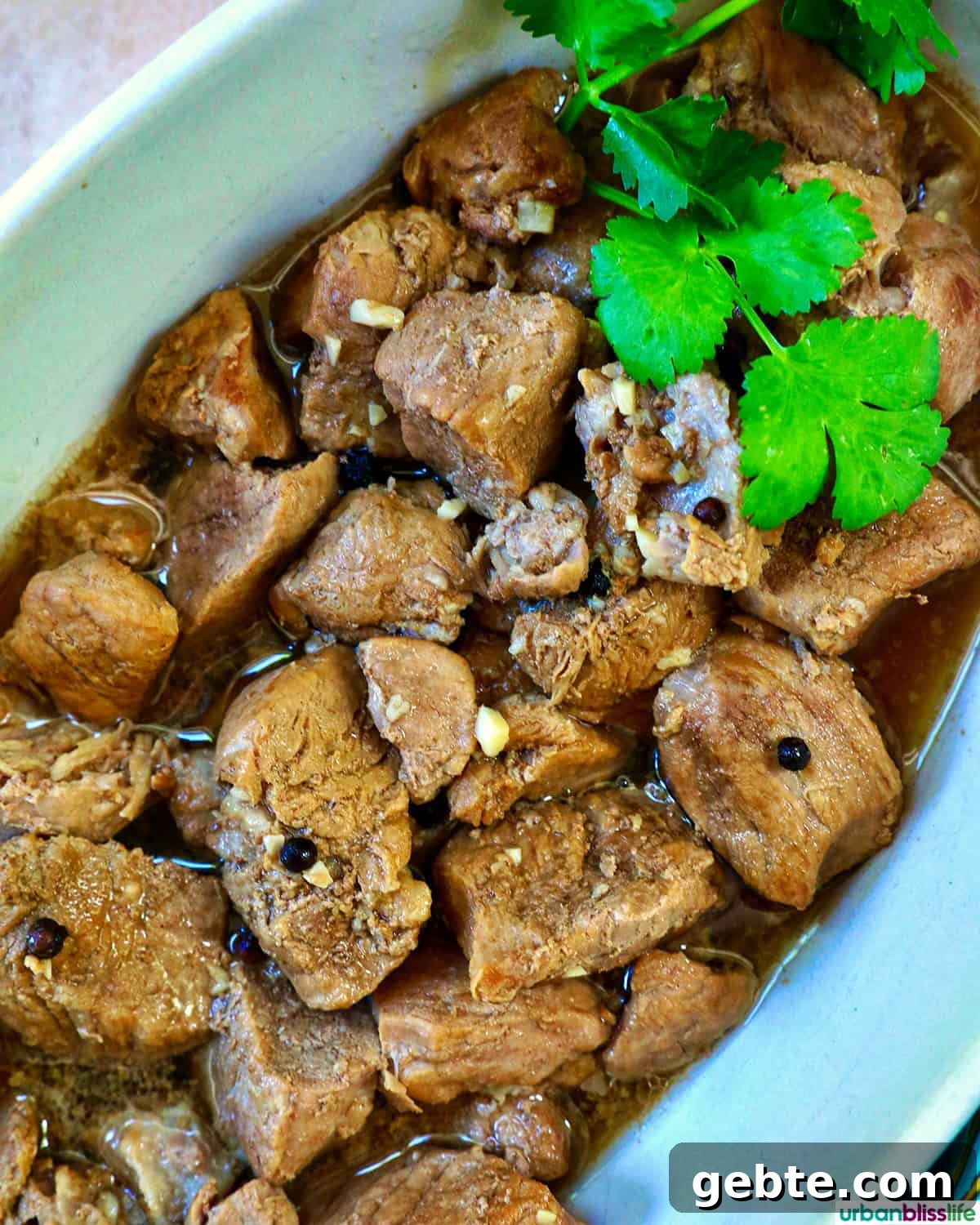
- Uncover and simmer for an additional 30 minutes, or until the sauce has reduced and the pork is tender. Remove peppercorns if you prefer not to serve them whole.
Marlynn’s Tip
Recipe Tip
Traditional adobo usually skips pre-seasoning the meat, but a light sprinkle of salt and pepper before searing can enhance the crust. Cut the pork into even pieces so everything cooks uniformly.
Recipe FAQs
Yes. Chicken adobo is equally traditional and delicious; cooking times will be shorter for chicken pieces.
Absolutely. Refrigerating the adobo overnight deepens the flavor and makes it an excellent make-ahead meal.
Keep leftovers in an airtight container in the refrigerator for up to 4–5 days. Reheat gently on the stove or in the microwave.
Serving suggestions
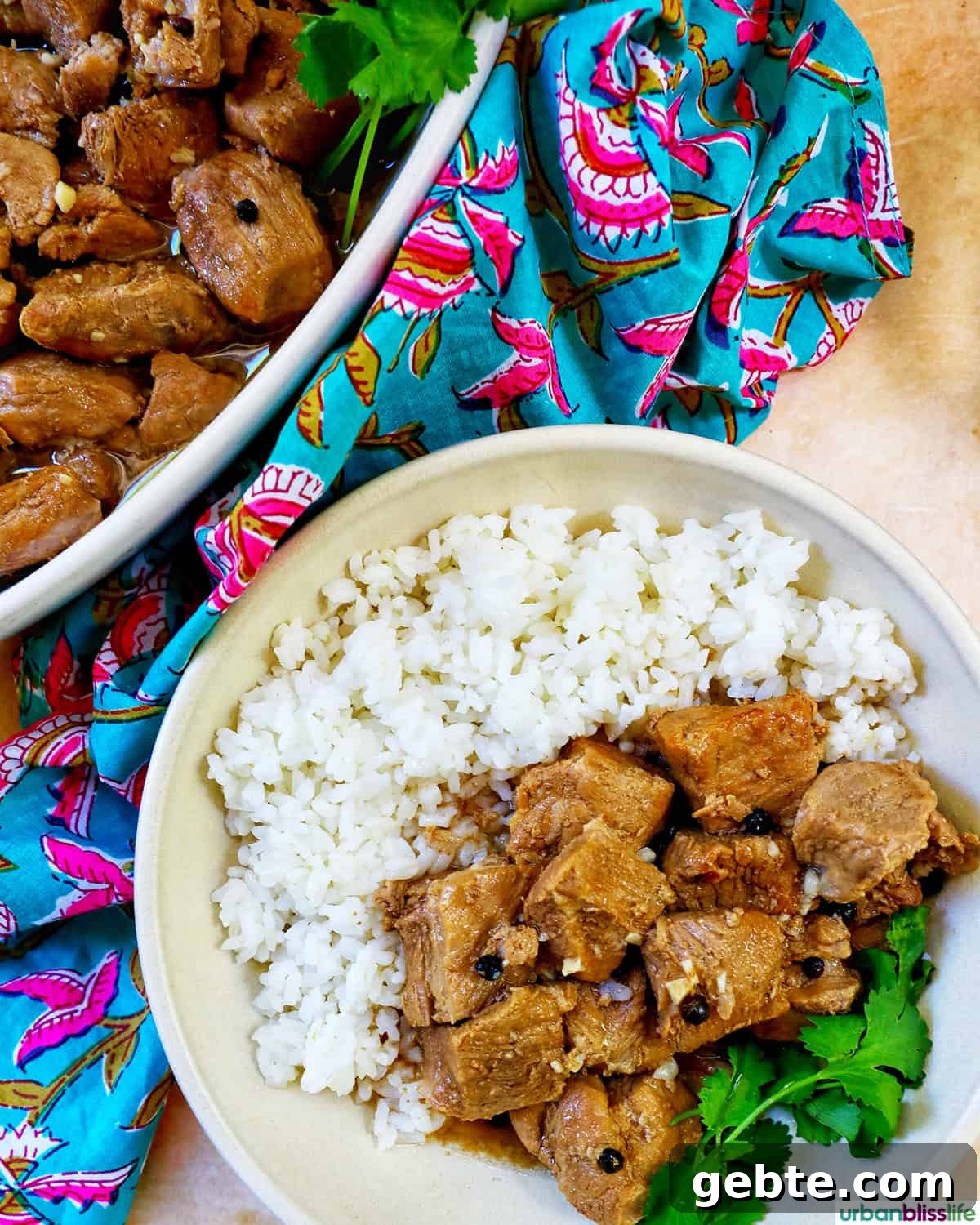
Serve adobo over steamed garlic rice for a classic pairing. It also pairs well with mashed potatoes for a comforting twist. For a full Filipino-style spread, include vegetable spring rolls, noodle dishes, or bread rolls on the side.
Leftover adobo transforms easily into fried rice: chop the meat and stir-fry with rice, eggs, and scallions for a quick, flavorful meal.

Wine pairings
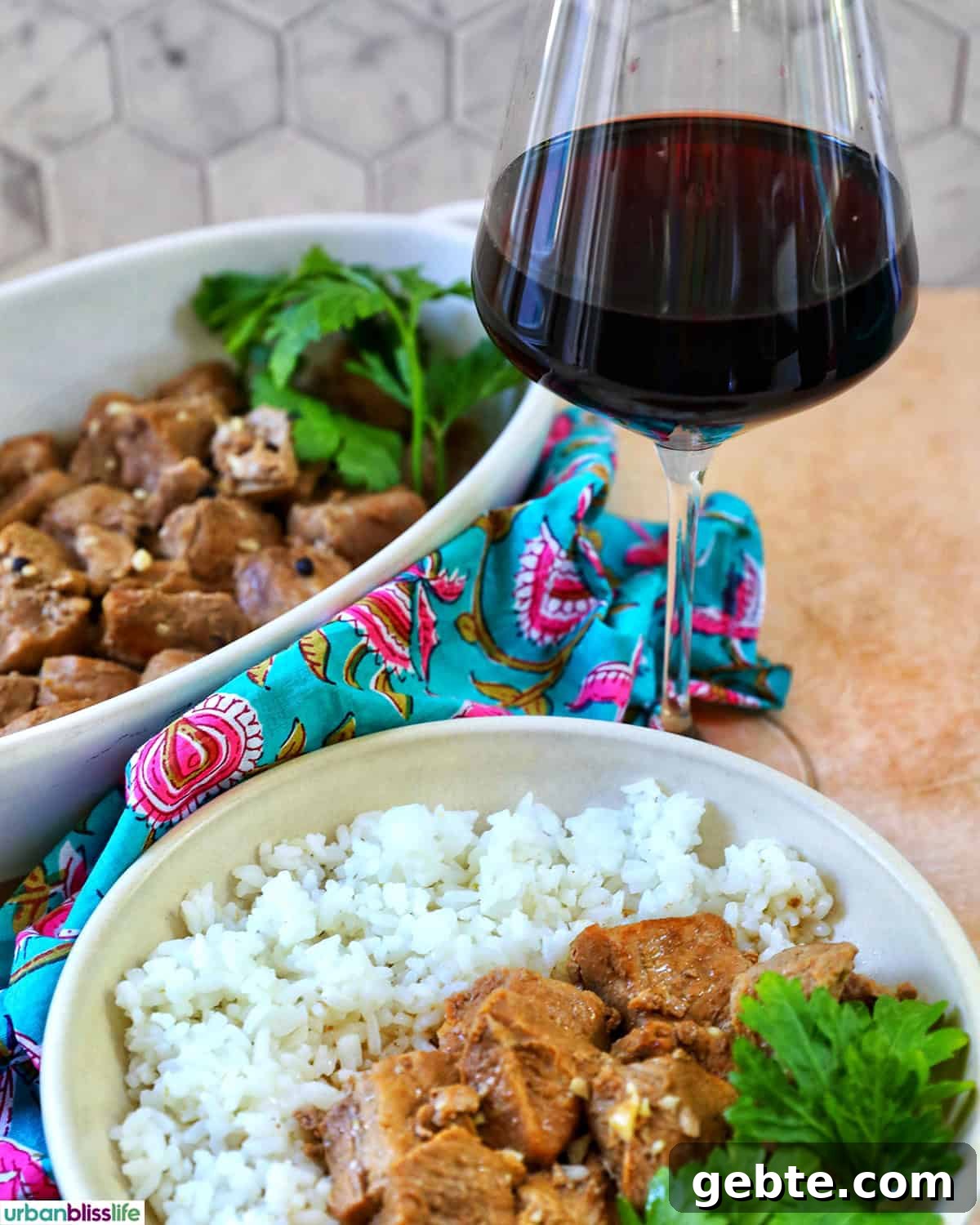
The savory, sour, and slightly sweet profile of pork adobo matches nicely with an off-dry white or a light-bodied red.
- Riesling: its lively acidity and subtle sweetness balance the sauce and cut through the richness of the pork.
- Pinot Noir: light body and bright red-fruit notes complement the savory depth without overwhelming the dish.
More Filipino recipes

Filipino Recipes
Filipino Mango Float

Filipino Recipes
Filipino Fruit Salad

Filipino Recipes
Filipino Grilled Pork Belly

All Recipes
Arroz a la Valenciana
If you try this recipe, please come back and leave a rating and a comment—feedback helps others discover and enjoy this classic dish.
Filipino Pork Adobo
Ingredients
- 2 Tablespoons vegetable oil
- 2 pounds boneless pork shoulder, cut into small pieces
- ¼ cup cane vinegar (or white vinegar)
- ⅓ cup coconut aminos (or soy sauce)
- 6 garlic cloves, minced
- 2 bay leaves
- 2 teaspoons whole black peppercorns
- 2 teaspoons sugar
- 2 cups water (or broth)
Instructions
- In a Dutch oven, heat the oil over medium-high heat.
- Add the pork and sear the pieces until lightly browned on all sides.
- Add the vinegar, coconut aminos (or soy sauce), garlic, bay leaves, peppercorns, sugar, and water.
- Bring to a low boil, then reduce heat to medium-low. Cover and simmer for 1 hour.
- Uncover and simmer 30 more minutes, until the sauce reduces and the pork is tender. Remove whole peppercorns if desired before serving.
Notes
Makes approximately 6 servings.
- If the sauce is too thin, mix 1 Tablespoon cornstarch with 1 Tablespoon water to form a slurry, stir into the sauce, and simmer over medium heat until thickened.
Nutrition
Nutrition information is an estimate and should be used as a guideline.
Follow on Instagram